Retrieving the Luggage: A Dream About Preparation for a New Season

There are times when a dream lingers long after you wake up. Not because every detail is immediately clear, but because it seems to arrive at exactly the right moment.

On the morning of my orientation for an Artificial Intelligence course—a new season of learning and growth—I had a dream that has stayed with me.

In the dream, I realized I had left my luggage in a hotel room. To retrieve it, I first needed to obtain a key from the room attendant. Once I received the key, I returned to the room and found my luggage exactly where I had left it. Interestingly, there were also many other pieces of luggage that belonged to other hotel guests.

At first glance, it seemed like an ordinary dream. But as I reflected on it alongside Scripture and recent events in my life, I began to see a deeper message about preparation, stewardship, and trusting God as I step into a new chapter.

A Hotel Is a Temporary Place

Hotels are places we stay for a season.

They are not permanent homes.

Perhaps that is the first lesson the dream teaches. Life is made up of seasons. Some are long, while others are brief. God often moves us from one assignment to another, teaching us different lessons along the way.

My orientation marked the beginning of a completely new season. After years of experience in other areas, I was beginning formal training in artificial intelligence.

The timing of the dream made me wonder whether God was reminding me that one season was ending while another was beginning.

Receiving the Key

One detail stood out.

I couldn’t simply walk into the room.

I needed the room attendant to give me the key.

Throughout Scripture, keys often symbolize access, authority, and opportunity.

Jesus said to Peter:

“I will give you the keys of the kingdom of heaven…” (Matthew 16:19)

In Revelation, Christ speaks of opening doors that no one can shut and shutting doors that no one can open (Revelation 3:7).

Whether or not the dream directly references these passages, the symbolism is meaningful. I didn’t take the key for myself—it was given to me.

That reminds me that new opportunities are often gifts from God.

Sometimes we spend years trying to force doors open when God simply asks us to wait until He provides the key.

Perhaps this new season of study is one of those doors.

Retrieving What Was Already Mine

The dream wasn’t about discovering new luggage.

It was about retrieving luggage that already belonged to me.

That detail changed everything.

Luggage represents what we carry with us.

It may symbolize our experiences, lessons, gifts, character, calling, relationships, and even the difficult seasons God has used to shape us.

As I begin studying AI, it would be easy to think that everything starts now.

But the dream reminds me otherwise.

God has already been preparing me.

Every conversation, every challenge, every ministry opportunity, every success and failure has become part of the luggage I carry into this new season.

I am not beginning from zero.

Neither are you.

Everyone Has Their Own Luggage

Another detail caught my attention.

There wasn’t only my luggage in the room.

There were many other bags belonging to other guests.

I didn’t touch them.

I didn’t compare mine with theirs.

I simply collected what belonged to me.

What a powerful reminder.

In today’s world, comparison comes naturally.

Someone has more qualifications.

Someone learns faster.

Someone has a larger platform.

Someone has more experience.

Yet God has never asked us to carry someone else’s assignment.

He asks us to be faithful with our own.

Each person has a unique journey.

Each person carries different experiences.

Each person has been shaped differently.

Faithfulness is not measured by comparison but by stewardship.

Connecting the Dream to Previous Lessons

What makes this dream especially meaningful is that it follows two other dreams that have been on my heart.

The first reminded me of Hebrews 11:1:

“Now faith is the substance of things hoped for, the evidence of things not seen.”

That dream challenged me to trust God before seeing the outcome.

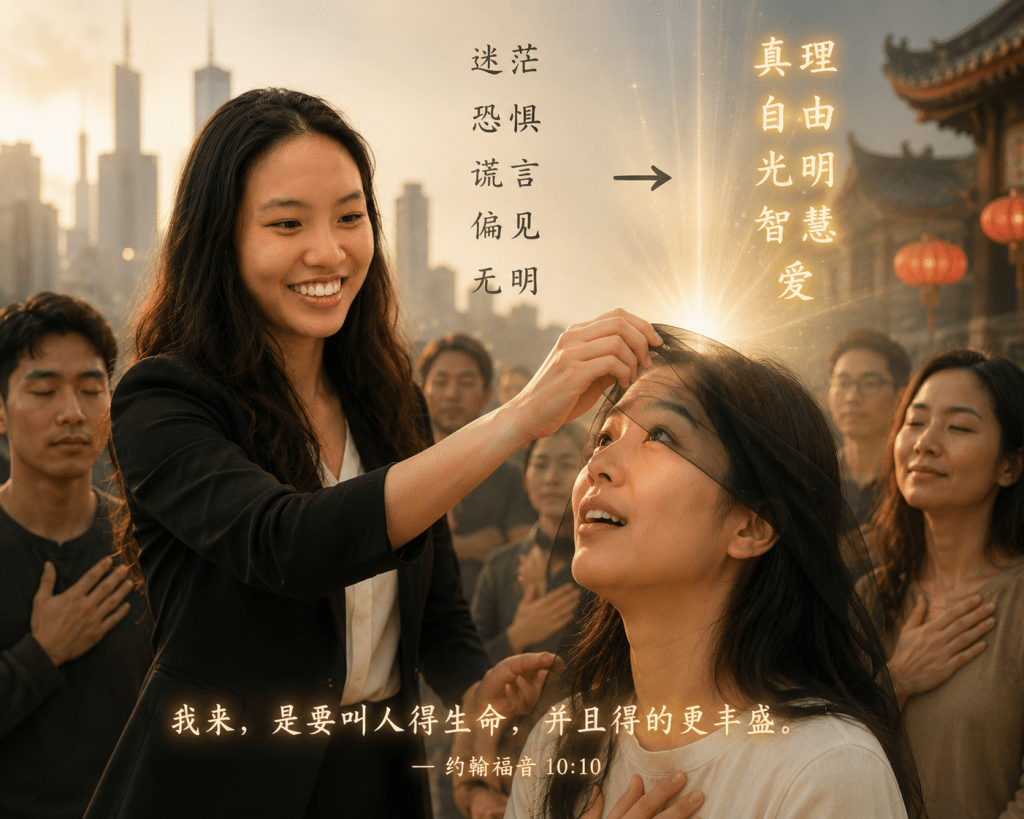
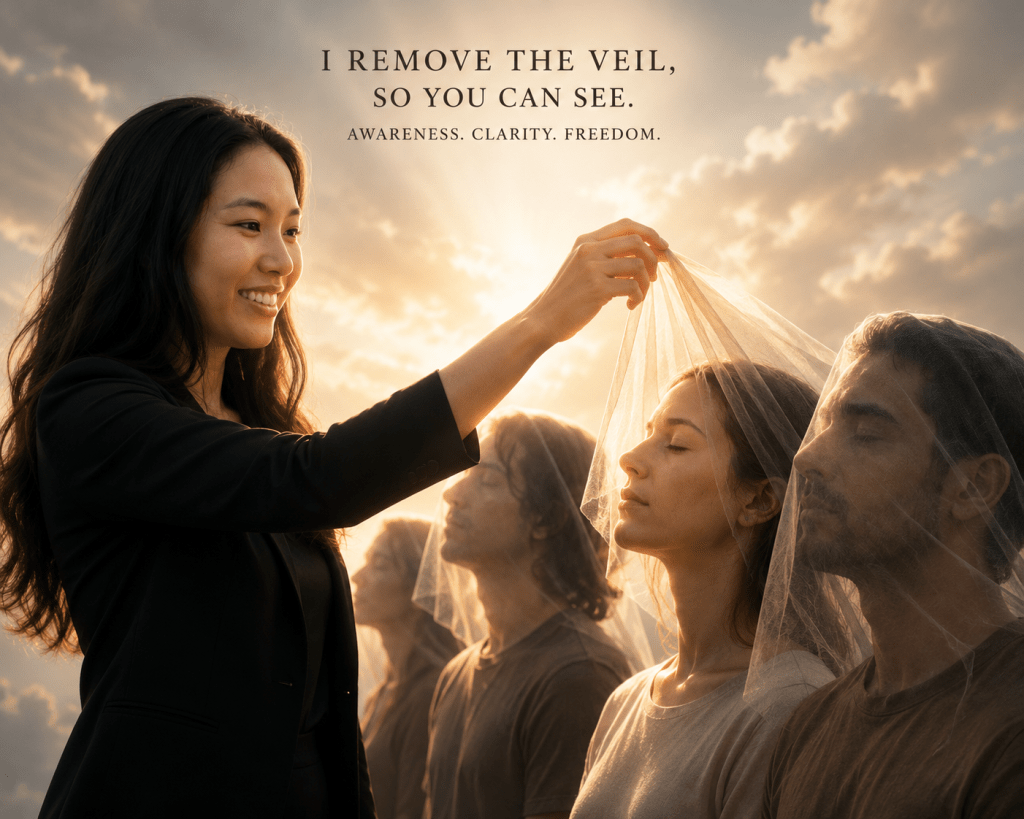
The second dream portrayed lifting a veil from people’s eyes in a Chinese context, symbolizing a longing for spiritual understanding and the removal of spiritual blindness.

Now comes this third dream.

Rather than standing alone, these dreams seem to form a progression.

First comes faith.

Then comes spiritual vision.

Finally comes preparation.

Before helping others, God often prepares the messenger.

Before entering a new assignment, He reminds us of what He has already placed in our hands.

AI and Calling

Beginning an AI course is exciting.

Artificial intelligence is changing industries, education, healthcare, ministry, and countless other fields.

Yet the dream gently reminded me that AI itself is not my identity.

It is a tool.

The more important question is this:

What will I do with what I learn?

Knowledge without wisdom accomplishes little.

Technology without compassion can become empty.

Skills without purpose can lose their direction.

Perhaps God is reminding me that as I learn new technical abilities, I should continue carrying the values He has already been developing within me—faith, humility, service, integrity, and a desire to help others.

A Personal Reflection

Looking back, I don’t see this dream as predicting the future.

Instead, I see it as an invitation.

An invitation to trust.

An invitation to remember.

An invitation to move forward without forgetting everything God has already done.

Every season prepares us for the next.

Nothing is wasted in God’s hands.

The luggage we carry isn’t just our past—it is part of God’s preparation for our future.

Final Thoughts

As I stepped into orientation that morning, I realized I wasn’t walking in empty-handed.

I was carrying years of experiences, lessons, and opportunities that God had already entrusted to me.

The dream reminded me not to compare my journey with others or become distracted by what they are carrying.

Instead, my responsibility is simple:

Receive the key that God provides.

Retrieve what He has entrusted to me.

Carry it faithfully into the next season.

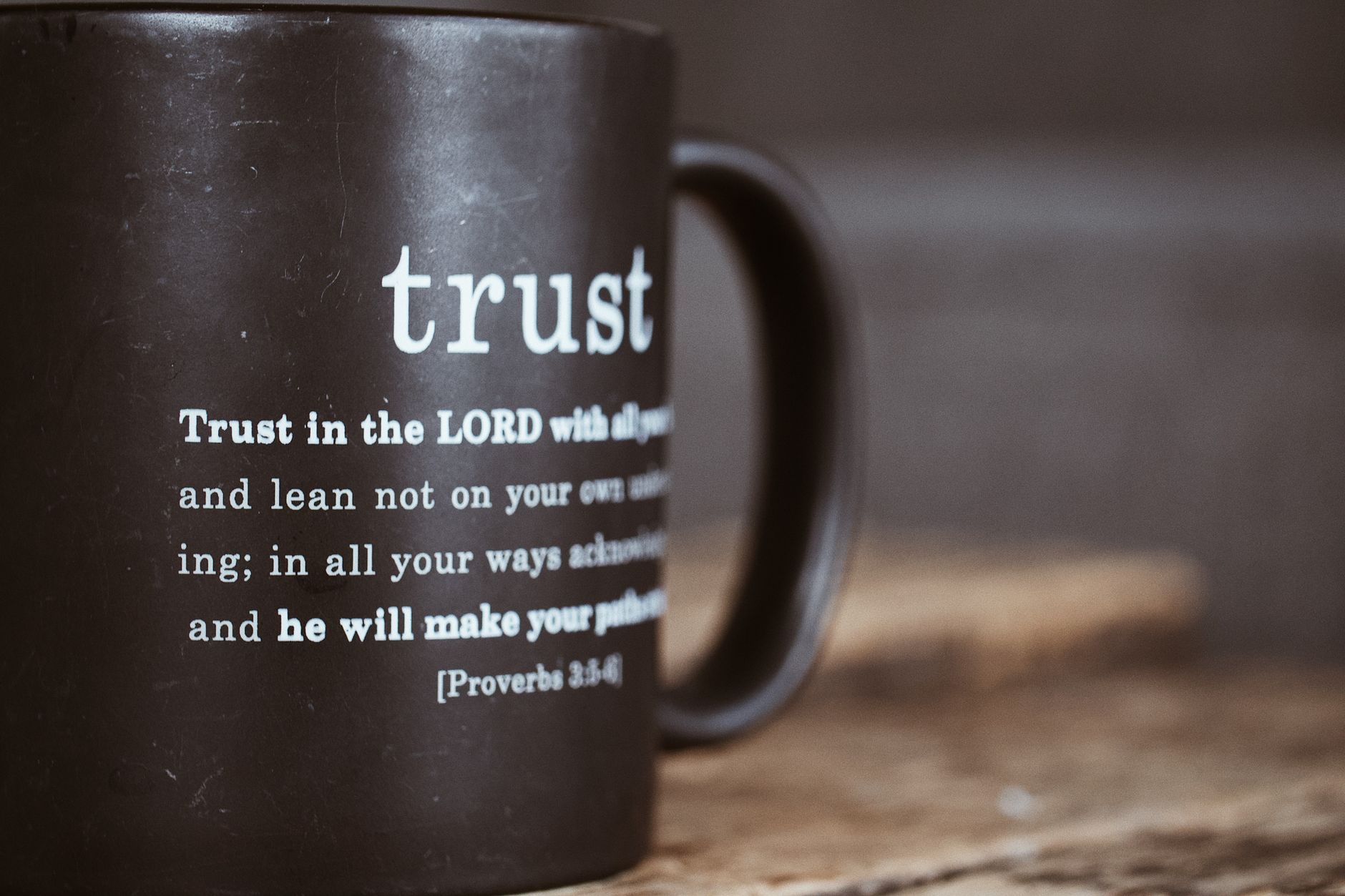
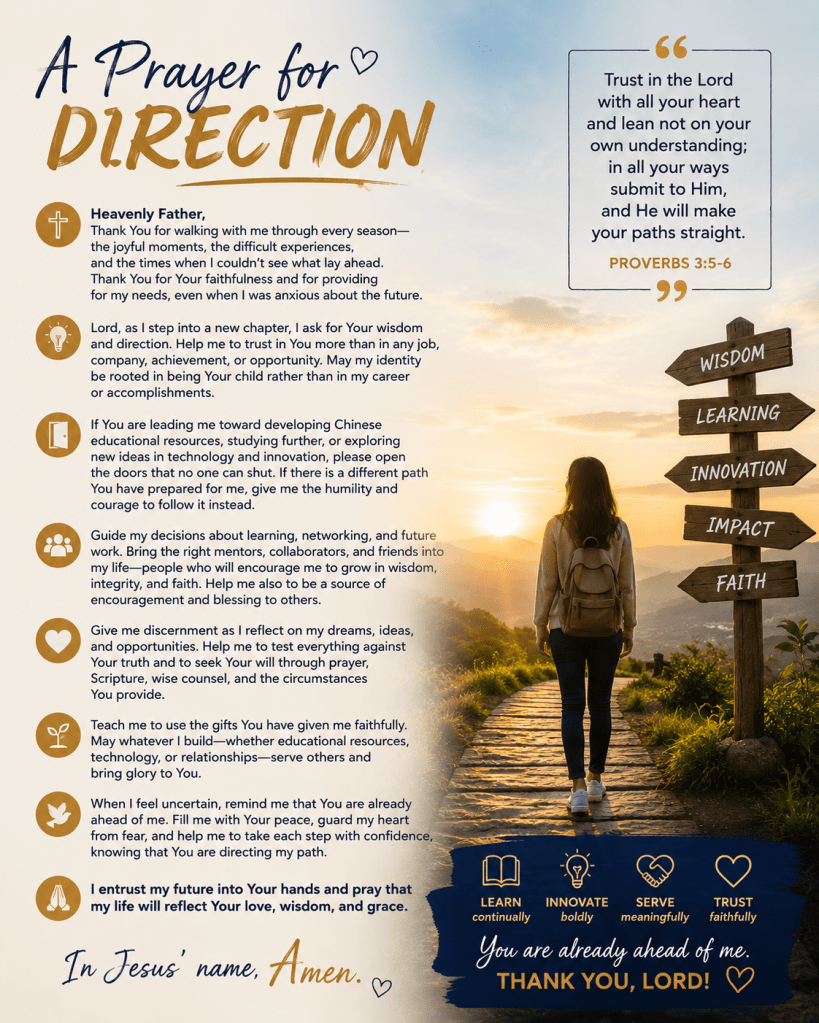
As Proverbs 3:5–6 encourages us:

“Trust in the Lord with all your heart and lean not on your own understanding; in all your ways submit to Him, and He will make your paths straight.”

Wherever God leads next—whether in ministry, technology, or opportunities I cannot yet imagine—I pray that I will faithfully carry what He has already placed in my hands and use it for His glory.

Perhaps that’s the true message of the dream: God prepares us long before He positions us. Before He opens a new door, He often reminds us of everything we already have, so we can step into the future with confidence, gratitude, and faith.

“Lord, as I begin this new season of learning, help me carry everything You have entrusted to me. Teach me what I need to learn, give me wisdom to use these new skills well, and keep me focused on the purpose You have for my life. May whatever I learn ultimately be used to serve others and glorify You.”
Faith to See: Reflections on Two Connected Dreams

Recently, I had two dreams that seemed deeply connected. Together, they reminded me of the biblical meaning of faith and the importance of spiritual vision.

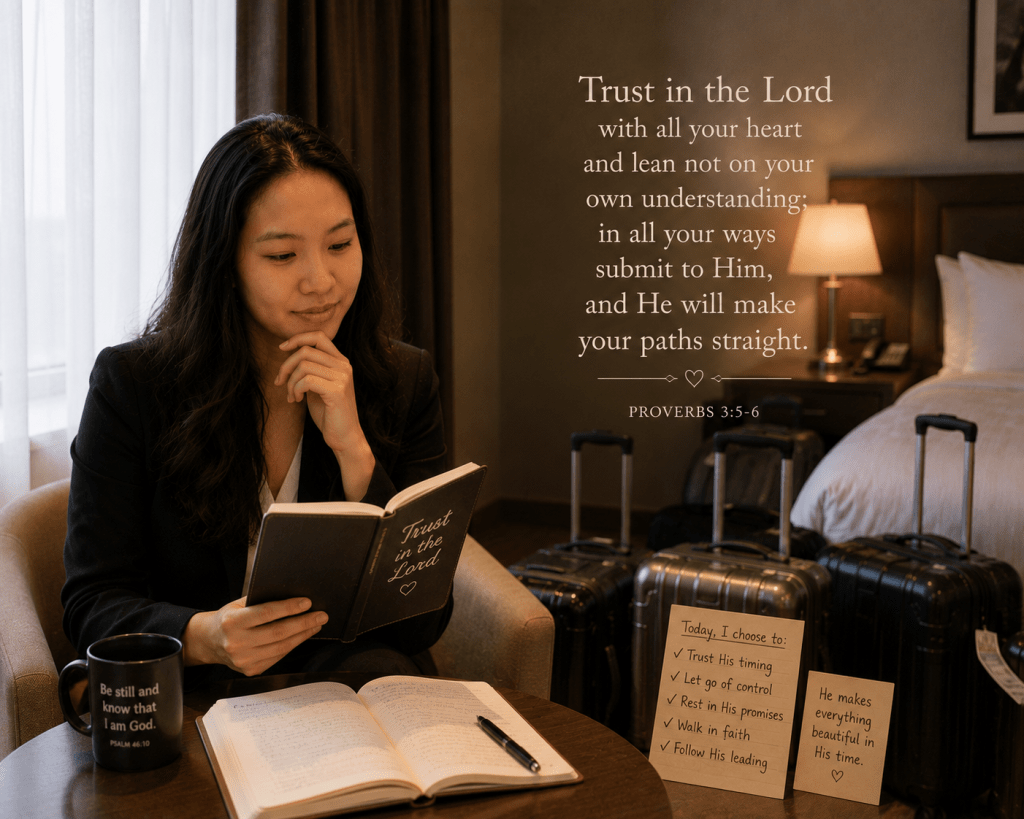
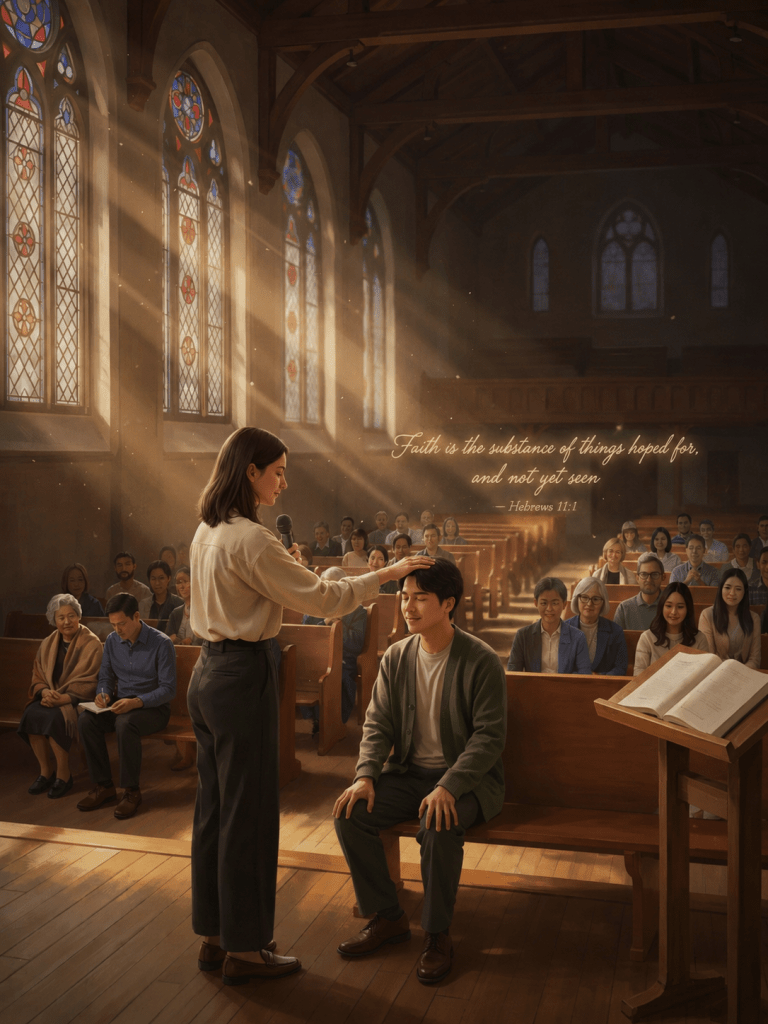
The first dream centered on faith. It prompted me to revisit the well-known definition in Hebrews 11:1:

“Now faith is the substance of things hoped for, the evidence of things not seen.” (Hebrews 11:1, NKJV)

This verse reminds us that faith is trusting God even when we cannot yet see the outcome. Faith gives us confidence in His promises before they become visible in our circumstances.

Not long afterward, I had another dream that seemed to build on that message.

In this dream, I found myself walking through a group of Chinese people who desired to have their spiritual blindness removed. As I moved among them, I gently lifted a veil from their eyes, and they were able to see. The dream wasn’t about forcing anyone to believe or changing their culture. Rather, it was a picture of people longing for greater spiritual understanding and clarity.

Throughout Scripture, the image of a veil often represents spiritual blindness or an inability to perceive God’s truth. Paul writes:

“But whenever anyone turns to the Lord, the veil is taken away.” (2 Corinthians 3:16)

As I reflected on the dream, I wasn’t left with a sense of personal achievement but with a reminder that only God opens spiritual eyes. If the dream carries a message, it is one of being available for His purposes—to pray, encourage, and point people toward Christ, trusting the Holy Spirit to bring understanding.

The Chinese setting also stood out. Rather than seeing it as a prediction, I see it as growing my heart for a particular people group and reminding me to pray that many would experience hope, truth, and the love of Christ.

When I consider both dreams together, they seem to tell one story. Faith comes first—we trust God for what we cannot yet see. Then, in His timing, He brings light where there was once darkness. Our role is simply to be faithful, to love others well, and to trust Him to remove the veil from hearts.

May we continue to walk by faith, believing that God is still opening eyes, transforming lives, and drawing people to Himself.

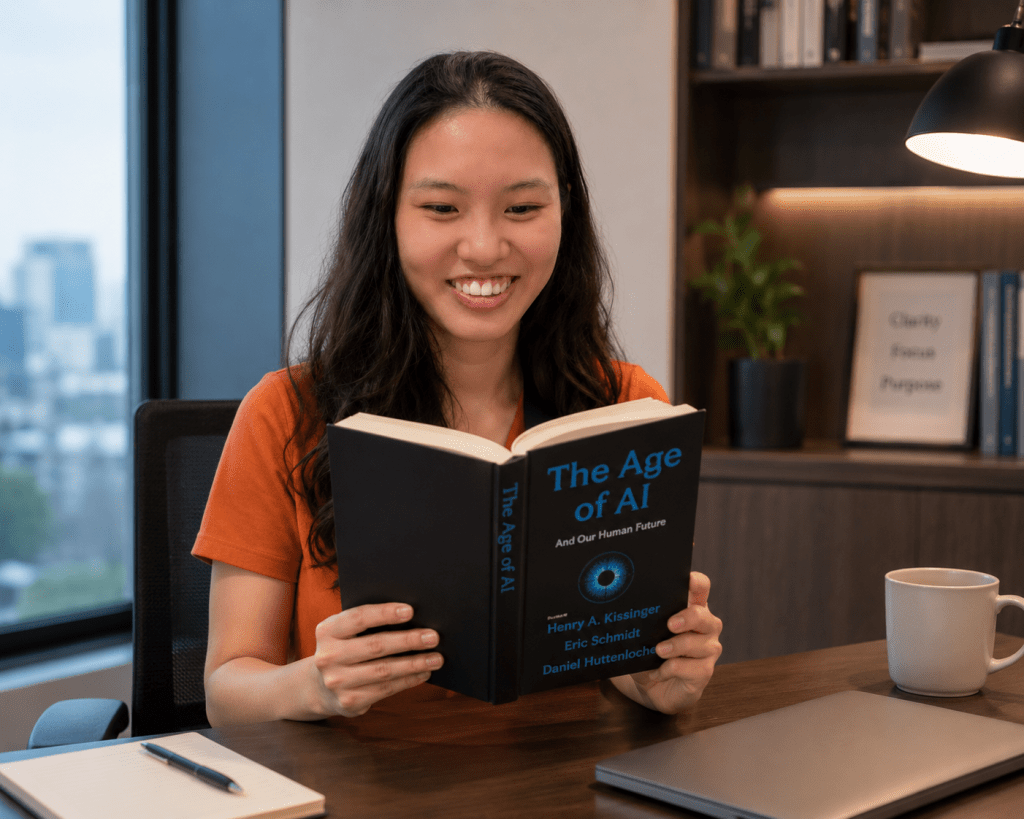
Beginning My AI Learning Journey: Reflections on Chapter 1 of The Age of AI

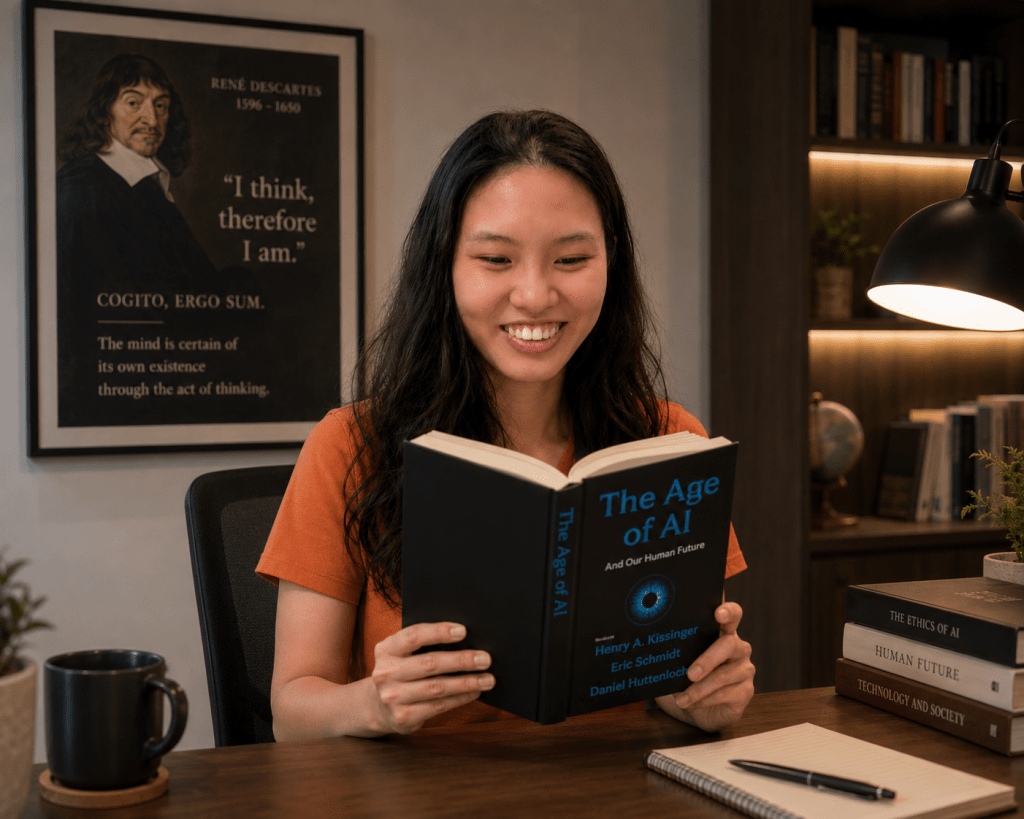
Today I began reading Chapter 1 of The Age of AI: And Our Human Future by Eric Schmidt, Daniel Huttenlocher, and Henry Kissinger.

I expected to learn about artificial intelligence. What I didn’t expect was to revisit one of the greatest philosophers in history—René Descartes.

Descartes is perhaps best known for his famous statement:

“I think, therefore I am.” (Cogito, ergo sum.)

His philosophy marked a turning point in human thought. By questioning everything that could be doubted, Descartes concluded that the one thing he could not doubt was the existence of his own thinking mind. His ability to reason became the foundation of certainty.

Reading this in the context of AI was fascinating.

For centuries, thinking has been one of the defining characteristics of being human. Yet today, we live in a world where machines can write essays, generate images, compose music, solve complex problems, and even engage in conversations that resemble human dialogue.

Naturally, this raises deeper questions.

What does it mean to “think”?

Is intelligence simply computation, or is there something uniquely human that AI cannot replicate?

If machines can reason, what distinguishes human wisdom from artificial intelligence?

These are no longer just philosophical questions. They are becoming practical questions for leaders, educators, policymakers, and anyone living in an AI-powered world.

As someone who is just beginning my AI learning journey, I appreciate that this book doesn’t start with technology alone. Instead, it begins by exploring the ideas that have shaped how humanity understands knowledge, reason, and intelligence.

It reminds me that learning about AI isn’t just about understanding algorithms. It’s also about understanding ourselves.

Perhaps that’s why philosophy still matters.

As AI continues to evolve, the question may not simply be what machines can do, but what it truly means to be human.

I’m looking forward to continuing this journey—one chapter at a time.

The Book Voucher I Almost Forgot: A Lesson in God’s Timing and Beginning My AI Journey

About a year ago, I received three $10 Kinokuniya book vouchers.

Like many gift vouchers, I told myself I would use them “one day.” But life became busy, and before I knew it, almost a year had passed. The vouchers remained tucked away in my wallet, waiting for the right opportunity.

I didn’t realize then that they were waiting for the right book.

Recently, I shared on LinkedIn that I was beginning my AI learning journey. One of my LinkedIn connections kindly asked:

“Have you read The Age of AI: And Our Human Future (2021), co-authored by Eric Schmidt, Daniel Huttenlocher and Dr. Henry Kissinger? There is a good layout of foundational ideas regarding AI and its philosophical connections!”

I replied:

“Thank you for the recommendation! I haven’t read The Age of AI: And Our Human Future yet, but it sounds like a great place to build a strong foundation, especially with its focus on both AI and its philosophical implications. I’ll add it to my reading list as I begin my AI learning journey. I appreciate you taking the time to share this recommendation!”

After our exchange, I decided to see if Kinokuniya carried the book.

A quick Google search showed that it was available at my local Kinokuniya store. Even more interesting, the listed price was around $29.

That’s when it hit me.

I had three $10 book vouchers—almost the exact amount I needed.

For nearly a year, those vouchers had been sitting unused. Now they had a purpose.

Instead of ordering the book online, I felt prompted to visit the bookstore myself. There was something refreshing about walking through the aisles, searching the shelves, and taking my time.

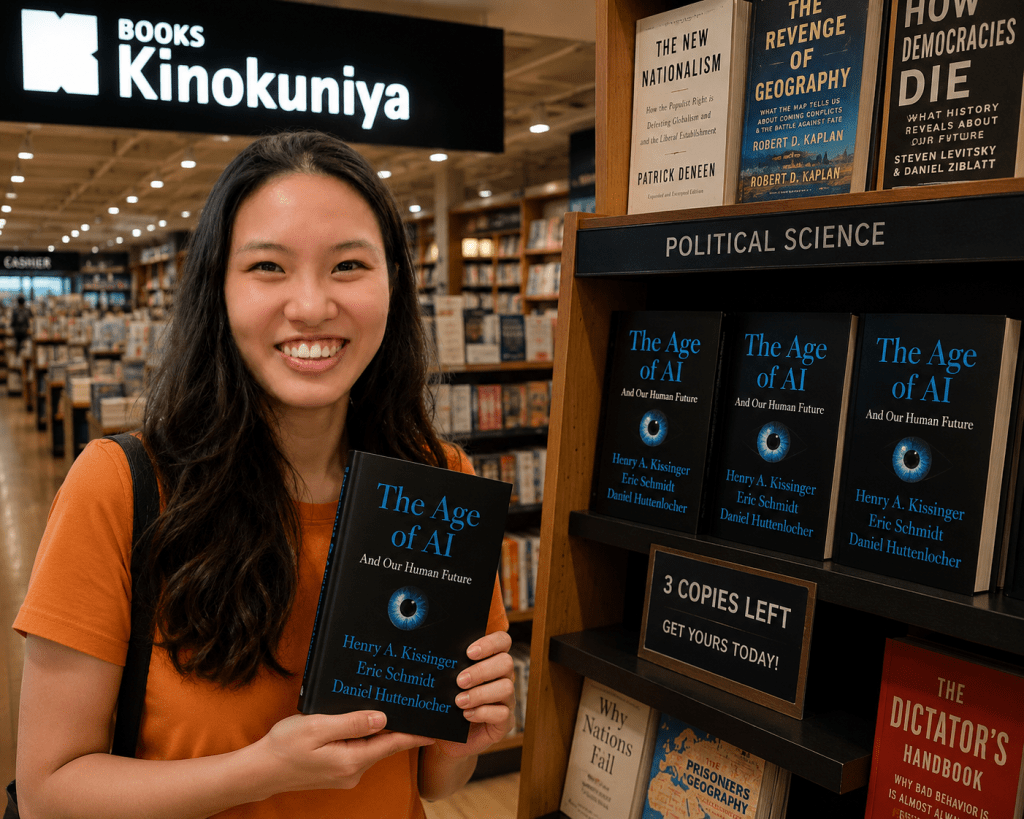
When I finally found the book, I noticed there were only three copies left.

Some people might call it coincidence, and that’s perfectly reasonable. But as someone who tries to live by faith, I’ve learned to appreciate these quiet moments. Not because they prove anything extraordinary, but because they remind me that God often works through ordinary circumstances.

A forgotten set of book vouchers.

A thoughtful recommendation from someone in my LinkedIn network.

A Google search that showed the book cost almost exactly what my vouchers covered.

A trip to the bookstore instead of clicking “Buy Now.”

Three copies remaining on the shelf.

None of these events, by themselves, are remarkable. Together, however, they reminded me of something I’ve experienced many times: God often guides us one step at a time.

Proverbs 16:9 says:

“In their hearts humans plan their course, but the Lord establishes their steps.”

Looking back, I can see how each small step naturally led to the next.

This experience also reminded me why I value communities like LinkedIn. Beyond professional networking, it is a place where people freely share knowledge, encourage curiosity, and sometimes influence someone else’s journey without even realizing it.

As I begin reading The Age of AI: And Our Human Future, I’m looking forward not only to understanding the technology but also to wrestling with the questions it raises.

How do we remain wise in an age of intelligent machines?

How do we steward technology responsibly?

How do we preserve the qualities that make us uniquely human?

Perhaps those are the questions that matter most.

Looking back, I don’t think the story is really about a book or even three forgotten vouchers.

It’s about being reminded that God often uses ordinary moments to nudge us toward new seasons of growth. Sometimes He uses a conversation. Sometimes a recommendation. Sometimes something as simple as a book voucher that’s been waiting in your wallet all along.

And sometimes, all that’s required is the willingness to take the next step.

As AI Becomes Routine, the Demand for the Humanities Grows

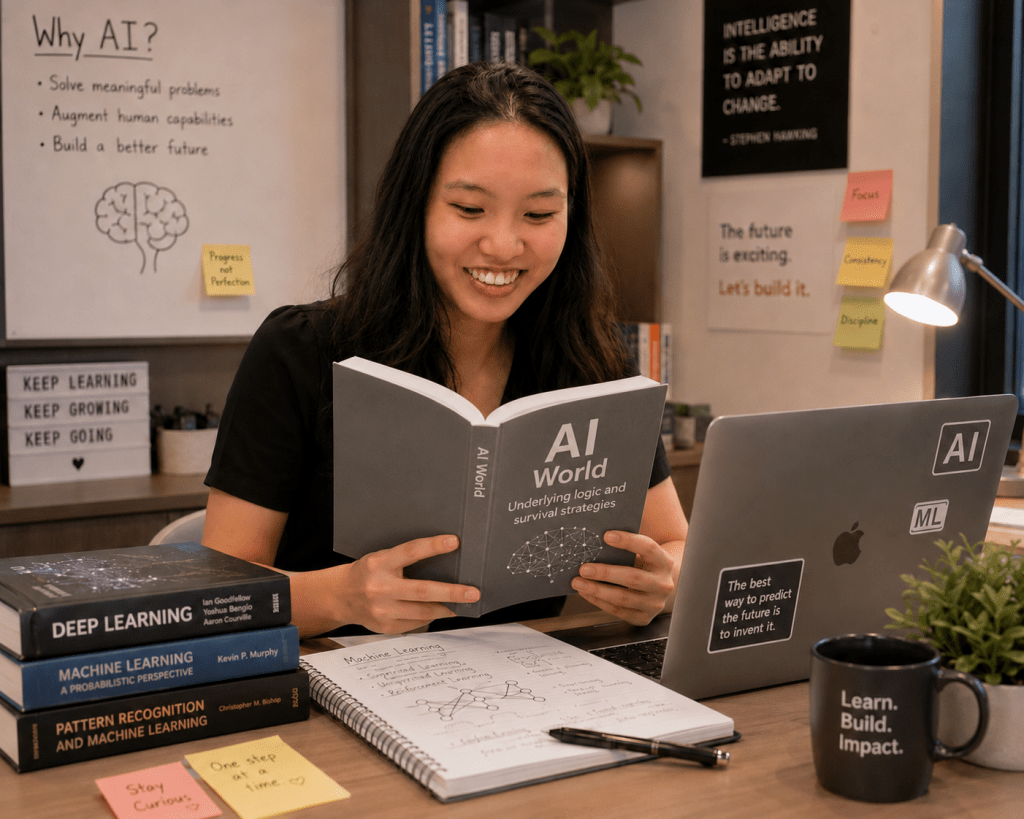
One idea from AI World: Underlying Logic and Survival Strategies by Sega Cheng has stayed with me long after I put the book down:

As AI becomes routine, the demand for the humanities grows.

At first glance, it sounds paradoxical.

We’re surrounded by headlines urging us to learn AI, master prompt engineering, or become proficient in the latest tools. The prevailing narrative suggests that technical expertise alone will define success in the future.

But what if the opposite is also true?

The Commoditization of Technical Tasks

Artificial intelligence is rapidly becoming part of everyday work. It can draft emails, summarize reports, write code, analyze data, translate languages, and generate creative content in seconds.

As these capabilities become more accessible, technical tasks that once required specialized knowledge are increasingly becoming commodities. AI doesn’t eliminate the need for expertise, but it changes where human value lies.

The question shifts from “Can you produce?” to “Can you decide what should be produced?”

That distinction is significant.

Why the Humanities Matter More Than Ever

The humanities—history, philosophy, literature, psychology, ethics, and the arts—teach us to think beyond facts and algorithms.

They help us:

  • Ask thoughtful questions instead of accepting easy answers.
  • Understand different perspectives and cultures.
  • Navigate ethical dilemmas.
  • Communicate with empathy and clarity.
  • Interpret context and ambiguity.
  • Exercise judgment when there is no obvious solution.

These are not simply “soft skills.” They are enduring human capabilities that become increasingly valuable as AI handles more routine cognitive work.

AI Can Generate Answers, But Humans Define Meaning

AI is remarkably good at recognizing patterns and generating responses based on data.

What it cannot truly do is understand human purpose in the way people do.

When leaders decide how AI should be used, they face questions that cannot be answered by algorithms alone:

  • Should this decision be automated?
  • Is it fair?
  • Who benefits?
  • Who could be harmed?
  • What values should guide us?

These are questions rooted in ethics, philosophy, and human experience.

The Future Belongs to Hybrid Thinkers

I don’t believe the future belongs exclusively to technologists or humanities graduates.

It belongs to people who can bridge both worlds.

People who understand technology while appreciating human behavior.

People who can analyze data without losing sight of empathy.

People who combine logic with wisdom.

Technical skills help us build intelligent systems. The humanities help us build systems worth trusting.

A Personal Reflection

Reading this idea challenged one of my own assumptions.

Like many people, I initially thought succeeding in the AI era meant constantly learning new tools. While that remains important, I’ve come to realize that my greatest investment may not be another software certification or programming language.

It may be spending more time reading history to understand societal change.

Studying philosophy to sharpen ethical reasoning.

Exploring psychology to better understand people.

Reading literature to develop empathy.

These disciplines cultivate habits of thinking that AI can support but not replace.

Final Thoughts

As AI becomes an everyday utility—much like electricity or the internet—its novelty will fade. What will continue to differentiate individuals and organizations is not merely access to AI, but the wisdom to use it well.

Perhaps the most valuable skill in the age of artificial intelligence is not becoming more like a machine.

It is becoming more deeply human.

Technology will continue to evolve. The qualities that define humanity—curiosity, compassion, judgment, creativity, and ethical responsibility—will remain timeless.

In the end, AI may change how we work, but the humanities remind us why we work and who we serve.

The Greatest Danger Is Not Failure—It’s Success Without God

When we think about the greatest dangers in life, we often think of failure. We fear losing our jobs, missing opportunities, making mistakes, or falling behind. We pray for doors to open, for our efforts to bear fruit, and for God to bless the work of our hands.

But what if the greater danger isn’t failure at all?

What if the greater danger is success without God?

Success is not inherently wrong. In fact, Scripture reminds us that every good gift comes from God. He delights in blessing His people, equipping them with gifts, and opening doors that align with His purposes. Education, careers, businesses, ministries, and achievements can all be expressions of His grace.

The danger begins when success quietly changes where our trust rests.

It rarely happens overnight. There is usually no dramatic moment when we decide we no longer need God. Instead, dependence slowly gives way to self-reliance.

We begin to think:

“I’ve worked hard for this.”

“My qualifications got me here.”

“My experience will carry me through.”

“My network, my savings, my position—they’re enough.”

Without realizing it, our confidence shifts from God to ourselves.

This is why the warning in the Old Testament remains so relevant today. After entering the Promised Land, the people of Israel were cautioned not to forget God once they enjoyed prosperity. The temptation wasn’t only idolatry in the obvious sense—it was believing that their own strength and wisdom had secured their success.

That temptation still exists today.

In a culture that celebrates independence, productivity, and personal achievement, humility can easily become an afterthought. We measure ourselves by promotions, salaries, degrees, titles, followers, and accomplishments. These things are not evil in themselves, but they make poor foundations for our identity because they can disappear as quickly as they came.

The question is not whether we will succeed.

The deeper question is: Who will receive the glory when success comes?

Will our achievements lead us to greater gratitude or greater pride?

Will success make us more dependent on God or less?

True humility is not pretending we have no gifts or abilities. It is recognizing that every opportunity, every talent, every relationship, and every accomplishment ultimately comes from God. We are stewards, not owners. We cultivate what He has entrusted to us, but we never outgrow our need for Him.

Ironically, failure often drives us to prayer, while success can quietly draw us away from it. When life becomes comfortable, it is easy to replace daily dependence with self-sufficiency. We may still attend church, read Scripture, or pray, but our hearts can slowly begin trusting in our own strength more than God’s provision.

Jesus reminds His followers, “Apart from me you can do nothing.” Those words are just as true in seasons of promotion as they are in seasons of hardship. Our need for Him does not diminish when our circumstances improve.

Perhaps one of the healthiest prayers we can offer is this:

“Lord, if You bless me with success, don’t let success steal my heart. Keep me humble. Keep me grateful. Keep me dependent on You.”

The greatest achievement is not building a successful career, accumulating wealth, or earning recognition. It is walking faithfully with God through every season of life.

May our success never become the reason we forget the One who made it possible. Instead, may every blessing deepen our gratitude, strengthen our humility, and remind us that our greatest security is found not in what we have accomplished, but in the God who remains faithful through every success and every setback.

Photo by Jessica Lewis ud83eudd8b thepaintedsquare on Pexels.com

Not Ready Yet, But God Is Preparing Me

“He who began a good work in you will carry it on to completion until the day of Christ Jesus.” — Philippians 1:6

One Monday morning, I had a dream that stayed with me long after I woke.

In the dream, I knew I was meant to begin ministry, but I kept thinking, “I’m not ready.” Surprisingly, there was no pressure or disappointment.

Instead, Dr. Philip Lyn, the speaker from a recent church camp, simply waited for me with patience and calmness.

Then the scene changed, and my course trainer was also waiting for me to begin.

Neither of them rushed me.

Neither questioned whether I would be ready.

They simply waited.

Later that afternoon, I received the course materials from the school. It felt like a gentle reminder that preparation often comes one step at a time.

Reflecting on the dream, I realised how often we confuse being in preparation with being unqualified.

Throughout the Bible, God prepared people long before He entrusted them with greater responsibility. Moses, David, the disciples, and Paul all experienced seasons of learning before stepping fully into their calling.

Perhaps God isn’t asking me to have everything figured out today.

Perhaps He is simply asking me to remain teachable.

The dream reminded me that God is never anxious about His timing. While I may feel unready, He is patiently shaping my character, deepening my faith, and providing what I need for the next step.

I don’t have to rush the process.

I simply need to trust the One who is preparing me.

Sometimes God’s waiting is not a delay—it is His classroom. And when the time is right, He will faithfully lead us into what He has been preparing us for all along.

A Prayer for a New Season

Heavenly Father,

Thank You for bringing me through every season of my life. Thank You for Your faithfulness, even when the path ahead has been uncertain.

As I begin this new chapter, help me to walk closely with You. Give me wisdom to recognize the opportunities You place before me and the courage to let go of what You are asking me to leave behind.

If this season is one of learning, prepare my mind to grow. If it is one of waiting, teach me patience. If it is one of serving, give me a humble heart. Above all, help me to seek You before I seek success.

Bless my studies in artificial intelligence and every opportunity to develop the gifts You have entrusted to me. May the knowledge I gain be used with integrity, compassion, and wisdom to benefit others.

Thank You for the friendships You have placed in my life. Help me to invest in relationships that encourage me to grow in faith, joy, and love. Teach me to rest well, laugh often, and remember that my worth is found in You, not in my achievements.

As I enter my forties, may this decade be marked by deeper faith, greater wisdom, meaningful work, loving friendships, and a life that reflects Your grace.

Lead me one step at a time. Even when I cannot see the whole journey, remind me that You are already there.

In Jesus’ name,

Amen.

When the Good Shepherd Sends Directions: A Dream About Finding the Way

“My sheep listen to my voice; I know them, and they follow me.” — John 10:27

There are seasons in life when we know where we’ve been, but we don’t yet know where we’re going.

I’ve been in one of those seasons. A season of waiting. A season of praying.

A season of asking God, “What are my next steps in ministry?”

One Saturday morning, I woke from a dream that has stayed with me ever since.

A Sheep in an Unfamiliar World

In the dream, I wasn’t standing on a stage. I wasn’t leading a discussion. I wasn’t speaking to a crowd.

I was simply…a sheep.

Not in a peaceful countryside, but in a futuristic world filled with towering buildings, advanced technology, and unfamiliar surroundings.

Everything looked impressive. Everything looked new. But I didn’t know where I belonged.

I wasn’t frightened. I was simply trying to find the place where I was meant to be.

Then something unexpected happened.

The Shepherd reached out to me.

Not by calling across a hillside. Not with a staff. Not even face to face.

Instead, a message appeared on a high-tech smartwatch, giving me the location of where I needed to go.

When I woke up, I couldn’t stop thinking about it.

The Shepherd Knows Where We Are

The image of a lost sheep immediately reminded me of Jesus’ words:

“I am the good shepherd. The good shepherd lays down his life for the sheep.” (John 10:11)

One detail stood out as I reflected on the dream.

The sheep wasn’t finding the Shepherd.

The Shepherd was already communicating with the sheep.

That changed everything.

Sometimes I assume that finding God’s will depends entirely on my ability to search hard enough, pray long enough, or make the perfect decision.

But perhaps the greater truth is this: The Shepherd already knows where I am.

He isn’t surprised by my uncertainty.

He isn’t frustrated by my questions.

He is already reaching toward me.

A Smartwatch in a Spiritual Journey

At first, the smartwatch seemed like an odd detail.

Why would such an ancient biblical picture include modern technology?

Then I realised something.

A smartwatch doesn’t carry us to our destination.

It simply provides guidance.

One notification at a time.

One instruction at a time.

One reminder at a time.

Isn’t that often how God leads us?

We want a complete roadmap.

God frequently gives us the next faithful step.

Psalm 119:105 says,

“Your word is a lamp to my feet and a light to my path.”

Notice that the lamp illuminates the next few steps—not the entire journey.

Faith isn’t walking because we see everything.

Faith is walking because we trust the One giving directions.

Following in a Changing World

The futuristic setting also stayed with me.

Everything looked unfamiliar.

Beautiful.

Advanced.

Different.

Perhaps that’s what the future often feels like.

Whether we’re changing careers, beginning a new ministry, stepping into unfamiliar opportunities, or simply entering a new season of life, we often feel like sheep navigating terrain we’ve never walked before.

The world changes.

Technology changes.

Culture changes.

But one thing does not.

The Good Shepherd still leads His sheep.

His methods may surprise us.

His timing may stretch us.

But His character never changes.

Lost Doesn’t Mean Abandoned

One of the greatest encouragements from this dream was this simple truth:

Being lost is not the same as being abandoned. The sheep in my dream didn’t have all the answers.

Neither do I. But the Shepherd was still communicating. Perhaps someone reading this feels exactly the same.

You are searching for direction. Wondering which opportunity to pursue.

Praying about ministry. Waiting for work. Considering a major life decision.

You may feel uncertain. But uncertainty is not evidence that God has stopped leading.

Sometimes the silence is not His absence. Sometimes it is the space in which we learn to recognise His voice more clearly.

The Journey Is Still About Trust

As I reflected on this dream, I realised it connects with several other lessons God has been impressing upon my heart.

Faith before sight. Hope before fulfilment.

Standing on God’s promises before seeing the destination.

Looking toward God’s Kingdom even while walking through today’s uncertainties.

Now this dream adds another reminder:

The journey has never depended on my ability to find the Shepherd. It depends on my willingness to follow Him.

Jesus doesn’t ask His sheep to know every twist and turn of the path.

He simply says, “My sheep hear my voice…and they follow me.”

A Prayer for Every Wanderer

Lord Jesus,

Thank You for being the Good Shepherd who knows every sheep by name.

When life feels unfamiliar and I cannot see the way ahead, remind me that You already know the path.

Help me to recognise Your voice above every competing distraction.

Teach me to trust Your guidance, even when it comes one step at a time.

When I feel lost, remind me that I am never beyond Your care.

And wherever You lead—whether into ministry, service, waiting, or something I cannot yet imagine—give me the courage to follow.

Because my confidence is not in my ability to navigate the future.

My confidence is in the Shepherd who walks before me.

Amen.

Final Reflection

Perhaps the most beautiful part of the dream wasn’t the futuristic world or the remarkable technology.

It was the quiet assurance that the Shepherd had not forgotten His sheep.

In a world that changes faster than ever, we often search for certainty.

But Jesus offers something even better.

His presence. His guidance. His voice.

The future may be unfamiliar. The path may still be unfolding.

But the Shepherd already knows the way home.

Design a site like this with WordPress.com
Get started