On August 14, I went back to my alma mater.
I didn’t expect the visit to affect me as much as it did.
Walking through the campus again, I recognized places I hadn’t thought about in years. The buildings were familiar. The paths were familiar. But I wasn’t the same person walking through them.
For a moment, I found myself thinking about who I was when I was there.
Especially in my early 20s.
I remember that period as a strange mixture of excitement and uncertainty. There was so much I wanted to understand, but I didn’t always know how to begin.
I was learning constantly.
Reading. Studying. Listening to people. Absorbing ideas. Trying to figure out what kind of person I wanted to become.
But when I look back now, I realize something.
A lot of my cognitive growth happened by accident.
I encountered ideas because a professor happened to mention them. I changed my mind because I happened to meet someone who challenged me. I discovered new perspectives because of a book, a conversation, or a random late-night thought.
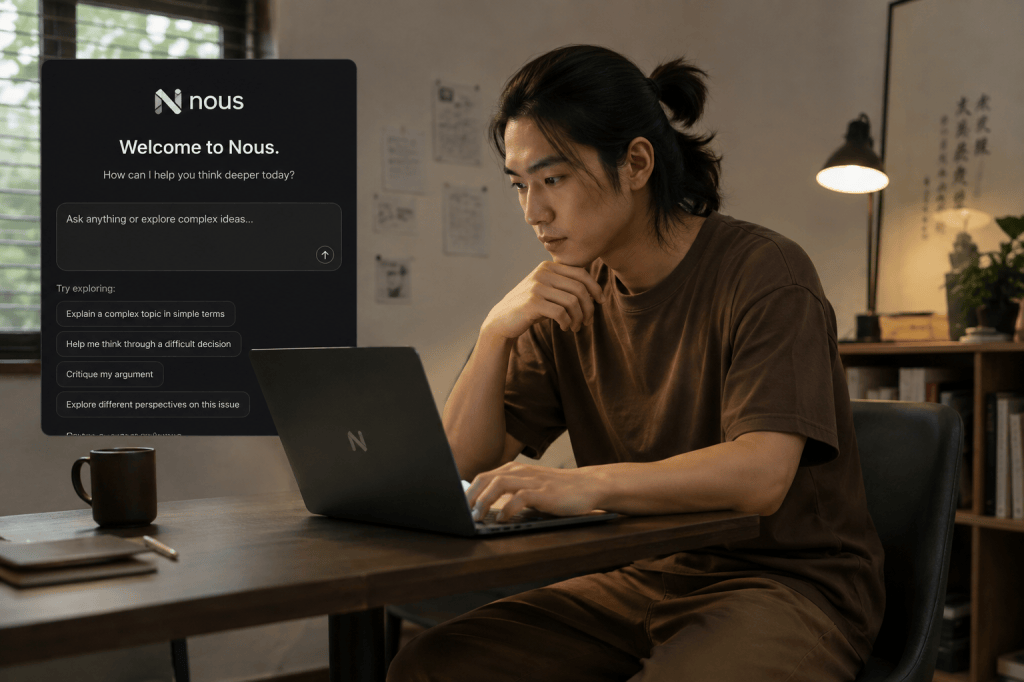
We learn so much, but rarely learn how to think
Education gives us an enormous amount of knowledge.
We learn theories, frameworks, formulas, historical events, technical skills and professional knowledge.
But some of the hardest questions we face have no textbook answer.
What do I actually want? Why do I believe what I believe?
Am I pursuing something because I care about it—or because I want other people to think I’m successful?
Why does this decision make me anxious?
What am I assuming without realizing it?
What would I believe if I weren’t afraid of being wrong?
Those questions followed me through my early 20s.
And sometimes, I didn’t even know how to formulate them.
That’s the part I remember most. Not necessarily having the wrong answers.
Not knowing what questions I should have been asking.
Looking back at my younger self
Standing on campus again on August 14, I couldn’t help thinking about my younger self.
I wish I could sit beside her for an afternoon. Not to tell her what career to choose.
Not to tell her which decisions would work out. I’d probably just ask her questions.
“Why do you want this?”
“Where did that belief come from?”
“Are you sure that’s actually what you think?”
“What if you’re wrong?”
And then I’d listen.
Because maybe that’s what I needed most at that age.
Not someone to tell me what to think.
Someone who could help me think.
And then I started thinking about AI
That realization made me think differently about what AI could become.
We already have AI that can answer questions incredibly well.
You can ask it to explain a difficult concept, summarize a book, brainstorm an idea, compare two options, or write an argument.
And that’s incredibly useful.
But I wonder whether we’re focusing too much on the answer.
Because there’s a strange possibility emerging.
AI can now give us answers that sound smarter than we are.
And if we’re not careful, we might start confusing the quality of an explanation with the depth of our own understanding.
We can become confident in an idea simply because an AI explained it beautifully.
We can borrow its certainty. I call this borrowed certainty.
And I think it’s one of the more interesting problems AI creates.
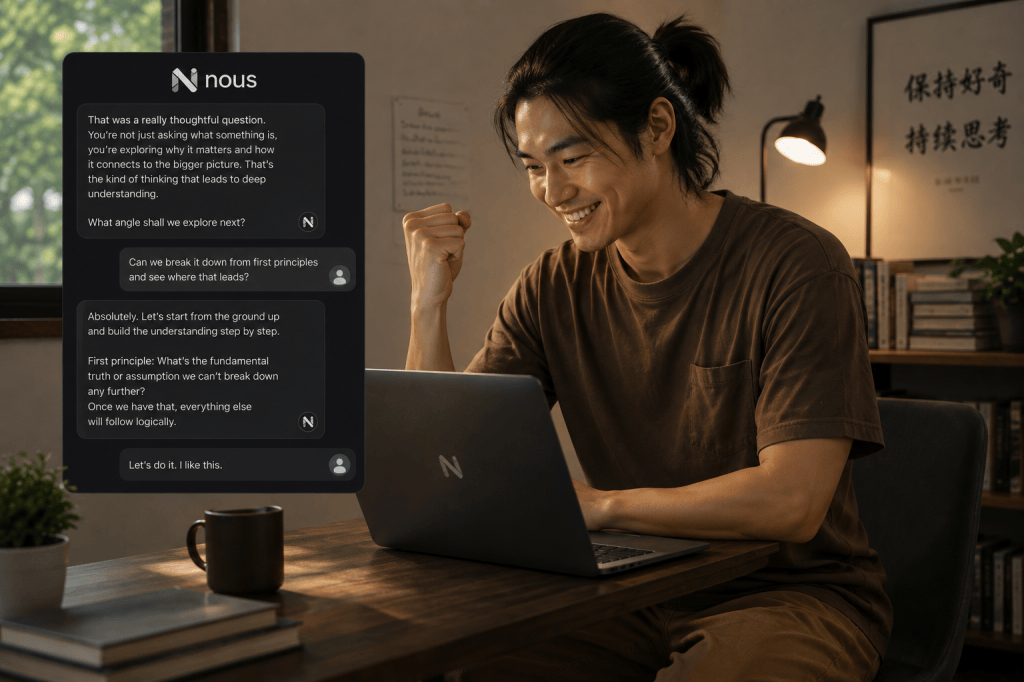
What if AI helped us think instead?
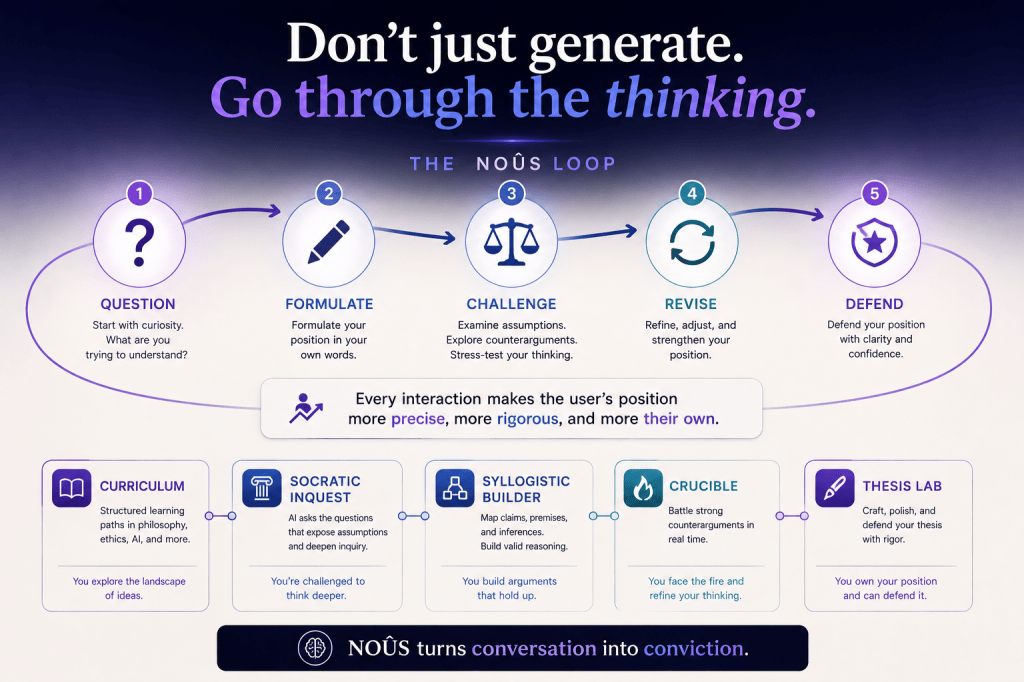
This is where my vision for Nous began to take shape.
I don’t imagine Nous as another chatbot that simply waits for a question and returns an answer.
I imagine something more personal. A place where you can bring an unfinished thought.
A difficult decision. A strange idea. A disagreement.
Or simply something you’ve been thinking about at 2 a.m. that you don’t know how to explain to anyone else.
And instead of immediately giving you an answer, Nous might ask:
“Why do you think that?”
“What assumption is underneath that belief?”
“What would change your mind?”
“Have you considered the opposite?”
“What are you actually trying to solve?”
Sometimes it might give you information.
Sometimes it might challenge you.
Sometimes it might disagree with you.
And sometimes, perhaps most importantly, it might simply stay with the question.
Because not every question needs to be answered immediately.
Some questions need to be thought through.
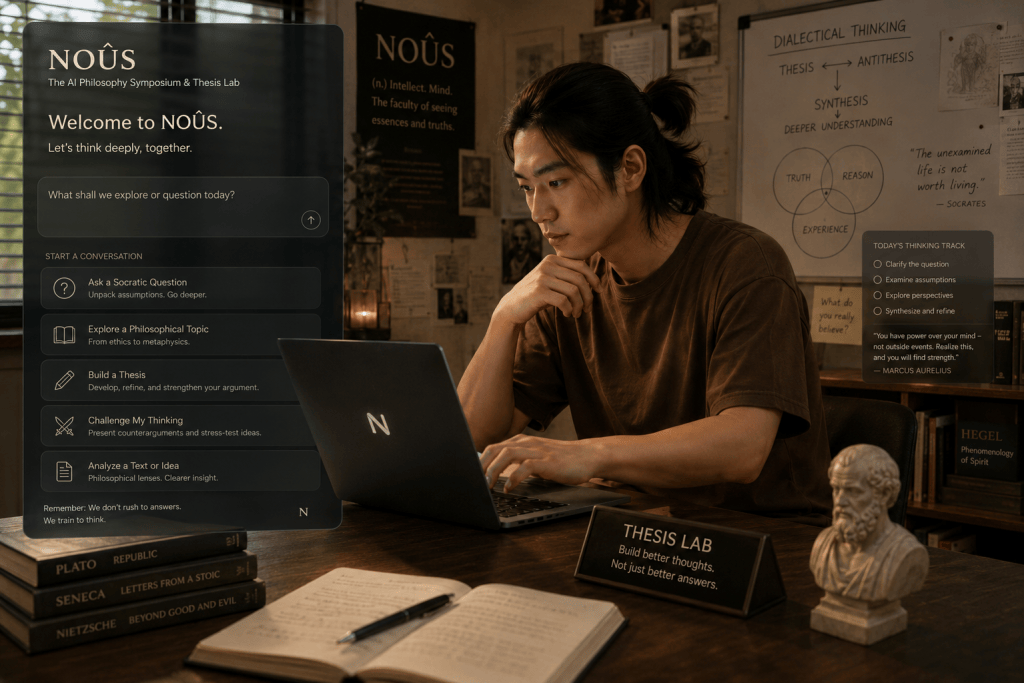
The kind of companion I wish I had
When I think about Nous now, I don’t picture a futuristic AI assistant.
I picture that younger version of myself.
Sitting somewhere on campus. Overthinking a decision.
Wondering whether she was doing enough.
Trying to understand what she actually wanted.
Feeling like everyone else somehow had things figured out.
I wish she had somewhere she could go and say:
“I don’t know what I’m doing.”
And receive something more useful than an answer.
Something like:” That’s okay. Let’s figure out what you don’t know yet.”
That, to me, is what a thinking partner should feel like.
Not an authority. Not a teacher standing above you.
Not a machine that makes decisions for you.
But something beside you. Helping you slow down.
Helping you question yourself. Helping you see another angle.
Helping you turn vague thoughts into clear ones.
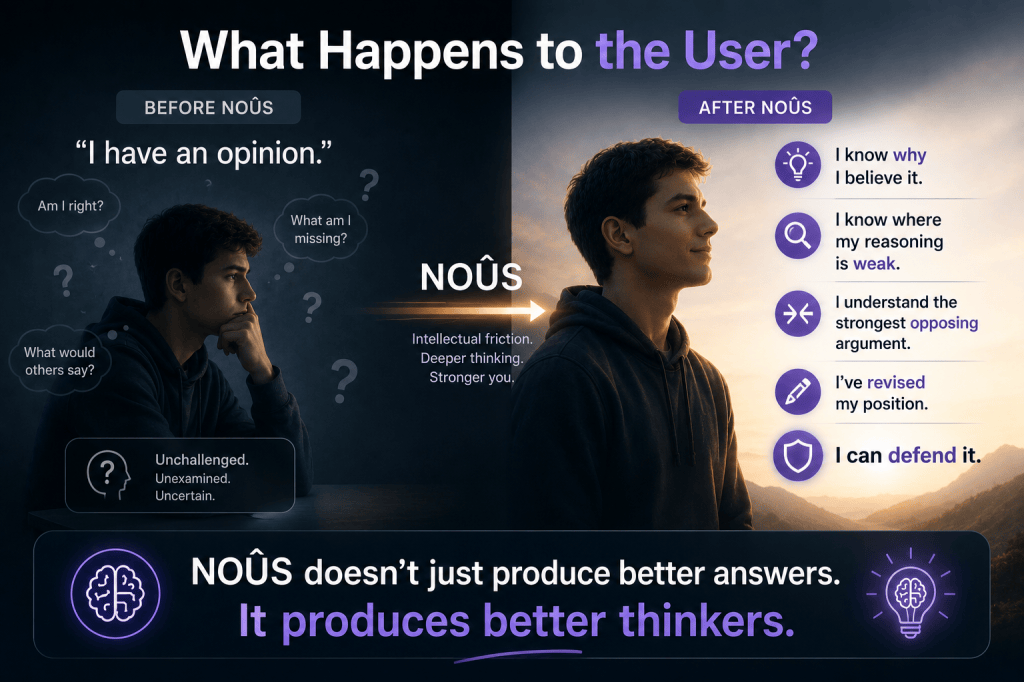
Maybe that’s what I want Nous to be
Going back to my alma mater reminded me that our early 20s aren’t just about acquiring knowledge.
They’re about becoming a person who can reason, question, reflect, decide, and change their mind.
And those abilities don’t automatically appear just because we went to university.
They have to be developed. Maybe AI can help with that.
Maybe the next generation of AI shouldn’t only make us faster at finding answers.
Maybe it can help us become better at thinking.
That’s the idea behind Nous.
Not: “Here is the answer.”
But: “Let’s think about this together.”
I don’t know exactly what Nous will become yet.
But after walking around my old campus on August 14, I know why I want to build it.
Because there is a version of me from my early 20s who could have really used it.
And perhaps there are millions of other people who are standing in that same uncertain place today.
Still learning. Still questioning. Still trying to figure themselves out.
I can’t go back and give my younger self Nous.
But maybe I can build it for someone else. And maybe that’s enough.