Finding the right job can feel a bit like trying to find the right pair of green slippers.
At first, you think you’re looking for something impressive — the right title, the right company, the right path. But over time, it becomes less about how it looks and more about how it feels. You try things on, you walk around in them, and some of them just don’t sit right. Too tight. Too noisy. Too much pressure in places you can’t quite explain.
And then there are the rare ones — not flashy, not perfect, but strangely natural. You stop thinking about them after a while because they don’t demand attention. They just fit. You reach for them without hesitation. They match your pace, your energy, the way your mind moves through the day.
Maybe that’s what the right job really is. Not the most impressive pair on the shelf, but the one that quietly feels like it was made for you.
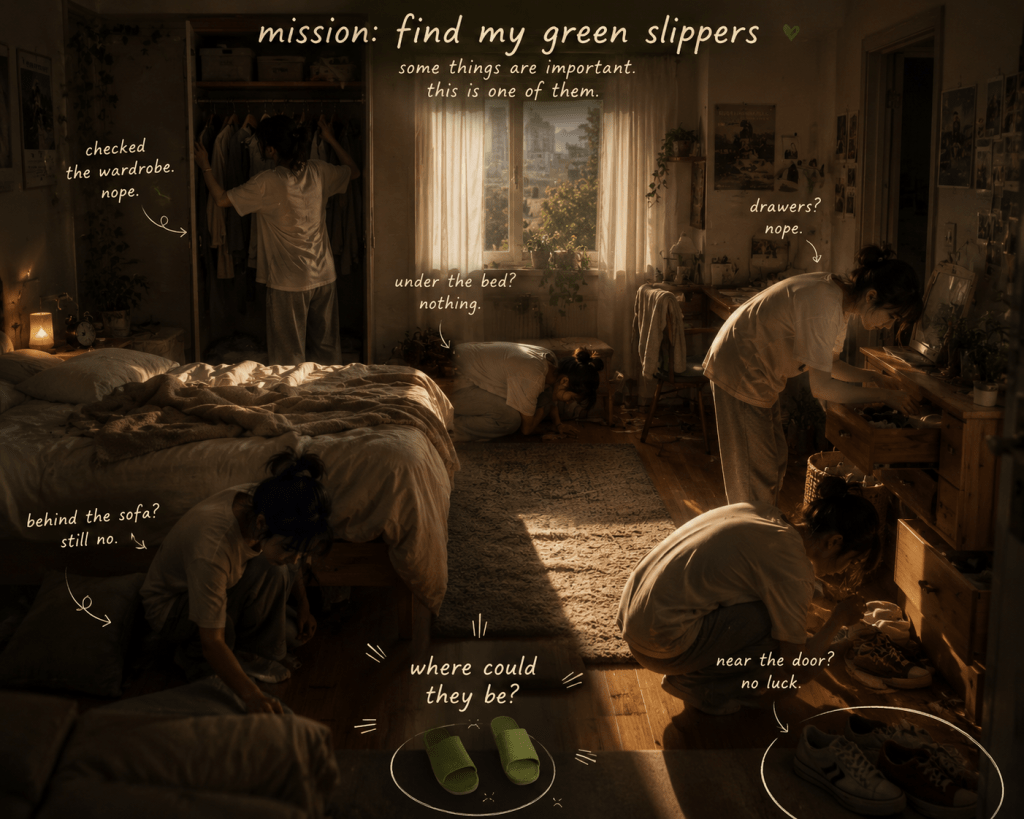
In the dream, it starts simple: I’m at home, or what feels like home, though the walls keep quietly rearranging themselves whenever I look away. There’s that familiar Sunday light—the kind that doesn’t quite commit to being morning or afternoon. It just… lingers.
I realize I’m barefoot.
Which is fine at first. Until I remember my green slippers.
Not just any slippers. The green ones. Slightly faded at the toes, shaped perfectly to my feet like they’ve memorized my existence. I decide I need them—now. Something about the day feels incomplete without them, like a sentence missing its final word.
That’s when the floor shifts.
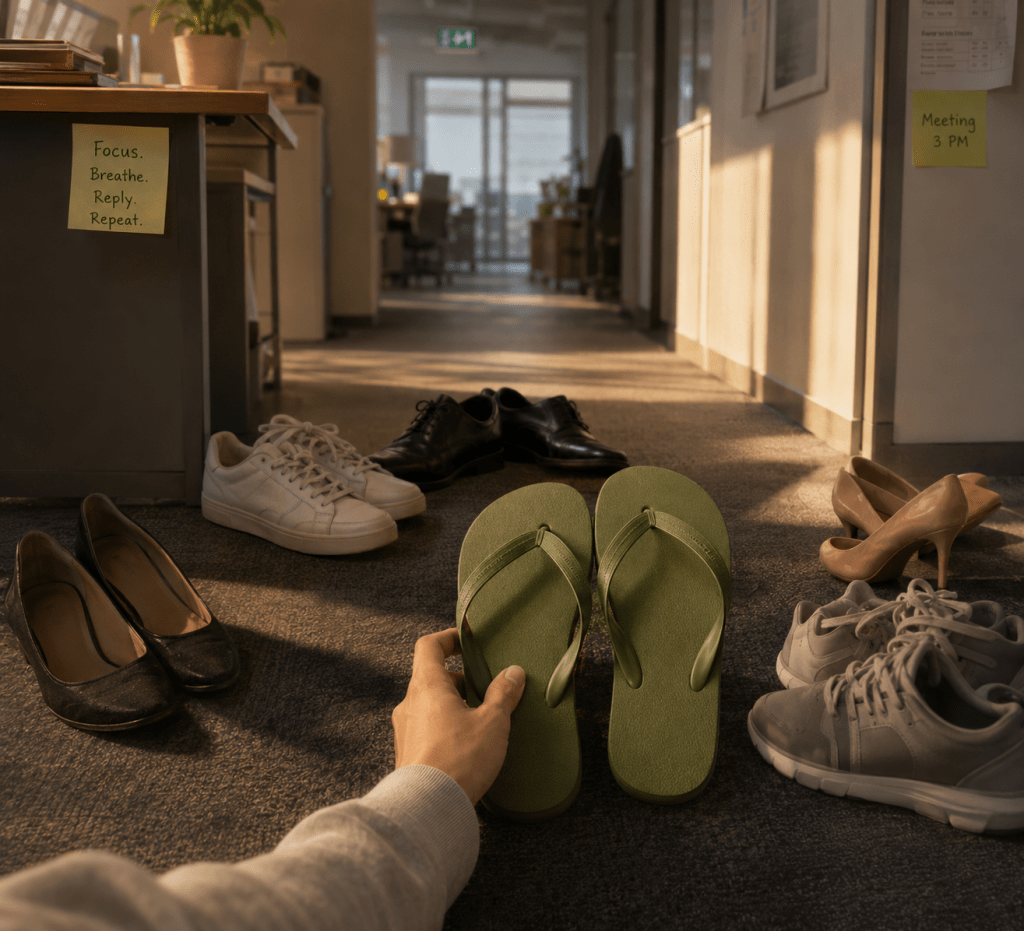
I’m suddenly standing in my current workplace, except it isn’t quite accurate. The corridors stretch a bit too long, the lighting hums a bit too loud, and the air smells faintly like paper, coffee, and “you should probably answer that email.”
And there it is: a massive pile of shoes.
Not just shoes—every shoe from the workplace. Office shoes, sneakers people swear are “just for commuting,” mysterious heels that look like they’ve survived several deadlines, and pairs that clearly belong to someone who leaves exactly at 7:01 p.m. sharp.
Somewhere in that chaotic mountain is my green slippers.
I start digging.
At first it feels logical. I pick up a black loafer. Not it. A pair of trainers with a scuffed left toe. Not it. Someone’s very serious-looking formal shoe that feels like it has never once made a mistake in its life. Definitely not it.
The pile keeps changing as I search. Every time I think I’ve made progress, it grows again—like the workplace itself is quietly producing more footwear just to see if I’m paying attention.
Somewhere in the middle of it all, I pause. My hands are covered in dust and fabric memories, and I wonder briefly why I even need the green slippers so urgently. The dream doesn’t answer. It just keeps shifting shoes around like a restless tide.
Then I see them.
Not neatly placed. Not glowing or highlighted or conveniently waiting. Just there—half-buried under a pair of shoes that look like they’ve been in three different departments and two restructures.
My green slippers.
I pull them free, and for a second, everything settles. The office fades a little at the edges. The pile stops growing. Even the lighting softens, like the dream is satisfied I’ve completed the task.
I put them on.
They fit perfectly, as always.
And just as I take a step forward—ready to leave the endless shoe pile behind—the workplace quietly turns into my bedroom again.
Sunday light returns.
Barefoot or not, I already know I won’t lose them again.
There’s a particular kind of dream that doesn’t feel random.
Not the chaotic kind where you suddenly forget your pants during an exam while being chased by a giant hamster. These dreams feel curated. Lit carefully. Emotionally coherent. Like your subconscious rented out an abandoned cinema and started screening films made entirely out of atmosphere.
That’s what happened during my three days of medical leave.
Every morning, I woke up carrying fragments of entire worlds.
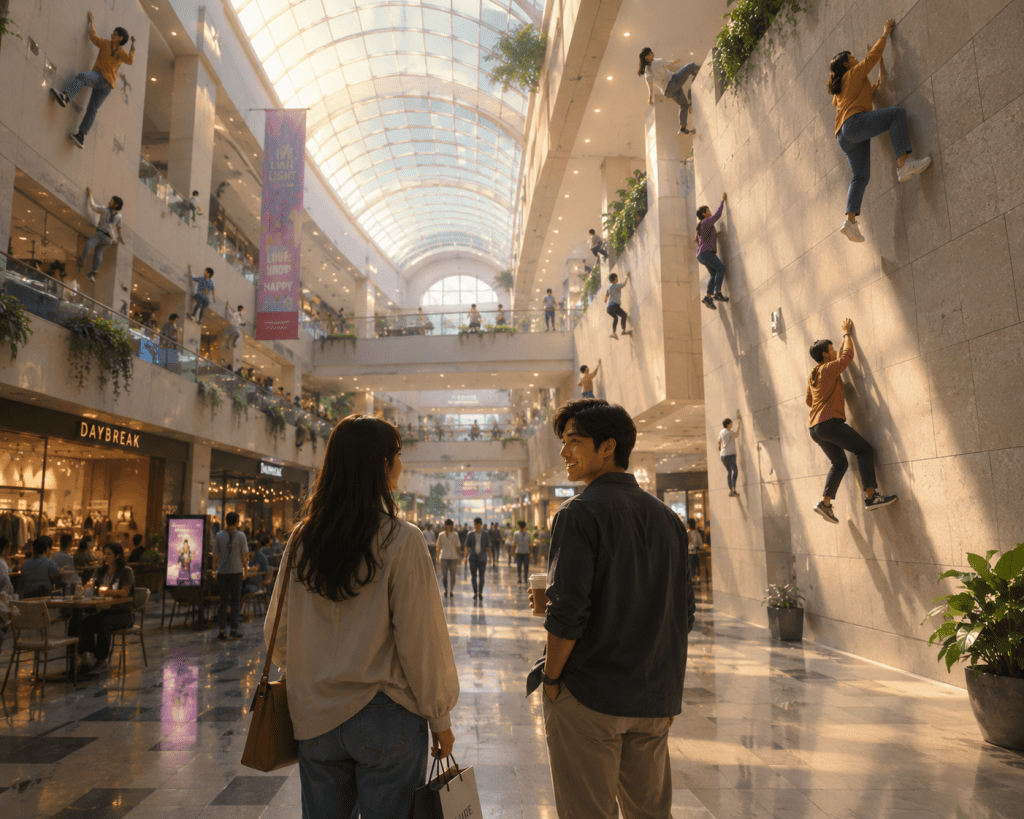
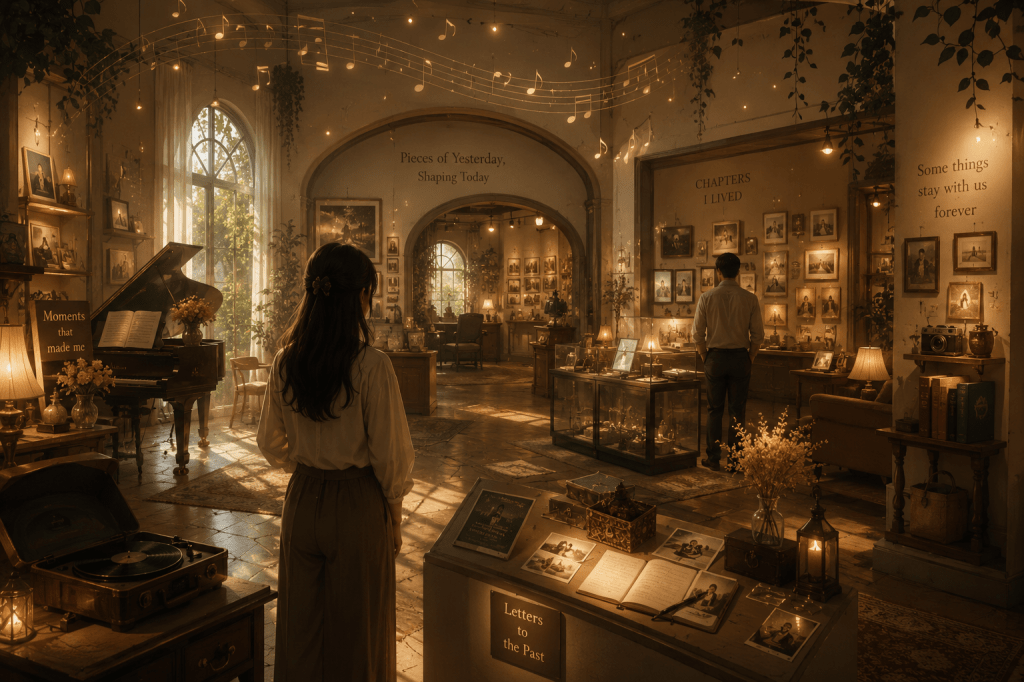
One dream took place inside what felt like a museum made of memories and light. Another unfolded in a shopping mall where people casually climbed walls and drifted vertically through open spaces, as if gravity had become more of a suggestion than a law. Nobody questioned it. Nobody panicked. The impossible simply existed alongside fluorescent storefronts and soft conversation.
And somehow, that made it feel more real.
The strange thing about surreal dreams is that they rarely announce themselves as surreal. Dreams don’t usually scream Look how weird this is! Instead, they gently rewrite reality and wait for you to accept it. Your brain says: yes, naturally people move vertically here. Of course this corridor bends into another memory. Of course the air itself feels golden.
That emotional logic matters more than physical logic.
What stayed with me wasn’t just the imagery — it was the tone. Every dream carried the same emotional texture:
calm
spacious
socially gentle
nostalgic
quietly unreal
None of them felt threatening. They felt contemplative. Like places designed for wandering rather than escaping.
I started wondering why these dreams appeared so intensely during medical leave. Then it clicked: for the first time in a while, my mind had room.
Daily life compresses attention into survival mode. Wake up. Reply. Travel. Work. Perform. Repeat. Even rest becomes scheduled. But medical leave interrupted the machinery. My routines dissolved for a few days, and suddenly my brain no longer had to spend every ounce of energy managing the external world.
So it turned inward.
Sleep probably played a role too. Waking up naturally in the morning often means waking directly out of REM sleep — the phase most associated with vivid dreams. Without alarms tearing the experience apart, the dreams stayed intact long enough to remember.
But I think it went deeper than biology.
The dreams felt less like random neural static and more like emotional processing rendered as architecture.
A memory museum. A gravity-defying mall. Softly altered social spaces. Worlds where ordinary rules loosened without collapsing completely.
It felt like my subconscious was experimenting with freedom in small, gentle ways.
Even the lighting in the dreams seemed emotionally deliberate. Everything carried that early-Saturday softness — the kind of brightness that feels warmer than reality itself. Not cinematic in a dramatic sense. More like reality with the emotional sharp edges sanded down.
And maybe that’s what rest actually does when we finally allow it to happen.
Not just physical recovery, but psychological decompression.
Sometimes the mind doesn’t respond to rest with silence. Sometimes it responds with creativity. With symbolism. With impossible malls and drifting bodies and memory archives glowing softly in the distance.
Maybe dreams become vivid during moments like these because the brain finally has enough quiet to speak in its native language: images, spaces, feelings, strange physics, emotional weather.
For three mornings, my subconscious became a filmmaker.
This morning’s dream felt quieter than the others.
No gravity-defying malls. No museum of preserved memories. No surreal spectacle demanding interpretation.
Just a greenhouse.
And somehow, that simplicity made it feel even more meaningful.
The dream began inside a vast glass conservatory filled with soft morning light. Sunlight filtered through panes overhead, scattering warmth across stone pathways and endless layers of green. Plants climbed walls and hung from rafters as though nature had slowly reclaimed the structure without resistance.
The air itself felt alive.
Not dramatic. Not mystical. Just deeply calm.
I was there with church members, though interestingly, they were not from my own cell group. They were familiar enough to feel safe, yet distant enough to create a subtle sense of discovery. In waking life, we often organize people into circles — close friends, acquaintances, communities within communities. But dreams blur those boundaries effortlessly.
In the greenhouse, none of that separation seemed important.
We wandered slowly among the plants, speaking casually, occasionally pausing near flowers or shaded corners where sunlight gathered like liquid gold. Nobody appeared rushed. Nobody seemed burdened by roles or expectations. The dream carried the emotional texture of quiet fellowship — the kind that exists without needing performance.
What stayed with me most after waking was the feeling of growth.
Not loud growth. Not ambitious growth.
The slow, patient kind.
A greenhouse is such a specific kind of environment. It is neither wild nature nor artificial space. It is protected life. A place intentionally designed for fragile things to survive long enough to flourish. Temperature is regulated. Light is filtered carefully. Growth is nurtured rather than forced.
Perhaps that is why the dream lingered in my mind long after morning arrived.
Over the past few days, my dreams have all shared unusual emotional landscapes: a museum preserving memories, a shopping mall where gravity loosened, and now a greenhouse filled with quiet companionship.
Looking back, they almost feel connected.
The museum honored the past. The mall explored freedom. The greenhouse felt like healing.
Not healing in the dramatic cinematic sense, but in the ordinary human sense — resting, reconnecting, slowly becoming alive again internally after periods of exhaustion or emotional noise.
And maybe that is what dreams sometimes do during seasons of rest.
They stop speaking in direct language and begin communicating through places.
A greenhouse. A sanctuary of living things. A reminder that not all growth is visible immediately.
Some things develop quietly beneath glass ceilings while the world outside continues rushing past unnoticed.
It was an early Saturday dream, the kind that arrives after sunlight has already begun entering the room.
Not the heavy darkness of midnight sleep, but a softer state of consciousness where reality and imagination overlap gently. In those dreams, the world feels strangely believable even when impossible things happen. And this dream unfolded inside a shopping mall.
But it did not feel like an ordinary mall.
It carried the spacious calm of a place untouched by urgency. No aggressive noise. No rushing crowds. The atmosphere felt suspended, almost cinematic, as though the dream had removed all the exhausting parts of public spaces and left only movement, light, and human presence.
Somewhere within that dream, an old client appeared.
Except they were no longer simply a client.
Professional distance had dissolved completely. We wandered through the mall casually, speaking with an ease that felt natural and oddly comforting. There was no hierarchy, no obligation, no transactional energy. Just companionship. The kind that exists effortlessly inside dreams, where people are sometimes transformed into softer versions of themselves.
Dreams have a strange habit of reclaiming people from reality.
Someone once connected to deadlines, conversations, or formal interactions can suddenly become symbolic of familiarity instead. Not necessarily because of who they are in waking life, but because the subconscious has detached them from structure and reintroduced them as emotional presence.
And then there were the people on the walls.
That image remains the clearest.
All around the mall, carefree strangers climbed up and down the sidewalls as though gravity had quietly stopped mattering. No panic. No spectacle. They moved with complete confidence, casually navigating vertical surfaces like it was the most ordinary thing in the world.
What struck me was not the impossibility of it.
It was how relaxed everyone seemed.
No one stared. No one questioned it. The dream accepted it naturally.
Watching them felt oddly liberating, like witnessing a world where people had escaped invisible rules without even announcing rebellion. They simply moved differently now. Freely. Lightly. Unburdened by the usual limitations.
Maybe that is why the dream stayed with me after waking.
It wasn’t about the mall itself. It wasn’t even really about the old client.
It was about atmosphere — that rare emotional texture dreams sometimes create better than reality does. A place where social roles softened, physics loosened, and people existed without self-consciousness.
There was something almost beautiful about the absurdity of it.
A shopping mall transformed into a dreamscape where strangers climbed walls with childlike ease while conversations drifted naturally through bright open spaces. It felt less like a narrative and more like an emotional climate — a temporary world governed not by logic, but by feeling.
And perhaps that is what dreams do best.
They rearrange reality just enough to reveal hidden emotional truths.
Sometimes all it takes is one Saturday morning and a gravity-defying mall to remind the mind that life does not always have to feel so rigid.
Late morning dreams feel different from night dreams.
They arrive softer, slower, almost aware that the body is half-awake. Light leaks through the curtains. The world outside already exists again, but the mind still refuses to leave its private theater. That was where I found myself on the third day of medical leave — wandering through a place that felt less like a dream and more like a carefully curated memory exhibit.
It was a living space, but not entirely a home.
It resembled a museum assembled by someone sentimental and meticulous. Every room carried the atmosphere of preserved time. Nothing looked abandoned. Nothing looked futuristic either. The entire place felt suspended between eras, as though memories themselves had become furniture.
There were objects whose meanings I somehow understood without explanation. Corners illuminated by warm light. Hallways that invited wandering instead of destination. Shelves and spaces arranged with the quiet confidence of someone trying to honor the past without disturbing it.
And throughout it all, music played.
Not loudly. Not dramatically.
Pleasant melodies drifted through the rooms like invisible threads stitching the dream together. The kind of music that makes nostalgia feel gentle instead of painful. It didn’t command attention; it accompanied existence. Every step through the museum-like space felt synchronized to those melodies, as if the dream itself had a soundtrack composed from forgotten feelings.
What fascinated me most was the role I occupied in the dream.
I wasn’t merely visiting the place.
I was curating it.
Moving through the rooms carried a strange sense of responsibility, as though I had personally selected what deserved preservation. Not just objects, but emotions. Atmospheres. Versions of time. It felt like constructing a sanctuary from fragments of memory — a place where moments could continue existing safely, untouched by reality’s tendency to move on too quickly.
And somewhere within that dream, a colleague appeared.
Not intrusively. Not symbolically obvious in the way movies often portray dreams. Their presence felt natural, almost observational, like another person quietly walking through the museum alongside me. Neither stranger nor central figure. Just someone existing within the emotional architecture of the space.
Dreams are strange that way.
Sometimes the people who appear are not there because of who they literally are, but because of what period of life they belong to. Perhaps my mind simply borrowed a familiar face from my current reality and placed it among older emotional landscapes. Or perhaps the dream was trying to connect my present life with memories I haven’t fully unpacked yet.
Medical leave changes the rhythm of consciousness.
Routine dissolves. Time stretches differently. Without deadlines and constant motion, the mind begins opening storage rooms usually kept locked during ordinary days. Maybe that is what the dream really was: not fantasy, but internal archival work. A quiet act of emotional preservation occurring beneath waking thought.
What remains with me after waking is not confusion, but atmosphere.
The warmth of the lighting. The softness of the melodies. The feeling of walking through memory without fear.
For a few suspended moments late that morning, my sleeping mind built a museum where the past was not something haunting, but something lovingly arranged.
Sometimes dreams don’t arrive as warnings or predictions — they arrive as experiences. Last night, I had one that felt unusually vivid, yet strangely calm.
It began on a road at night.
There had been a car accident ahead — not close enough to feel panic, but visible enough to know something had gone wrong. Flames flickered in the distance, reflecting off wet roads and dim streetlights. But instead of fear, there was distance. Observation. Stillness.
I was in a car, not driving.
And the driver made a decision: not to go near the accident site.
Instead, we rerouted.
🛣️ The choice to avoid chaos
The road curved away from the fire. No hesitation. No urgency. Just a quiet, deliberate shift in direction — as if safety was already understood as the priority.
There was no need to question it.
The car simply moved away from danger.
And somehow, that felt right.
🚶 A different kind of arrival
Eventually, the car stopped at a distance from the building we were heading toward.
We didn’t park close.
We parked further away from the disrupted area, where things felt calmer, quieter, more stable.
From there, I stepped out and walked.
The ground was wet. The air felt still. The chaos was behind me now — not something I had to fix, not something I had to engage with. Just something I had been guided around.
🧠 The feeling that stayed with me
What stood out most wasn’t the accident.
It wasn’t the fire.
It was the feeling of calm detachment.
There was trust — in the driver, in the route, in the idea that not everything needs to be confronted directly in order to be okay.
Sometimes, avoiding the chaos is the right path.
Sometimes, rerouting is the solution.
🌿 What this dream might represent
Looking back, it doesn’t feel like a prediction of anything external. Instead, it feels more like a reflection of internal state — a quiet processing of change, stress, and direction.
A reminder that:
Not every disruption needs to be entered
Not every situation needs direct engagement
Safety sometimes comes from stepping aside, not pushing through
🚗 Final thought
I don’t think dreams like this are meant to be decoded too literally.
Maybe they’re just experiences the mind creates when it is trying to understand movement, transition, and safety.
And maybe, sometimes, the most important part of the dream is not the accident on the road…
Throughout the Bible, dreams are often used as a way God communicates vision, guidance, and deeper spiritual truths. While not every dream carries prophetic meaning, Scripture does show that dreams can carry symbolic imagery—sometimes even involving living creatures.
One of the most well-known passages about dreams is found in the book of Joel:
“And it shall come to pass afterward, that I will pour out my spirit upon all flesh; your sons and your daughters shall prophesy, your old men shall dream dreams, your young men shall see visions.” — Joel 2:28
This verse highlights that dreams can be part of spiritual experience and reflection, especially when they carry strong emotional or symbolic content.
Animals also appear in dreams throughout Scripture as symbolic figures. In the book of Daniel, for example, beasts appear in visions representing kingdoms and spiritual realities:
“Daniel spoke, saying, ‘I saw in my vision by night, and behold, the four winds of heaven were stirring up the Great Sea.’ And four great beasts came up from the sea…” — Daniel 7:2–3
In this passage, animals are not literal creatures but symbolic representations of larger truths and movements in history.
Similarly, in the story of Joseph, dreams are used to communicate future events and direction (Genesis 37), showing that God can use vivid imagery—sometimes even unusual or symbolic scenes—to speak in ways that are deeply meaningful to the dreamer.
Reflection
Dreams featuring animals can often invite reflection on instinct, emotion, and the “life” within our inner world. While interpretation should always be approached with humility, Scripture shows that dreams can carry meaning, symbolism, and encouragement depending on context.
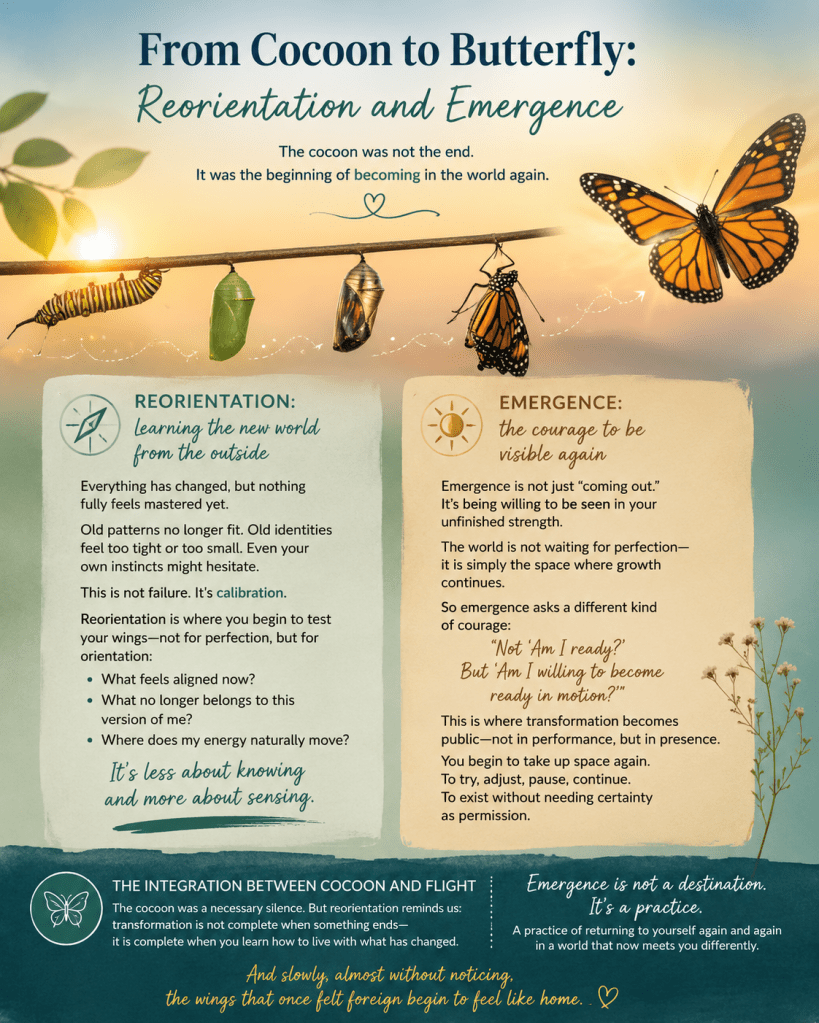
In my last reflection, I wrote about the cocoon season—the hidden places where God quietly dismantles old identities, old expectations, and even old versions of ourselves so that something deeper can emerge.
But what I’ve come to realize is this:
The cocoon is not the end of transformation.
It is only the beginning of reorientation.
Because emerging from the cocoon does not immediately feel like freedom. Sometimes it feels unfamiliar. Sometimes it feels disorienting. Sometimes the very thing you prayed for arrives, and yet you still find yourself asking:
Who am I now?
The butterfly does not emerge flying.
It emerges fragile. Soft-winged. Learning gravity again.
And maybe that is where many of us are right now spiritually, emotionally, even vocationally—not fully hidden anymore, but not yet fully steady in the newness God is unfolding.
“See, I am doing a new thing! Now it springs up; do you not perceive it?” — Isaiah 43:19
I think reorientation is the part we rarely talk about.
We celebrate breakthrough. We celebrate arrival. We celebrate transformation stories once they sound complete.
But Scripture is filled with people who had to learn how to live after transition.
Moses had to reorient from prince to shepherd. David from shepherd to king. Peter from fisherman to disciple. Paul from persecutor to apostle.
God changed their direction before He fully revealed their destination.
And perhaps that is why reorientation feels uncomfortable: because faith often requires movement before mastery.
“For we walk by faith, not by sight.” — 2 Corinthians 5:7
There is a holy tension in becoming.
Old patterns no longer fit. Old instincts no longer lead with the same certainty. Even the spaces that once felt familiar can begin to feel too small for who God is shaping you to become.
Not because you are lost.
But because you are stretching.
Because growth often feels awkward before it feels natural.
The butterfly emerging from the cocoon must strengthen wings it has never used before. Likewise, God sometimes calls us into capacities we have never had to rely on before—deeper trust, deeper surrender, deeper dependence on Him.
And that dependence changes us.
“Trust in the Lord with all your heart and lean not on your own understanding.” — Proverbs 3:5
I am learning that emergence is not about becoming perfect.
It is about becoming willing.
Willing to be seen again. Willing to move again. Willing to trust God outside the cocoon.
Because hiddenness can become strangely comfortable. Safe. Predictable.
But we were not created to remain inside places that were only meant to transform us.
At some point, the cocoon that protected us can also become the thing that restricts us.
And so God calls us outward.
Not rushed. Not forced. But invited.
Invited into visibility. Invited into obedience. Invited into new terrain.
“Arise, shine, for your light has come…” — Isaiah 60:1
What encourages me most is knowing that God does not abandon us between transition and arrival.
He is present in the hidden formation. Present in the uncertainty of reorientation. And present in the trembling first movements of emergence.
The butterfly does not question whether it was created to fly. It simply grows into what was already written within it.
Maybe faith is similar.
Maybe becoming is less about striving to invent ourselves and more about surrendering to who God has already been forming beneath the surface all along.
And slowly—sometimes so slowly we barely notice—what once felt unfamiliar begins to feel like grace.
The wings strengthen.
The movement steadies.
The fear loosens.
And what once felt like an ending becomes the beginning of learning how to live transformed.
Over the past season of my life, I began experiencing a series of vivid dreams that seemed strangely interconnected.
Some involved my former workplace. Others centered around former students, professional events, leadership settings, and moments of recognition. At first, they appeared unrelated—simply fragments of memory shaped by stress, transition, and reflection.
But over time, a deeper pattern emerged.
Together, the dreams formed a symbolic journey that closely resembled one of nature’s most powerful transformations: the process of a caterpillar becoming a butterfly.
The more I reflected on this metaphor, the more I realized that the dreams were not merely about external situations. They were revealing something happening internally: a process of transformation.
The Caterpillar Stage: Surviving Through Constant Movement
Every butterfly begins as a caterpillar.
The caterpillar stage is characterized by constant movement, constant labor, and continuous consumption of energy simply to survive and grow. It is not glamorous. It is practical, grounded, and often unnoticed.
In many ways, this reflected my earlier season.
Professionally and emotionally, life involved:
managing difficult situations
navigating unhealthy environments
handling emotional meltdowns and conflict
carrying responsibilities quietly
trying to remain steady while under pressure
Like many people in caregiving or educational environments, much of the work required emotional endurance rather than recognition.
During these seasons, it is easy to become so focused on surviving daily demands that long-term vision begins to fade. One’s identity slowly becomes tied to crisis management rather than calling.
Yet the caterpillar stage is still essential.
Growth is happening, even when it does not yet look beautiful.
The Cocoon Stage: Hidden Transformation
The most mysterious part of metamorphosis is the cocoon.
Externally, the cocoon appears silent and inactive. But internally, profound transformation is taking place.
This stage strongly mirrored many of the dreams connected to my former workplace.
In one dream, I saw a bookstore where part of the Chinese books section had been cordoned off while authorities investigated the area. Certain books became inaccessible. There was tension, uncertainty, and a sense that hidden things were being exposed.
Another moment in the dream involved books being taken away before I could receive them.
At first, these images felt discouraging. But over time, I began seeing them differently.
The cocoon stage often involves:
separation from old environments
loss of familiar identities
emotional uncertainty
internal restructuring
There are moments in life where we realize: the version of ourselves tied to a previous season can no longer continue in the same way.
Yet the new version of ourselves has not fully emerged either.
This in-between stage can feel uncomfortable because transformation is rarely immediate.
Spiritually, it resembles the wilderness seasons seen throughout Scripture:
Moses in Midian before leadership
Joseph in prison before promotion
David as a shepherd before kingship
The hidden season was not punishment.
It was preparation.
The Reminder That the Season Was Not Fruitless
One of the most meaningful dreams involved a former student I had once taught.
In the dream, the student—now older—was searching for a boutique tuition centre for Mathematics. Alongside this memory was a message from his father expressing appreciation for how caring I had been when celebrating his son’s success in a Mathematics worksheet.
This dream shifted the emotional atmosphere entirely.
Unlike earlier dreams marked by restriction or tension, this one carried warmth, trust, and affirmation.
It reminded me of something important: even difficult seasons can still produce meaningful fruit.
When individuals leave challenging environments, they often remember the pain more clearly than the impact they made. Yet the dream revealed that encouragement, patience, and kindness leave lasting impressions far beyond a particular workplace or season.
The dream became a quiet reminder that my work was not wasted.
Sometimes, the most lasting influence we have on people comes not through extraordinary achievements, but through ordinary moments of care.
The Butterfly Emerging: Dreams of Leadership and Recognition
As the dreams progressed, the imagery changed significantly.
Instead of restricted spaces, investigations, or emotional tension, I began seeing:
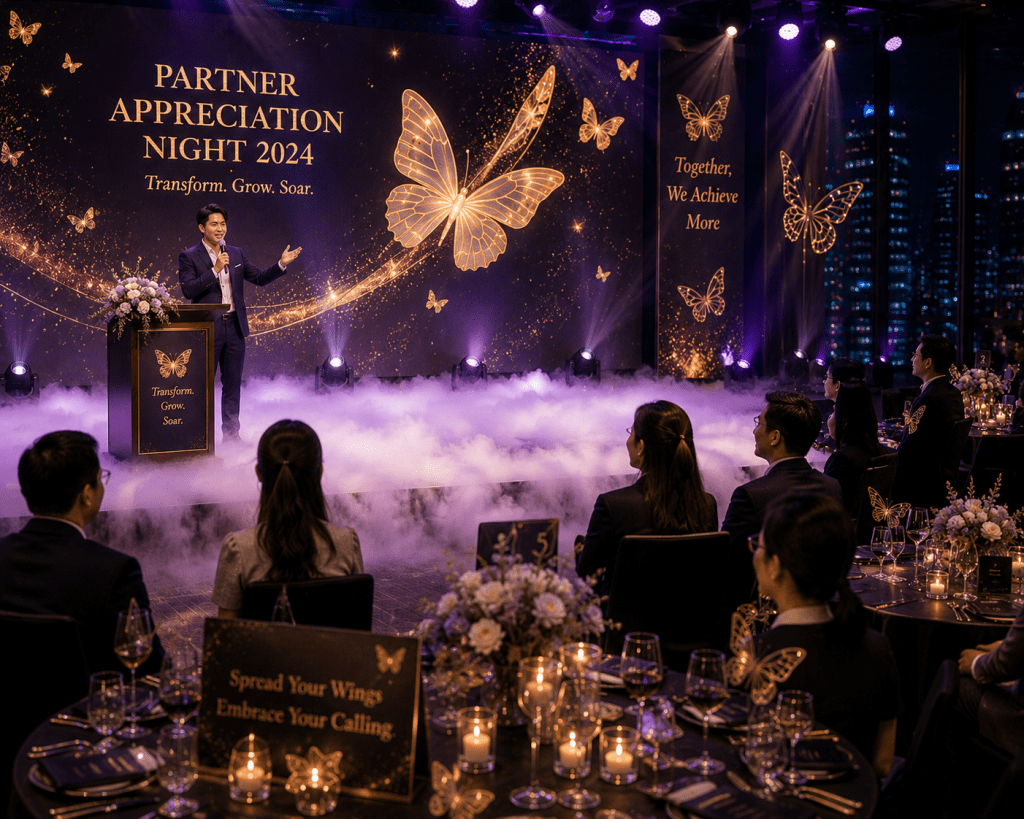
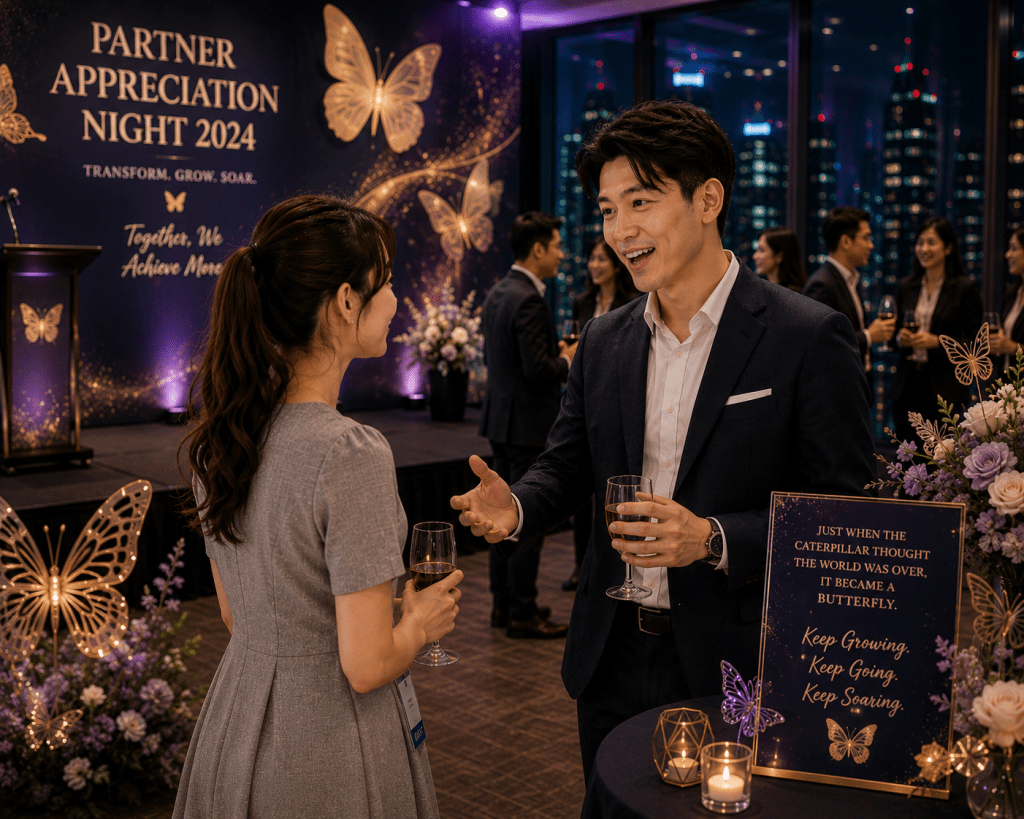
corporate events
networking environments
leadership settings
teaching opportunities
joyful conversations
moments of public recognition
One dream involved attending a corporate event where a client from my former workplace encouraged me to stay until 10 PM because there was a prize waiting for me.
That dream felt deeply symbolic.
The butterfly stage is not simply about beauty. It represents:
freedom
movement
visibility
maturity
operating fully in one’s intended capacity
The corporate event imagery reflected emergence.
For the first time, the dreams no longer centered around surviving environments. Instead, they reflected influence within them.
This was especially significant because my current reality still involved emotionally draining situations involving student meltdowns and conflict management. Yet internally, the dreams seemed to reveal a different longing: the desire to thrive rather than merely endure.
Why Transformation Often Feels Uncomfortable
One of the hardest parts of transformation is that internal growth and external circumstances do not always change at the same pace.
A butterfly develops wings before it fully flies.
Likewise, people often begin changing internally long before their environments reflect that change externally.
This creates tension.
A person may begin sensing:
a greater capacity for leadership
a longing for healthier environments
a desire for meaningful collaboration
a vision for a different future
while still living inside circumstances that feel exhausting or limiting.
That tension does not necessarily mean failure.
Sometimes, it simply means transformation is already underway.
From Sinai to the Promised Land
Looking back, the dreams collectively resembled a spiritual progression:
exposure
separation
wilderness
growth
emergence
recognition
Much like the biblical journey from Mount Sinai to the Promised Land, transformation involved both difficulty and preparation.
Sinai represented truth and exposure.
The wilderness represented transition and reshaping.
But the Promised Land represented alignment: stepping into spaces where purpose, gifting, and identity could flourish more fully.
The dreams suggested that painful seasons were not the final destination.
They were part of the process.
A Final Reflection
Perhaps the most meaningful realization from these dreams is this: transformation often happens quietly before it becomes visible.
The cocoon season can feel lonely, confusing, and emotionally exhausting because so much is changing internally before anything outwardly shifts.
Yet hidden growth is still growth.
Looking back, I no longer see the dreams merely as reflections of stress or memory. Instead, they seem to form a narrative of becoming:
moving from survival toward purpose
from hiddenness toward visibility
from emotional exhaustion toward maturity and confidence
Most importantly, they remind me that difficult seasons do not always diminish a person.
Sometimes, they are the very places where wings are formed.






 All about Lina Lifestyle