Three Principle Goals on helping clients as a counselor

Previously I wrote a blog post about being equipped with counselling and psychotherapy as #WorldMentalHealthDay is coming up on October 10. I mentioned how the course can help the distressed by giving an overview of the helping professional. I shared my personal experience working in the healthcare setting and why people seek help due the problem situations they face. I would like to share the three principle goals of helping from the course. Firstly, life-enhancing outcomes, second learning self-help and third prevention mentality. Lastly, what a successful outcome of counselling looks like.

This image has an empty alt attribute; its file name is pexels-photo-7203724-1.jpeg
Three principle goals of counselling

Goal One: Life-enhancing Outcomes

Help clients to manage their problems in living more effectively and to develop unused or underused resources and opportunities more fully.

Best when done in client-directed outcome informed manner

Goal Two: Learning Self-Help

Help clients become better at helping themselves in their everyday lives

Goal Three: Prevention Mentality

Helping clients develop an action-oriented prevention mentality in their lives

Setting up resources to prevent future distress

Recognizing how to maximize unused opportunities

Results Focus

A successful outcome of counseling requires that clients go away able to manage their problems in living more effectively and to develop opportunities on their own.

Sharing some form of the problem-management and opportunity-development process with them during sessions is essential in order for this to occur.

For a successful outcome, clients need:

(1) to participate actively in the problem-management process during the helping sessions.

(2) to apply what they learn to managing immediate problems and opportunities

(3) to continue to mange their lives more effectively after the formal helping period is over.

My journey with mental health

With these principles in mind, I started seeing a counselor as I wanted to manage my problem more effectively and develop opportunities on my own. Back in 2019, I had wanted to fulfill my dream of going the entrepreneurial way as I wanted to more freedom to choose the job as a private teacher. My immediate problem was that my contract job ended and I was left without a safety net and feeling burnt out by the demands of the previous job.

In a depressed state

My mental health was at the lowest as I felt more depressed than excited about starting on this path as the road ahead seemed too long and far ahead. When I held other jobs as an employee I often wondered what it was like being on my own. I recalled the early period of 2019 vacillating between looking for a job or continue the path of tutoring.

The internal self-doubt and turmoil started and I have worked with the counselor to manage the job search process. Days were so trying finding out the “opportunity development” process that I lacked motivation as I was tired from having to make decisions. On top of that, I perceived myself to be “lazy” as I hardly exercised or wanted to get out there to make new friends.

Develop an action-oriented prevention mentality

My counselor took a goal oriented purpose where I have to set daily goals to exercise or to speak to one new person to expand my social circle for example. It was a difficult period and I started taking small action steps to get out there to exercise at the park daily. I started keep a daily mood journal like rating my mood on daily basis on a scale out of 10. Initially I started off with rating my mood as low or depressed. However, small action steps helped as I wanted to improve my mood from a low of 4 to 8.

Small Goals to get out of depression

With such a scale, I gained more self-confidence whenever I made new friends or keep the habit of exercise for a few days in a role and boosted my self-confidence. I started managing my mood better by celebrating every small wins like getting new customers or exceeding my daily steps by crossing 10000 for example. I grew a lot in terms of understanding self and became more aware of every negative thought that would spiral downwards. I took a prevention approach by ensuring that I would maintain my mood by going out for a walk in nature and so leave negative self-talk behind and forge a more positive self-esteem by loving self more.


How being equipped with counselling and psychotherapy help empower the distressed

Before the pandemic I was working in a healthcare setting in various polyclinics where I come in contact with the medically ill. I claim to be no expert counselor or psychotherapist as I am not trained formally or qualified in this area. Nevertheless this blog post will give a simple overview of the helping profession. I still feel that with #WorldMentalHealthDay coming up on October 10, I would like to share a basic introduction on learning about counseling and psychotherapy as I had enrolled in the school and worked as a client relation associate at the same time.

Photo by SHVETS production on Pexels.com

Introduction to counselling and psychotherapy

The course started with an introduction to the formal helping professionals. They are counselors, psychiatrists, psychologist, social workers. Other professionals who often deal with people in times of crisis and distress will be doctors, nurses, dentists and teachers.

Why do people seek help?

To deal with problems in living

Examples of problem situations: self doubt, unreasonable fears, stress that accompanies serious illness, addiction to alcohol or drugs, failing marriage, loss of employment, confusion in adapting to a new culture, catastrophic loss, jailed because of child abuse, midlife crisis, lonely with no family or friends, battered by their spouses etc

Problem Situations Are

Complex and messy problems that people are not handling well

They arise in interactions with ourselves, with others and with the social settings, organizations and institutions of life.

Missed or Unused Opportunities

Resources that people are not using or opportunities they are not developing.

Why do People Seek Help?

To Live more fully

To uncover missed opportunities and unused potential

Examples: feel locked in to dead-end jobs or bland marriages, frustrated because they lack challenging goals, feel guilty because they are failing to live up to their own values and ideals, want to do something more constructive with their lives, disappointed with their interpersonal lives, burned out.

My experience

I still remember my vivid encounters working with the distressed and have to think on my feet on how to approach their problem situation. I felt that countless individuals have shared their private lives on their encounters with social settings, organizations and institutions of life. Many times I am in a situation of helping them make decisions to tap on unused resources. These resources are useful and practical such that they can affect their outcomes on the personal healthcare options. Often times, clients in need are in distress due to being in a transition from the polyclinic to the hospital or the nursing homes.

I got to hear personal stories of how they felt that had tapped on the help of institutions and encountered roadblocks and obstacles. Hearing their side of the story at the personal level, I have a better understanding of how public policy aimed at reducing reliance on welfare may create barriers for the truly genuine sandwiched class to tap on resources. I probably got to know the all familiar name of politicians that clients bring up whenever they have to appeal their cases.

Next, on the organizational level I do encounter stories of losses of employment from sunset industries through retrenchments where this could exacerbate mental health issues on top of physical health matters. This is where I could render the help that is genuine and my assistance needed to get financial application done procedurally correct as they are likely able to qualify for the minimum safety net.

For social setting, there is a lot of distress in terms of facing loss of limbs or being wheelchair bound. It had been a very deep complex challenge working with care coordinators, medical social workers, doctors and nurses to get as much help as possible for clients to get procedures for their financial application done.

Mental Health of healthcare professionals

Working with such an intricate network, going from doctors to nurses to get lengthy paperwork done is just a glimpse of what I knew about the healthcare profession. It is not an easy profession I believe as one needs to stay mentally resilient in the face of hearing human stories of the distressed and be present to them by rendering help that is personalized and contextualized to fit their needs.

It is a life experience that I think is highly valuable as I get to hear survival stories of the downtrodden and their survival instinct in the face of life adversities. With mental health in the spotlight in the pandemic, I believe the stress healthcare workers face has been multiplied in the face of so many uncertainties of how the Covid-19 situation impacts the healthcare system to the point of strain. For example, I can’t imagine having to make tough ethical decisions like planning for who uses the ICU resources.

I feel that to a large extent, more mental health resources can be given to healthcare workers. This is based on handling the simple responsibility of my own work and having known the overlap of directly working with healthcare workers and patients. Being in contact with this group of healthcare workers before, I sense there is a need for greater mental health resources catering to the group during the pandemic. It is good direction to take if public policies needed to be carefully made to prevent a systemic mental health issues like burnout in the healthcare sector.

Photo by Karolina Grabowska on Pexels.com

How selecting a job for my online character is like my dream job journey

There is a song by Bette Midler called The Rose that goes like this, “It’s the heart that is afraid of breaking that never learns to dance. It’s the dream that is afraid of waking that never takes the chance.” I felt that this song seems to parallel my journey in choosing my dream job journey in my younger days.

My first dream job

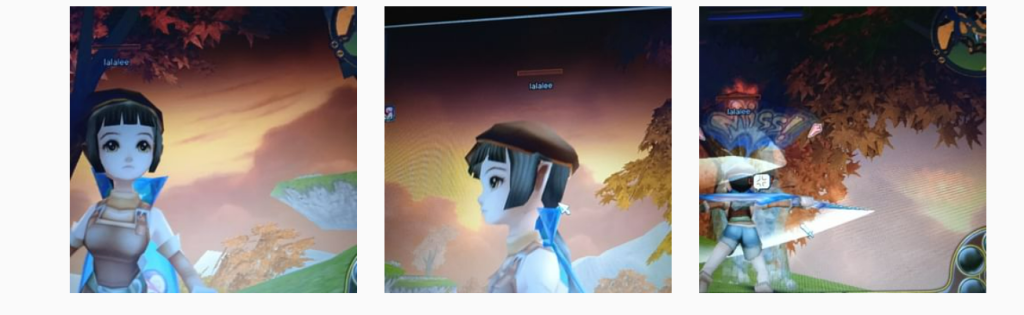
I think I wanted to be a teacher as far back as when I was a teenager playing FLYFF. Playing the online fantasy game today, I had to choose a particular job class for my character Lalalee in order to progress in the game as she had to specialize after reaching level 15. She could not gain experience as a vagrant anymore if she does not make a decision to specialize and choose a job she like and she will be stuck at level 15.

Graduation from school did feel that way as we had this dilemma which is to choose a job of our dreams or take another job that is not our heart’s desire. Back in my younger days, being in the position of a “vagrant” I took part time jobs in other job roles like marketing for a car company and customer service in the community club.

These jobs somehow made me questioned my heart’s desire on what I truly want to do everyday once I reached the metaphorical level of graduation from being a vagrant at 15. If I need to progress, I knew deep down that I would like to choose the teaching path and would have to enter the education field. Throughout the years, there were many obstacles like dealing with the metaphorical monsters in the FLYFF game where we have to defend ourselves when we are out on real world battlefield. However, the hardest part to defend will actually be the internal which is the heart. Facing many heart breaking obstacles externally, it is not easy to stay the part of one’s heart desire.

It is the dream that is afraid of waking

In the game, I decided to follow my heart again and chose the acrobat as I enjoyed watching the bow and arrow and slings in the fantasy game. I did not want to choose other job classes as I thought this was my dream job for my Lalalee. As the song goes, “It’s the dream that is afraid of waking that never takes the chance.” It reminded me that at certain times I did not take action to fulfill my dream as I did not dare to take the chance again.

My online game challenge and taking the step to fulfill the dream

Gaming does feel therapeutic as I did reflect back on the “vagrant” days where I struggled with a desired dream role when I spent months away from. In FLYFF, I found it particularly challenging to enter the dream job of an acrobat. I went to some lengths to watch guided video so as to fulfill the game quests in order to qualify as an acrobat as I got lost in the fictional world of FLYFF like going west of Florene instead of east to meet the acrobat instructor.

Finally, seeing Lalalee going to the right direction and interacting with the right characters got her qualified as an acrobat is fulfilling. Watching her dance and twirl around with her newly minted bow felt like I had come full circle in taking the chance on my dream. Looking back at how I ventured into the field of education, it did felt like I was courageously living a dream despite getting lost by going west instead of east. I believed it had been an arduous journey filled with dancing to the tune of the heart and facing existential questions like is this what I am called to do ?It is never easy though when I chose other job classes and spent some months or years away from fulfilling the dream.

Why my upskill journey is as fun as playing a character in the MMORPG

Bright eye new character

As it is my lull period, I just restarted playing the game FLYFF as my inquisitive student asked me about the games that existed when I was still in school. Out of nostalgia, I created the character Lalalee and she started off as a vagrant from level 1 and started exploring the fantasy land of Madigral to slay the monsters. The fantasy land was beautiful as the graphics showed natural landscapes that still awes the imagination after so many years from breathtakingly realistic mountain to the happening town square. It was fun creating my bright eyed character Lalalee especially when she looked ready to conquer the world probably like how many felt after graduating from school. She held her sword with agility as she went through the so-called volatile, uncertain, complex and ambiguous (VUCA) world of monsters and quests.

Previously, I wrote a blog post on “Three reasons why you will like to upskill” and I felt that there are similar parallels to playing the MMORPG when it comes to upskilling which the game seemed to naturally build in players. My third point of view about upskilling is that it boost one’s confidence seemed to ring true. I felt a sense of satisfaction attending my online learning school on the Alison platform and managed to get close to 30 certificates and diplomas during the pandemic.

Similarly, when my character Lalalee went from level 1 to level 14 in two days, I enjoyed strategizing how to choose the right level of monsters to fight and enter the battlefield prepared. This is because I made sure she was able to get enough strength to fight, improve her stamina and increase her defense with better armour and shield upgrade. Here is how the game works. Whenever, she fought a monster, the loot will fall off and she can get “penya” (FLYFF currency), swords and armour. This is like upskilling where you gain a certain % of experience after slaying a monster and she can go to the next level after gaining 100% experience. The strategy comes into play where you have to choose a right level of monster to slay so that you can retain your health points and yet have to also choose a challenging battle. This balance needed to be struck in order to gain experience so that you can move to the next level faster.

Character choosing a job class

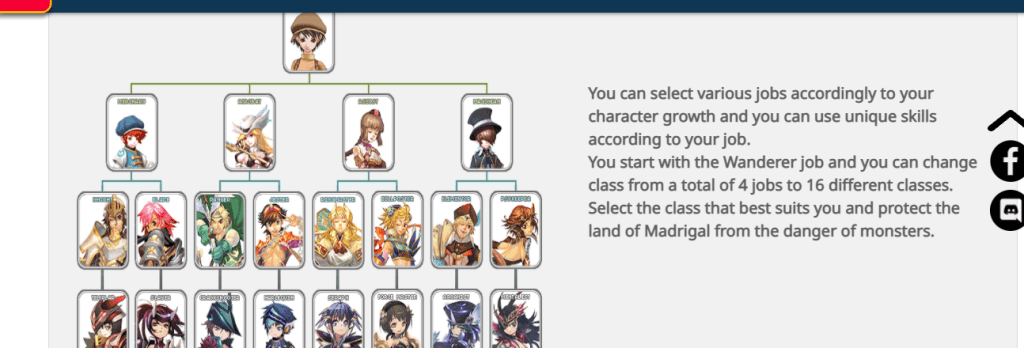
Lalalee will have to choose a job class at level 15 and I would have to decide on how to specialize in either being a magician, assist, mercenery or acrobat. Choosing a job class at level 15 will then predetermine the job classes she can choose at level 60. It parallels my search for a new job identity as I felt that whenever I could upskill I can pick up a range of skillset and have to decide what kind of skills I am inclined towards.

Knowing my interest, I picked a range from educational psychology to mental health studies. It is both bewildering and exciting to be able to pick up so many skillsets. Nevertheless, I felt that I seem to enjoy making a decision for my life. Similarly, my virtual character Lalalee’s (or cyborg )fate is in my hands as I have to decide on her job class soon. The freedom of choice is a wonderful feeling of getting my bright eyed character to upskill as a vagrant and look forward to the next stage of her life.

You can follow me on instagram to know more about Lalalee.

https://www.instagram.com/li.nah/

Finding a suitable job role is like playing a massively multiplayer online role-playing game (MMORPG) 

When I was a playful kid spending carefree days at school

When I was a kid mainly still in school, I enjoyed playing MMORPG as I loved the fantasy of being able to select different jobs before stepping into the real world of work. It was a carefree time spending endless hours in the game FLYFF becoming any character one wished. In the game, everyone starts off as a vagrant and when we reach level 15 we can choose our job class. There are four classes namely acrobat, assist, magician or mercenary. When we reach level 60 we can choose to branch further into different job classes like the jester and ranger if you are an acrobot.

I find that even though it is just a simulation of choosing a role, it gave a good preparation of what I will have to do in the real world of choosing a job role. In the fantasy MMORPG, we had to slay monsters to protect the fantasy land of Madrigal. When I started my character at level 1 as a vagrant, I had to choose 4 different job classes and I felt that I could not settle for one as I liked all job classes.

As we were given a few slots for our character choice, I ended up creating a second or third character so I could try out the other roles like the magician or assist.

Character’s Job Role

This reflected my path in my career as I had to face decisions to take on different roles like a teacher. It was like being a magician which required making magic happen when you had to cast psychological spells to slay the monsters. It required a slightly different skillset from that of an assist in the game which required one to be a healer and experienced the power to heal characters that died. This kind of parallels my role in healthcare where we had to use healing hands to heal the sick metaphorically.

For the role of the mercenery, the characters used the sword more and somehow I knew I did not like the role as much as the magician and assist. Whenever, I had to create another character, I had to start from vagrant at level 1 again . It felt refreshing as you get to use different skillset and conquer the monsters in the same territory.

Playing the game🎯

Somehow, across all job classes, all characters have to slay the same monsters to advance up the levels. We have to do our best to keep our health points so that we will not die. It is not easy as we have to slay both the monsters and keep consuming health pills so that our characters can keep grinding and successfully conquer the monsters. What was interesting was that we needed to make sure that we do not end up getting killed by the giant monsters in each level.

A really playful kid

FLYFF character
Flyff character
FLYFF game

FLY FOR FUN​

htmledit_20120709798297.bmp

According to FLYFF website, what is fun about the game is as follows:

In the world of Flyff, everything you’ve imagined becomes a reality. You can fly the vast sky using various mounts, everything from brooms to cars. It’s a world of dream and fantasy of fighting the monsters that disturb the peace of the continent of Madrigal! Enjoy the wonderful adventures of the world of Flyff.

Three reasons why an agile mindset is important in the VUCA world?

Photo by RODNAE Productions on Pexels.com

In my previous blog post, I shared my understanding of the webinar on how to go from a poor to agile mindset. I have summarized the few reasons why the agile mindset is important for leaders.

The problem lies in frame of mind and there needs to be a transformation of thoughts, emotions and action.  Hence the need for an agile mindset where they need to change their way of thinking and start on a completely different path.

Three reasons why we need to grow an agile mindset

I would like to elaborate on the three reasons we can grow the agile mindset so we can face the volatile, uncertain, complex and ambiguous (VUCA) world. For some background on what the VUCA is, I wrote a previous blog post on the characteristics of the VUCA world and how it impact work. https://jeroybrighterfuture.school.blog/2021/09/21/four-characteristics-of-the-vuca-world-and-how-it-impacts-work/.

(1) Creative Destruction

Back in the 1970’s, companies on the S&P index, the average company lifespan last from 30 to 35 years before they go out of business. The prediction is that in the 2020s where we exist right now, company’s lifespan is shortening by 15 to 20 years. Company’s lifespan is shrinking and this process is called creative destruction. Causes of creative destruction include technology and innovation making certain processes irrelevant resulting in firm closure. Entire industries can merge and you can see hybrid models in digital healthcare or retail and entertainment, transport and fuel.

According to Innosights, there are three factors that can help companies thrive across different sectors. The factors are that they are digital, sustainable and play to core strengths to allow them to catch the market trends and seize opportunities. There are some interesting mergers and acquisitions like Air Asia has acquired Gojek operations to launch a super app.

(2) Changes in the workforce

Different generations have different needs and wants. In order to thrive as a leader in this multi-generational workforce, you need to understand the different needs and wants. According to Gallup, they have found four things. Gen Z and the millennials want employees to care about their well being and are ethical. The older millennials want their leaders to have open communication style. Younger millennials and Gen Z want diverse and inclusive workplace. Across all the generation, they want employers to care about them.

(3) Skills and attitudes gap

We live in an era of double destruction caused by automation and Covid-19. Destruction by technology is not new as it has been happening for years but with the impact of the pandemic we can see the real extent on the labour market where jobs are disappearing faster than they are created. Although many people are now returning to work the experts are not expecting numbers to return to pre-pandemic levels.

The good thing is that there are new jobs emerging and there are opportunities. To take on these opportunities, the workforce need different skills. There are new jobs with hybrid industries. UOB did a survey where 9 in 10 people think they need upskilling and reskilling in order to stay competitive. Many expect digitalization and retrenchment to take place.

Conclusion

To conclude, we need to embrace the agile mindset for three reasons. First, the shrinking lifespans of companies. Second, the different needs of the multi-generational workforce. Third, skills and attitudes gap. According to Mckinsey, there are 56 DELTAS associated with better outcomes in employment, higher incomes and job satisfaction in the future of work. The 56 DELTAS are grouped under 4 categories which is cognitive, interpersonal, self-leadership and digital. As manual jobs are disappearing, it is the advanced cognitive skills that people need.

2 Things you can remember from the webinar

To sum up, there are two things that one can take from the short course and that is coping with uncertainty and self-confidence. These two traits emerged more than once for employability, income and job satisfaction. If you are thrown in any situation, the agile mindset will help you gain ease and authenticity.

Improve your life by going from poor to agile mindset in the VUCA world

I managed to get a badge for attending an agile mindset webinar by Chuen Chuen. Many times I have wondered what is agile and how does it improve the lives of people around the world? This time, I am glad that I can attend a webinar from a highly experience coach with real world experience in dealing with hundreds of leaders around the world. Learning from such a successful coach in the Linkedin world, I am glad that I managed to complete my course and get my credentials for Agile Thinking and Leadership after answering the few questions for my course. I am going to share my answers here to summarize my key takeaways from the fruitful session.

Name a few reasons why the agile mindset is important for today’s leaders

First, some leaders are stuck with a poor mindset  of scarcity where life is a race where you need to get to the top of the ladder faster than anybody else. Next, they  are not good team players and these are not good qualities like possessing a competitive and suspicious side. Third, some leaders need a good frame of mind like a full reset as they have self doubts and confidence issues. The problem lies in frame of mind and there needs to be a transformation of thoughts, emotions and action.  Hence the agile mindset where they need to change their way of thinking and start on a completely different path. 

Name the three steps in ACESENCE’s proven process that help leaders grow the agile mindset/agility.

First, the use of metaphors and question where it becomes a powerful process. This is where you use metaphors in a specific way such as to unveil and surface new perspective. You can consider new perspective where you are able to decide which one serves you best.  There is an effect of using metaphors on people’s thinking. Mindsets can easily become agile if you invest in the right processes over time. Thus, you need to regularly invite metaphors into the thinking process and disrupt the automatic thinking process.

Second, you need to combine metaphors with powerful questions so these can reframe, expand your thinking and reflect on your reality and thinking about your thinking or metacognition. 

Third, reflect on your paradoxes where you feel uneasy. This is when your head is saying something but your heart is saying something else. Or perhaps you feel stuck as all the options feel correct. 

We shared five inner voices at the training. Which one resonated with you the most? Explain

I believe that I resonate with the developer.  This inner voice I believe help others to grow and succeed. Life becomes meaningful when we grow as developer and serve others where we need to pass on the flame and lighting other people’s fire. This is where we see ourselves growing human potential. These voice helps us become more aware and help us turn the lens from looking in to looking out. I have mainly resonated with these traits having served the less advantaged and needy in my community involvement service job in the past. In the present I think as a teacher I often have to develop the individual potential of my students by finding the right coaching and so motivating them to excel.

What’s one practical step you’d like to take to begin growing an agile mindset? 

Using metaphors and paradoxes for story telling more in my lesson planning as well as my writing on Linkedin and blogs.  As a teacher, I believe that I have been interested in the potential of my students as I often develop their interest in metaphors and answering questions too. 

Four characteristics of the VUCA world and how it impacts work

Previously, I wrote an article “How Powerful are our thoughts?”. I wrote about the characteristics of the VUCA world. I believe that an individual’s thoughts are powerful in determining our success and lessen our suffering when searching for a job in today’s volatile, uncertain, uncertain and ambiguous (VUCA) world. I focused on the characteristics of volatility and connected it with the imagination. I would like to share more on the the four characteristics, example and approach according to the Harvard Business Review.

Volatility

Characteristics: The challenge is unexpected or unstable and may be of unknown duration, but it’s not necessarily hard to understand; knowledge about it is often available.

Example: Prices fluctuate after a natural disaster takes a supplier off-line.

Approach: Build in slack and devote resources to preparedness – for instance, stockpile inventory or overbuy talent. These steps are typically expensive; your investment should match the risk.

Uncertainty

The characteristics of uncertainty means that despite a lack of other information, the event’s basic cause and effect are known. Change is possible but not a given.

Example: A competitor’s pending product launch muddies the future of the business and the market.

Approach: Invest in information – collect, interpret and share it. The works best in conjunction with structural changes, such as adding informational analysis networks, that can reduce ongoing uncertainty.

Complexity

Characteristics: The situation has many interconnected parts and variables. Some information is available and can be predicted, but the volume or nature of it can be overwhelming to process.

Example: You are doing business in many countries, all with unique regulatory environments, tariffs, and cultural values.

Approach: Restructure, bring on or develop specialists, and build up resources adequate to address the complexity.

Ambiguity

Characteristics: Causal relationships are completely unclear. No precedents exist; you face “unknown unknowns.”

Example: You decide to move into immature or emerging markets or to launch products outside your core competencies.

Approach: Experiment. Understanding cause and effect requires generating hypotheses and testing them. Design your experiments so that lessons learned can be broadly applied.

Photo by Laura Tancredi on Pexels.com

Three ways to respond correctly to a mental health crisis with confidence

I recently read an article on suicide and mental health awareness. There are 452 cases of suicide in 2020 showing an increasing number from the year 2016 at 429 cases. “Awareness of the warning signs and not dismissing concerns are the first steps in helping someone who might have suicidal thoughts, experts have told CNA. With the research data done over the years, I am not immune to the effects of suicide in the community.When it comes to encountering persons with suicidal thoughts due to the nature of the professional relationship formed, I am placed in a position of having to respond appropriately.

Mental Health of my clients

In my recent memory, working in a healthcare setting encountering clients face to face, I do encounter family members of the medically ill seeking help for their suicidal ideation. They asked for my advice on how to seek help in this matter. Being in a position to lend a listening ear, I often do feel that as a neutral third party to the circumstances of the family I have to respond by listening, empathy and tact in handling such a difficult topic.

Still, suicide among my beneficiaries is not a main focus of my work in the community care sector but raising awareness of the financial healthcare schemes to alleviate the finances of being medically ill. I went for an external course on counselling and psychotherapy to understand the dynamics of human interaction in a face to face setting and how to respond in the right body language so that I can respond with sensitivity and tact whenever I am put in such a position. I wished I had a clearer guidelines to respond more appropriately to such a condition.

“The identification of risk factors of suicidality thus provides an opportunity to intervene early thereby lowering the risk of suicides in the population.” With this article’s stand on intervention, I am glad to have done a part on a daily basis to help families in distress by enabling them to access the financial and caregiving resources available.

As a teacher, I do encounter students who express suicide ideation due to the stress and pressures and exams and I often have to analyze how to reduce their intention to “jump down from my flat” if I fail etc. I think across the human lifespan whether they are children or elderly, they share similar human characteristics when faced with mental health distress.

Samaritans of Singapore

I do think that with the pandemic, mental health awareness is important. I am glad to know that the Samaritans of Singapore has done a study and found that it is important for more in the community to be equipped with the literacy of identifying signs of distress or crisis to be able to intervene early.

I would like to share Channel News Asia’s version of what one can do to help the suicidal and here are ways to respond appropriately.

(1) If someone displays warning signs or shares about their thoughts of suicide, we may get startled or react emotionally.

During that time, it is important to do the following:

Remain non-judgemental and show genuine concern. It can also mean providing support, such as a listening ear. Provide them with a safe space to share their thoughts and feelings.

(2) To know whether they are suicidal, ask directly if they are experiencing any suicidal thoughts and thinking of ending their life.

“Often people worry that asking such sensitive questions may make them feel worse. On the contrary, research shows that asking directly can reassure the person in distress that you are ready to have the difficult conversation with them and may be able to provide the much-needed support.”

(3) This is a belief that talking about suicide increases a person’s risk of suicide, but studies have shown that this is not true.

It is key to work to “dispel the myths that surround suicide” – by acknowledging that it is not a rare occurrence, and that talking about it does not lead to someone becoming suicidal. This is especially important as hopelessness is viewed as an important risk factor for suicide. The key message is that suicidal ideation is common, it is not something to be ashamed about, it is transient, and that help is available.

https://www.channelnewsasia.com/singapore/suicide-mental-health-singapore-depression-help-sos-imh-2182036

Photo by Anna Shvets on Pexels.com

Three reasons why you will like to upskill to improve your life

I enjoy learning a lot and have been awed by great lecturers since my younger days. Having graduated with a Philosophy degree, it did boost my presence in the workplace as I have been blessed with great colleagues who often time asked me why I love what I studied. I remembered catching up with another department colleague with multiple years of corporate communications experience who had to prepare news stories for the organization. Back then, I often have to contribute human interest stories from my volunteer programme for his work. It helped built a good bridge as a fresh graduate with older more experienced colleagues. Whenever we have lunch to break the mundaneness of collaborating, I recounted my fascination with philosophy and we often have endless conversations about topics outside of work hence strengthening inter-departmental relationship.

When I moved to the health/community care sector, it became an ice breaker with colleagues to make sense of the ground with regards to the healthcare policies. And till this day, I’ve often discussed many interesting themes of philosophy ranging from ethics to epistemology to makes sense of medical social work.

Philosophy

Ever wondered what is Philosophy?

Philia + Sophia = Philosophy

Philosophy is actually made up of two ancient Greek words where ‘philia’ means friend or lover of wisdom. A philosopher is thus a lover of wisdom who wants to pursue his or her knowledge and understanding through pursuing wisdom and acquiring ‘wisdom’.

I am glad I had gone through the process of loving knowledge and bringing it to the workplace. Fast forward today, when I started teaching my own students, I often felt that I needed to sharpen my skills as a teacher and believe in the need to upskill.

So far, I have completed close to 30 certificates and diplomas after I started less than a year ago. This is not a difficult feat as I have put in consistent effort by pacing myself. The E-learning courses enables the learners to use a setting where they can remind themselves to study whenever they could. I would like to share the three benefits of upskilling.

1.Upskilling adds value to your clients

In the teaching field, I often have to keep ahead of the latest news as I have to prepare my students sufficiently to acquire enough vocabulary. Being interested in acquiring knowledge and sharing your love for learning is one of the best role model I can be to my students. The end result is that unmotivated students start to acquire the love for learning. Being a subject specialist, it can be evident that students who come from a different cultural background start to like learning the English Language. The intangible reward is that their life becomes more interesting as I found out that my student who was reluctant to know the English Language want to learn more about action movies in his free time.

2. Upskilling boost your confidence

After being in the workplace for some time, I often feel that we can get stuck in a rut. When I started a new role where I have to come into close contact with clients, I signed up for a counselling and psychotherapy class. As the nature of the job requires face to face contact, it is good to know some counselling techniques to approach clients and ask appropriate probing questions and display empathetic responses to their problem situations. Upskilling provided intangible benefits such as the reward of clients trusting you with their personal issues from physical ailments to mental health. Overall, upskilling, boost one’s confidence as I have to adapt to a different work culture and social norms in a healthcare setting.

3. Upskilling bridges the skills gap

There is often a gap between the work we do and the jobs that are growing in demand in the different sectors ranging from digital technology to healthcare. With the changes in technology, there is often a need to bridge the gap for the new world of work. With the proliferation of many learning platform such as NTUC, it is easy to learn new trending skills like agile methodology to digital marketing.

Recently, I signed up for Cultivating an Experimental Mindset as I wanted to learn from a reputable adult institution. This proves to be beneficial as I will be in contact with adult learners from diverse background and put in a new environment away from my typical world with students. I get to learn from the adult perspective on how they perceive failure.

In the Singapore context, failure is kind of a setback where there is a fear of it. Hence, the course sets us up to see failure from a different angle instead where we start seeing taking steps to try a new venture as experimental. I believe there is a widespread fear of failure among Singaporeans as a culture and the course seeks to address that by cultivating an experimental mindset where we see failure as only a learning process. It is inspiring to also have case studies and group work where we work on our own failures. The assessment puts us all on the edge as it brings out the Singaporean’s fear of failing exam. Indeed, I get to see how our culture has been quite negative with experimenting in the area of entrepreneurship. I was inspired by Alibaba’s founder who sets an example of how he persisted and believed in his start-up despite receiving multiple rejections at the start. It is good to emerge with positive thinking regarding how to overcome the volatile, uncertain, ambiguous and complex world.

Photo by Ricardo Esquivel on Pexels.com

Create your own website, free on WordPress.com.Create your own website.
Start free