More Than I Asked For — Ephesians 3:20 From an A&E Waiting Room

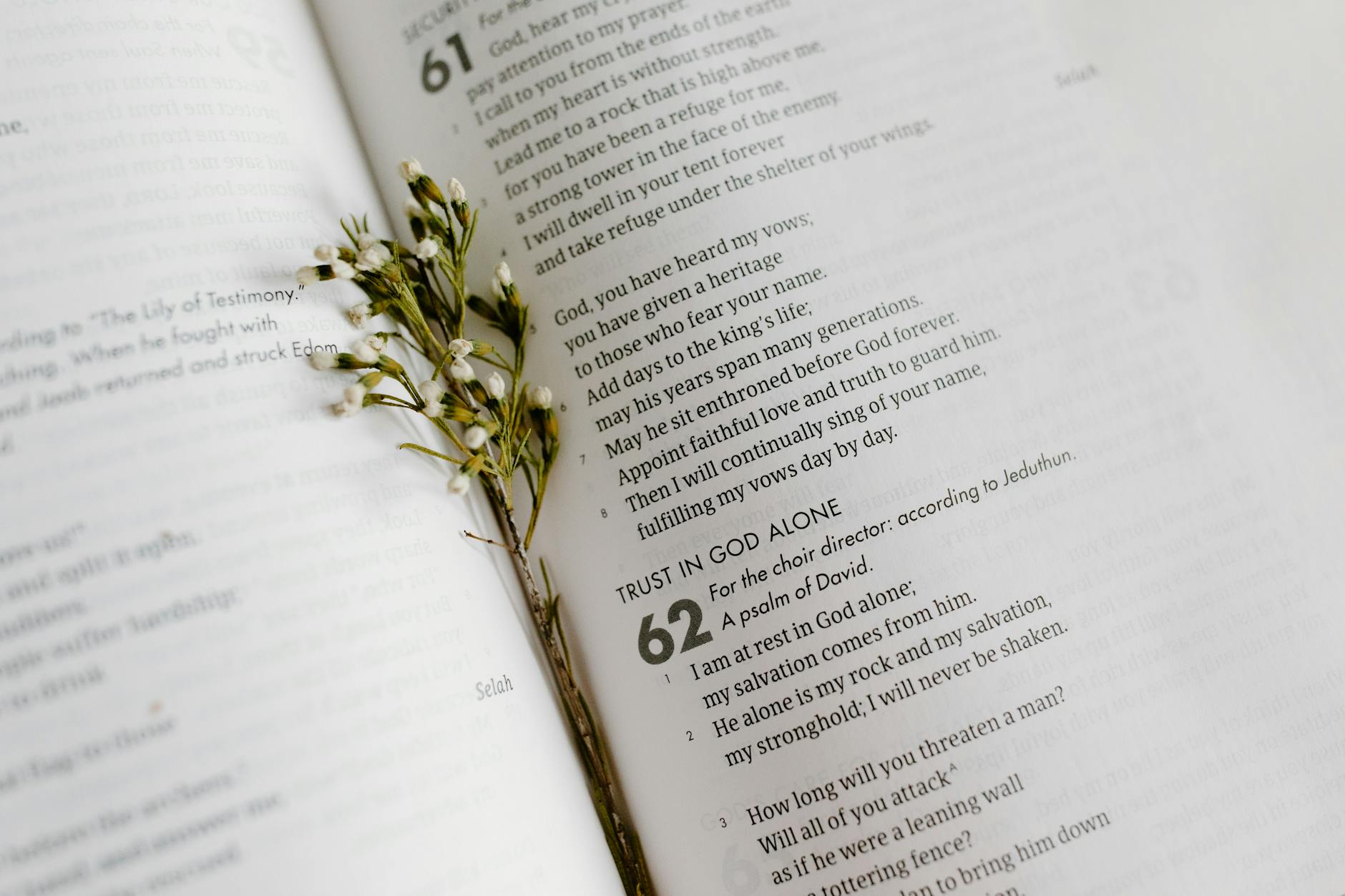
“Now to him who is able to do immeasurably more than all we ask or imagine, according to his power that is at work within us.”
— Ephesians 3:20

More Than I Asked For — Ephesians 3:20 From an A&E Waiting Room

When I think about this verse now, I don’t picture big dreams or bold prayers. I picture A&E.

I picture plastic chairs, harsh lighting, and me sitting there a year ago with a seriously red, painful eye, trying to stay calm. My prayers that night were not ambitious. They weren’t imaginative. They were basic and immediate: Please let this be okay. Please don’t let this get worse. Please help me get through this.

That’s it. That was the size of my faith in that moment.

And yet, looking back, that was the night I felt closer to God than I had in a long time.

Asking for So Little — Receiving So Much

At the time, I wasn’t asking for “immeasurably more.” I wasn’t imagining growth or perspective or spiritual depth. I just wanted reassurance. Relief. Some sense that I wasn’t alone.

What I received wasn’t dramatic or miraculous in the obvious sense. But it was deeper than what I asked for. In the middle of fear and waiting, I felt held. Quietly steadied. Stripped of the illusion that I was in control — and strangely comforted by that.

I asked for help with my eye.
What I received was a reminder of dependence, trust, and God’s closeness.

That was the “more,” even if I didn’t recognise it at the time.
Photo by RDNE Stock project on Pexels.com

The Contrast of Now

Fast forward a year, and life is calmer. Health is better. I’m busy, functioning, planning ahead. On paper, this is the answered prayer. This is the improvement.

But this is where that verse presses in again.

Because now, I’m not asking much at all. I’m capable. Distracted. Self-reliant. I don’t sit still long enough to notice how much I still need grace. The danger isn’t that God is doing less — it’s that I’m paying less attention.

What if the “immeasurably more” in this season isn’t rescue, but quiet transformation?
What if it’s learning how to stay close to God without fear forcing the closeness?

Seeing the A&E Moment Differently

That night in A&E wasn’t just something to get through. It revealed something true — about me, and about God. It showed me how thin my sense of control really is, and how present God can be when I finally stop pretending otherwise.

Looking back through the lens of Ephesians 3:20, I can see that God didn’t just answer the prayer I prayed. He did something deeper than I knew how to ask for — something that’s still unfolding now, in quieter ways.

Photo by Tara Winstead on Pexels.com

Trusting the “More” I Can’t Measure

I don’t feel God’s work as clearly now as I did then. Life is louder. Fuller. Less urgent. But faith, I’m learning, isn’t always about intensity. Sometimes it’s about trusting that God is still at work within me, even when nothing feels dramatic.

A year ago, I asked to get through the night.
Today, I’m living with the slow result of a prayer that went deeper than I realised.

And maybe that’s what Ephesians 3:20 looks like in real life — not bigger asks, but a God who quietly does more than we even know to ask for.


One Year Ago in A&E — and How Different Life Feels Now

One year ago, I was sitting in A&E with a really angry-looking red eye, trying not to spiral.

If you’ve ever been in A&E, you’ll know the feeling. The harsh lighting, the waiting, the way time stretches. You’re surrounded by people, but somehow you feel very alone. I remember feeling scared — not just about my eye, but about how quickly everything felt out of my control.

Photo by Andre on Pexels.com

And weirdly, or maybe not weirdly at all, that’s when I felt closer to God than I had in a long time.

Sitting There With Nothing But Trust

I didn’t say any big, impressive prayers. I didn’t have clarity or confidence. I just sat there, quiet, aware of how small I felt — and how much I needed help.

There was a sense of being held, even in the uncertainty. Like I didn’t need to fix anything or have answers. Just… be honest. Hospitals have a way of cutting through the noise. When you’re forced to wait, faith stops being abstract and starts being very real.

That night stripped things back. I was vulnerable. Open. Aware of how fragile life actually is.

Fast Forward to Now

Photo by xiaoxian on Pexels.com

A year later, my life looks nothing like that moment.

I’m healthy. Busy. Making plans. Getting on with things. And honestly, I’m grateful for that. This version of life is easier in a lot of ways.

But here’s the contrast I keep noticing: I don’t feel that same closeness to God all the time.

Not because God has gone anywhere — but because I’ve filled my life back up. Noise, distractions, confidence, self-reliance. When things are going well, it’s easy to stop checking in. Easy to forget how dependent I actually am.

What That Night Still Whispers to Me

I don’t believe fear or illness are things to chase. I wouldn’t want to relive that night. But I also don’t want to forget what it showed me.

It showed me that:

  • Vulnerability can open doors we usually keep shut
  • God doesn’t need polished words — just honesty
  • Closeness isn’t about crisis, it’s about attention

The challenge now is learning how to bring that same openness into normal life. Into ordinary days. Into moments when I feel “fine” and therefore less aware of my need for grace.

Living With the Contrast

Maybe the goal isn’t to recreate intense spiritual moments, but to let them quietly shape us. To remember without romanticising. To let past vulnerability soften how we live now.

One year ago, I was scared and sitting still in a hospital waiting room.
Today, I’m okay — and learning how to be still again, on purpose.

Both versions of me are real. And God was present in both.

Sometimes I catch myself missing that version of me — not the fear, but the clarity. The way everything unnecessary fell away. Now, I have to work harder to notice God in the ordinary: in routine days, small prayers, half-attention moments. It’s less dramatic, less intense, but maybe that’s the point. Faith now feels quieter, more like a slow decision than an emotional surge — choosing to remember what I already know, even when life doesn’t force me to.

Photo by SpotwizardLee on Pexels.com

I’m genuinely grateful for where I am now, but I’m also aware of how easily gratitude can slide into complacency. When nothing feels urgent, I forget to pause. I thank God in passing instead of leaning in. Comfort can dull attentiveness if I’m not careful. I don’t want ease to make me distant — I want it to make me thankful and awake, aware that grace didn’t stop being necessary just because life got calmer.

The Broom Tree Is Not the End of the Story

Elijah had just witnessed fire fall from heaven.

Photo by Pixabay on Pexels.com

It’s one of the most dramatic moments in Scripture—bold faith, public victory, unmistakable evidence of God’s power. And then, almost immediately after, Elijah ran. Exhausted. Afraid. Empty.

He collapsed beneath a broom tree and asked God to let him die.

That detail matters.

Because it reminds us that spiritual highs do not make us immune to human limits. Even the most faithful among us can reach a place where the body is spent, the soul is overwhelmed, and hope feels thin.

God met Elijah with rest, not rebuke

What’s striking about the broom tree moment is God’s response. There is no lecture. No correction. No demand that Elijah “remember the miracle” or “be stronger.”

Instead, God gives Elijah sleep. Food. Water. Silence.

Twice.

Only after rest does God speak again.

Photo by Andrea Piacquadio on Pexels.com

This is important for those of us who feel confused when burnout follows obedience, or when weariness shows up right after a season of courage. The broom tree is not a sign of failure. It is often the place where God acknowledges our humanity.

Before calling Elijah forward, God restores him.

Photo by vee terzy on Pexels.com

The wilderness is not the Promised Land—but it’s not punishment either

Elijah’s journey didn’t end under the broom tree. But it also didn’t immediately resolve into clarity or comfort. He still had to walk through the wilderness. He still had questions. He still felt alone.

Sometimes we rush past these middle places, eager to arrive at the “Promised Land” without honoring the work God does along the way. But Scripture shows us again and again: wilderness seasons refine us, slow us down, and teach us how to receive rather than strive.

The Promised Land is never reached by force. It’s entered by trust.

The Promised Land often begins quietly

We tend to imagine the Promised Land as obvious—overflowing abundance, instant peace, unmistakable arrival. But often, it begins much more gently.

A nervous system that finally exhales.
A sense of safety returning.
Joy showing up without effort.
Strength that no longer comes from adrenaline.

Like Elijah hearing God not in the wind, earthquake, or fire—but in a gentle whisper, the Promised Land often reveals itself through peace rather than power.

It’s not louder. It’s steadier.

Photo by Alexey Demidov on Pexels.com

Rest is part of the promise

Elijah’s story reminds us that God is not only concerned with what we do, but with how we are sustained. The broom tree and the Promised Land are connected by the same truth: God cares for His people.

Rest is not a detour from calling.
Exhaustion is not a moral failure.
Stillness is not disobedience.

Sometimes the most faithful thing we can do is lie down, eat what is offered, and trust that God is still writing the story.

If you’re under the broom tree right now

If you find yourself weary, disoriented, or unsure how you got here—know this: the broom tree is not where God leaves His people. It is where He tends to them.

The Promised Land does not require you to push harder. It comes as you are strengthened, nourished, and gently led forward.

You are allowed to rest.
You are allowed to be human.
And you are still on the journey.

God is not finished with you yet.

How to Trust God When the New Thing Is Gentle

Learning to trust God’s work when it doesn’t shout

There are seasons when faith feels like movement—decisions, risks, action, momentum. And then there are seasons when faith feels like stillness. Like breathing again. Like not having to prove anything.

Isaiah 43:19 has been meeting me in one of those quieter seasons:

“See, I am doing a new thing!
Now it springs up; do you not perceive it?
I am making a way in the wilderness
and streams in the wasteland.”

Photo by Lorenza Magnaghi on Pexels.com

At first glance, this verse sounds bold. Even dramatic. A new thing. A way. Streams. But the more time I spend with it, the more I notice how gentle it actually is.

God isn’t commanding urgency here. He isn’t demanding clarity or effort. He’s inviting attention.

When “new” doesn’t look how we expected

We tend to imagine new beginnings as loud and obvious—full of certainty, energy, and visible progress. But what if the new thing God is doing doesn’t arrive that way?

What if it comes as relief instead of adrenaline?
As kindness instead of pressure?
As warmth instead of striving?

If your spirit feels calmer than before—less driven, less frantic—that doesn’t mean your faith has dimmed. It may mean your nervous system is healing. It may mean God is rebuilding you from the inside out.

Healing is rarely loud. But it is holy.

Photo by Alina Vilchenko on Pexels.com

“Now it springs up; do you not perceive it?”

Springs don’t explode through the ground. They gather quietly beneath the surface. They take time. They move steadily, unseen, until one day there’s water where there was none.

The signs of a new season are often subtle:

  • being welcomed instead of tested
  • your body recovering faster than it used to
  • joy appearing in small, ordinary moments
  • the ability to care without carrying everything

These are not insignificant details. They are invitations to notice. Evidence that life is returning in places that once felt dry.

Perception takes patience. And patience takes trust.

Photo by ud83cuddfbud83cuddf3ud83cuddfbud83cuddf3Nguyu1ec5n Tiu1ebfn Thu1ecbnh ud83cuddfbud83cuddf3ud83cuddfbud83cuddf3 on Pexels.com

God is making the way—you are not required to force it

“I am making a way in the wilderness.”

This line changes everything.

You are not being asked to prove your calling.
You are not being asked to justify your decisions.
You are not being asked to carry outcomes on your back.

The way is being made for you, not by you.

The wilderness—by definition—is a place without clear paths. But God doesn’t shame us for not knowing where to step next. Instead, He promises presence and provision right where clarity is lacking.

Your role in this season is not to march forward with certainty. It’s to walk gently. To notice where the ground feels solid. To stop when you need to stop.

Photo by Olivia Wright on Pexels.com

Streams in the wasteland: God’s response to burnout

Streams mean supply. Replenishment. Life returning where depletion once ruled.

Burnout tells us we’ve failed—failed to manage, failed to endure, failed to be faithful enough. But God’s response to burnout isn’t disappointment. It’s provision.

Streams don’t ask why the land dried out. They simply flow.

Joy that returns without effort.
Energy that comes back without forcing it.
Peace that doesn’t need to be explained.

This is grace. Not as a concept, but as a lived experience.

A prayer without pressure

Sometimes prayer doesn’t need words polished by theology or effort. Sometimes it can be as simple as this:

God, I trust You are doing a new thing,
even if I only see part of it.
Help me notice the small streams today.
I receive the way You are making for me.

And then—stop.

No fixing. No interpreting. No pushing meaning out of the moment. Let the prayer do its quiet work.

A gentle truth to carry with you

You are not behind.
You are not disobedient.
You are not weak for resting.

If anything, this season reveals courage—the courage to listen when it was time to move, and the courage to slow down when it was time to heal.

New things don’t always arrive with noise. Sometimes they arrive with peace. And peace, too, is evidence that God is near.

If you find yourself in a quieter chapter right now, don’t rush past it. Springs are forming. A way is being made. And streams are already moving toward you—even if you can’t see them yet.


Photo by bill emrich on Pexels.com

From Mount Sinai to the Promised Land: When the Client Finally Gets It

Mount Sinai

Here’s a moment in every long project where you wonder if you’re actually going anywhere—or just circling the mountain for the hundredth time.

That place is Mount Sinai.

Photo by Soran Ali on Pexels.com

Mount Sinai is where the rules are handed down. Where expectations are high, clarity is low, and progress feels theoretical. You’re doing the work, learning the terrain, carrying the weight of responsibility—but the payoff is still abstract. Necessary? Absolutely. Comfortable? Not even close.

For me, Mount Sinai looked like endless revisions, tough conversations, second-guessing decisions, and explaining why something mattered before anyone could see that it mattered. It was process-heavy, outcome-light. Growth was happening, but mostly on the inside.

And then… we left.

Not in a dramatic, lightning-from-the-sky way. Just a quiet shift. A decision to move forward with confidence. To stop optimizing for approval and start optimizing for results. To trust that the work we’d done on the mountain was enough to carry us into something better.

That’s when we started walking toward the Promised Land.

The Promised Land isn’t perfect. It’s not effortless. But it’s fertile. Things grow there. Ideas land. Momentum replaces friction. You’re no longer arguing for the value—you’re demonstrating it.

And then comes the moment you don’t plan for, but always hope for:
the impressed client.

Photo by SHVETS production on Pexels.com

Not the loud, over-the-top praise. Not the polite “looks good.”
The real impressed.

The pause before they speak.
The “Oh—this is strong.”
The sudden trust.

That reaction doesn’t come from a single clever move. It’s the compound interest of everything that happened on Mount Sinai—the discipline, the patience, the standards you held even when no one was clapping yet.

What struck me most wasn’t just that the client was impressed. It was why. They weren’t reacting to polish alone. They were responding to clarity. Confidence. Intentionality. The sense that this work had been thought through deeply, not rushed into existence.

That’s the quiet gift of the journey: when you finally arrive, people feel the distance you traveled—even if they weren’t there for the hard parts.

Photo by Mohamed Sayed Shoman on Pexels.com

Leaving Mount Sinai taught me something important: struggle doesn’t disqualify the work; it qualifies it. The tension, the uncertainty, the long road—they’re not detours. They’re preparation.

So if you’re still on the mountain, staring at a horizon that feels far away, take heart. Keep walking. Keep refining. Keep believing the land ahead exists, even if you can’t see it yet.

Because one day, sooner than you think, you’ll look up and realize you’ve arrived.

And the client?
They’ll know it too.

Entering the Promised Land: Beginning a New Season of Work

Photo by eberhard grossgasteiger on Pexels.com

“The Lord our God said to us at Horeb, ‘You have stayed long enough at this mountain.’”
— Deuteronomy 1:6

Starting work in a new place feels exciting, uncertain, and sacred all at once. As I stepped into this new role, the passage that kept returning to my heart was Deuteronomy 1:6–11—a moment when God spoke clearly to His people and said, it is time to move on.

Israel had not failed at Horeb. They had received the law. They had encountered God. But staying too long—even in a place of genuine encounter—was no longer obedience.

“You Have Stayed Long Enough”

God did not rebuke Israel for being at Horeb. He simply declared that the season had ended.

That truth reframed everything for me.

Leaving my previous workplace was not rejection. It was timing. There are moments when faithfulness looks like staying—and moments when faithfulness looks like leaving. Deuteronomy reminds us that stagnation can exist even in holy places if we refuse to move when God says go.

This new role is not about escape. It is about obedience.

Photo by Charlie Solorzano on Pexels.com

“Turn and Take Your Journey”

“Turn and take your journey, and go…”
— Deuteronomy 1:7

The Promised Land was not reached accidentally. Israel had to turn—change direction—and then take their journey step by step. God named the destination, but He did not teleport them there.

Starting work in a new place feels the same.

There is promise, but there is also process. There is favor, but there is still learning. The Promised Land is not the absence of work; it is work aligned with God’s direction.

This is not arrival into ease—it is arrival into purpose.

A Land Already Given

“See, I have set the land before you. Go in and take possession…”
— Deuteronomy 1:8

God spoke as if the land already belonged to them—before they possessed it.

That truth anchors me as I begin this new chapter. I am not striving to earn legitimacy here. I am learning to steward what God has already placed before me. Confidence does not come from proving myself, but from trusting that God does not send us where He has not already gone ahead.

The land was promised long before the people crossed into it.

Growth, Expansion, and Blessing

Later in the passage, Moses reminds the people that God had multiplied them and would continue to do so.

“May the Lord… increase you a thousand times and bless you as He has promised!”
— Deuteronomy 1:11

The Promised Land is a place of increase—not just numerically, but in responsibility, maturity, and capacity. Growth requires stretching. Blessing often comes with weight.

As I begin work here, my prayer is not merely for success, but for enlargement: enlarged wisdom, enlarged humility, enlarged love for people, and enlarged trust in God.

Walking Forward in Faith

The Promised Land was never about geography alone—it was about alignment. Israel entered not because they were perfect, but because God was faithful.

Starting this new role, I carry that same truth. I am here not because I am flawless, but because God keeps His word. I step forward aware, dependent, and grateful.

If you are beginning something new—especially after a long season in one place—Deuteronomy reminds us that moving on can be holy. God does not rush us, but neither does He leave us circling mountains forever.

Sometimes the most faithful prayer is simple:

“Lord, we are ready to go where You have already promised.”

And then—we take the journey.

Photo by Manuela Adler on Pexels.com

From Sealing to Release: A Spirit-Led Transition

Some transitions are decided in boardrooms.
Others are decided in the spirit long before the paperwork catches up.

Looking back, my move from one company to another did not begin with resignation letters or job offers. It began with two dreams—four days apart—that framed the end of one season and the spiritual necessity of entering another.

December 26, 2025: The Crown That Was Sealed

On December 26, 2025, I had a vivid and deeply symbolic dream.

Joseph Prince placed a golden crown upon my head. This was not a spectacle or a celebration—it was calm, intentional, and authoritative. Then the crown was covered with a transparent layer, sealing it in place while keeping it fully visible.

Spiritually, this felt unmistakable.

The crown represented calling, identity, and authority that does not come from a title or position, but from God Himself. It was not something I achieved—it was something conferred. The transparent covering mattered deeply: this was not hidden favor, nor was it premature exposure. It was sealed authority—real, present, but protected until the appointed time.

At that moment in life, nothing externally had changed. I was still in the same job, under the same structure, with the same expectations. But inwardly, heaven had already spoken. Something had been established before circumstances aligned.

The dream carried a clear message: what God crowns, He also preserves. Not everything crowned is immediately displayed. Some things are sealed because they are sacred.

The transparent covering spoke of sealing.

“Now it is God who establishes us with you in Christ and has anointed us, who has also put His seal on us and given us His Spirit in our hearts as a guarantee.”
— 2 Corinthians 1:21–22

December 30, 2025: The Headband of Constriction

Four days later, on December 30—my final day at work—I felt the opposite spiritual sensation.

The image that captured the day was the Sun Wukong headband: a symbol of restraint, control, and enforced obedience. In the story, the headband tightens when the wearer resists direction, causing pain meant to subdue will and independence.

That was exactly how the day felt.

It was not merely stress or sadness. It was spiritual constriction. A pressure around the mind. A sense that staying any longer would require submission not to growth, but to limitation. What once felt tolerable now felt oppressive—not because the environment suddenly changed, but because I had.

The headband was not evil; it was instructional. It revealed that the season of discipline under that authority had ended. What once trained me would now restrain me.

Spiritually, this was confirmation: a crowned head cannot remain under a tightening band.

“It shall come to pass… that the yoke shall be destroyed because of the anointing.”
— Isaiah 10:27

What once trained me now restricted me. What once shaped me now pressed against the very identity God had sealed. The pressure was not condemnation—it was confirmation. The grace to remain under that authority had lifted.

A crowned head cannot remain under a tightening yoke.

This was not rebellion.
This was release.

The Spiritual Logic of the Transition

The order mattered.

First came the crown.
Then came the pressure.

God affirmed identity before allowing discomfort to intensify. The sealing came before the constriction. This is often how spiritual transitions work: God establishes who you are becoming, then allows the old structure to feel increasingly incompatible with that identity.

I did not leave because I was rejected.
I left because I was released.

What felt like oppression was actually alignment. The headband did not mean failure—it meant that the grace to stay had lifted.

Walking Forward Covered, Not Rushed

I did not step into the next company unveiled in public triumph. I stepped forward covered—sealed, protected, and inwardly certain.

The crown did not disappear because it was unseen.
It remained because it was God-given.

If you find yourself feeling increasing pressure in a place that once fit, it may not be resistance—it may be revelation. The Spirit often signals departure not with chaos, but with clarity: this no longer aligns with who you are now.

Some endings are not punishments.
They are permissions.

And some crowns are not for display—
they are for destiny.

“Humble yourselves under the mighty hand of God, that He may exalt you in due time.”
— 1 Peter 5:6

If you find yourself experiencing increasing pressure in a place that once fit, ask the Lord whether the season has shifted. Oppression is sometimes not an attack—it is a signal that the anointing has outgrown the assignment.

Some doors close because grace has moved on.
Some yokes tighten because they are about to break.

And some crowns are not for immediate display—
they are for divine appointment.

The Lord seals before He sends.
And when He sends, He sends with authority.

🌿 When You Feel Wronged at Work: Lessons from Genesis 34

We’ve all been there — feeling unjustly treated, unseen, or burdened with responsibilities that others ignore. In workplaces where leadership is passive, systems are broken, and relationships become political battlefields, it’s easy to feel like you’re losing your footing.

Recently, I’ve been reflecting on a powerful passage from Genesis 34, which offers a surprisingly relevant lens for how we might navigate injustice — not just in ancient times, but in today’s emotionally exhausting work environments.

⚖️ The Situation: When Injustice Feels Personal

In Genesis 34, Jacob’s daughter Dinah is wronged. Her brothers, driven by rage and a desire for justice, retaliate in deceptive and violent ways. But rather than restoring dignity or righteousness, they desecrate God’s covenant, destroy a whole city, and cause even more damage.

It’s a cautionary tale — one that warns us against responding to injustice with our own version of destruction.

As I wrestled with my own frustrations at work — unresponsive leadership, unsafe incidents involving students, lack of accountability — this passage reminded me that how I respond matters more than how others behave.

🛑 Five Pitfalls to Avoid When You’ve Been Wronged

  1. Don’t Disobey God
    When systems fail, it’s tempting to take things into our own hands. But detaching from God’s ways only leads to further breakdown. Revenge or bitterness may feel justified, but they distort who we’re called to be.
  2. Don’t Deceive Others
    Jacob’s sons used manipulation to get what they wanted. In the workplace, this could look like passive-aggressiveness, subtle sabotage, or gossip. God calls us to confront dysfunction truthfully, not deceitfully.
  3. Don’t Desecrate What’s Sacred
    The covenant sign of circumcision was misused by Jacob’s sons. In our world, the “sacred” might be our values, our calling, or even the vulnerable children we’re meant to protect. Don’t let hurt push you to abandon what matters most.
  4. Don’t Destroy Others (or Yourself)
    Unchecked anger can make us say or do things that hurt others — and ourselves. Don’t let toxic systems turn you into a version of yourself you won’t recognize later.
  5. Don’t Dignify Harsh Actions with Self-Justification
    Jacob’s sons defended their vengeance as justified. But God invites us to humble reflection, not rationalization. Sometimes, our strongest response is not force — but wisdom, grace, and restraint.

🙏 So What Should We Do?

God’s response to injustice looks radically different from ours. Here are seven ways to navigate workplace conflict without losing yourself:

1. Decide Not to Take Matters Into Your Own Hands

Just because you can escalate, retaliate, or resign on impulse — doesn’t mean you should. Wait. Observe. Choose your timing and words carefully.

2. Direct the Injustice to God

Tell Him what you’re experiencing. Not in polished prayers, but in real, raw conversation. He sees the burdens you carry.

3. Discern Your Response

Sometimes, God tells us to speak up. Other times, He tells us to wait. Either way, we need discernment. Don’t react — respond.

4. Discuss What You Discern

Talk to people who walk closely with God. Don’t process pain alone. Let wise counsel anchor your perspective.

5. Discipline Yourself to Obey

If God says stay, stay with purpose. If He says go, go with peace. His favour follows obedience — not comfort.

6. Display Love and Humility

Even when others are disorganized, unkind, or passive, don’t let their behaviour define yours. Lead with love. Walk in peace. Your character is your loudest legacy.

7. Depend on God for Justice

Not all justice is instant. But no act of faithfulness goes unnoticed. Trust that God will vindicate in His way and time.


🌱 What This Has Meant for Me

In my own workplace, I’ve seen moments where systems failed and leadership faltered — and I was tempted to throw in the towel. But this passage reminded me that my strength isn’t just in what I do, but how I do it.

Even as I consider new ventures, transitions, or shifts in responsibility, I want to move from a place of clarity, not resentment. From calling, not chaos.

Because in the end, I don’t just want to leave dysfunction — I want to grow through it.


📖 Final Reflection

“Do not be overcome by evil, but overcome evil with good.” — Romans 12:21

Maybe you’re in a similar place. Maybe you’re exhausted. Hurt. Ready to walk away.

Pause.

Bring your heart before God.

Let Him lead you not just out of injustice — but into a deeper wholeness.

You deserve that. And so does everyone your life touches.

Photo by Tara Winstead on Pexels.com

🌌 A Glimpse of Healing: The Night My Eyes Turned White Again

It was an ordinary cell group evening—or so I thought.

I had arrived that night carrying not just the usual burdens of the week, but also a troubling discomfort: my right eye had turned completely bloodshot. The whites were a deep, angry red, and I could feel the irritation pulsating behind my eyelid. My natural instinct was to consider another trip to A&E. I had already been there twice earlier this year, and the thought of going back again filled me with weariness. But something in me paused.

Instead of running to the hospital, I brought it to the group.

That evening, we were gathered together in the warmth of shared prayer and honest conversation. I hesitated for a moment—sometimes it feels easier to pray for peace or provision than for physical healing. But as the discussion flowed into a time of prayer ministry, I felt the prompting of the Holy Spirit: “Ask. Believe.”

So I asked.

We prayed. Nothing elaborate or dramatic. Just simple, sincere, faith-filled words lifted to a God who sees, knows, and heals. I closed my eyes, and as my cell group surrounded me in love and intercession, I felt a warmth—both spiritual and physical—rest over me. No lightning, no thunder. Just peace.

And then the miracle happened.

By the time we finished our time together and I got home, I caught a glimpse of myself in the mirror. I blinked. Then leaned in. My eye—once blood red—was clear. White. Normal.

No A&E. No drops. No waiting room. Just prayer and presence.

I stood in the bathroom, silent and awestruck. It wasn’t just that the physical condition had changed—it was that God had met me, tangibly and personally. He didn’t just see my eye; He saw me. My doubts, my fatigue, my quiet prayer whispered in faith. And He answered.

That night reminded me that healing can come in unexpected ways. Sometimes it’s gradual, and other times, it’s instant. But always, it flows from a place of relationship with a God who is intimately involved in our lives.

I still carry that moment with me, not just as a story to tell, but as a testimony to treasure. The Holy Spirit moved that night, not just over my eye—but over my heart.

If you’re in need of healing today, physical or otherwise, I want to encourage you: bring it to God. Bring it in community. Bring it in faith, no matter how small. Miracles are still happening, even on ordinary evenings in cell group.

Photo by Luku00e1u0161 Dlutko on Pexels.com

Understanding Key Developmental Theories for Effective Teaching in Schools

As educators, it’s vital to recognize the unique ways in which children develop and learn. Understanding developmental psychology and its associated theories can make a huge difference in how we approach our students and design our teaching strategies. Whether you’re a new teacher or an experienced one looking to refresh your knowledge, here are the foundational developmental theories that can guide you in creating an effective, engaging learning environment in schools.


1. Piaget’s Cognitive Development Theory

Swiss psychologist Jean Piaget is one of the most well-known figures in educational psychology. His theory of cognitive development explains how children think and understand the world at different stages of their lives. Piaget identified four major stages of cognitive development:

  • Sensorimotor Stage (0–2 years): Children explore the world through their senses and motor activities.
  • Preoperational Stage (2–7 years): At this stage, children start using symbols and language but are still very concrete in their thinking.
  • Concrete Operational Stage (7–11 years): Logical thinking emerges, but it is still rooted in concrete experiences.
  • Formal Operational Stage (12+ years): Abstract thinking and problem-solving skills begin to develop.

Why This Matters in School: Most elementary-aged students fall within the Preoperational or Concrete Operational stages. Teachers can benefit from understanding that:

  • Younger students often need hands-on, concrete learning experiences to make sense of abstract concepts.
  • Patience is key when it comes to developing logical reasoning—children at this age may still struggle with concepts like conservation (the idea that quantity doesn’t change despite changes in shape or appearance).
Photo by Thomas Beaman on Pexels.com

2. Vygotsky’s Sociocultural Theory

Lev Vygotsky’s sociocultural theory emphasizes the role of social interaction and cultural context in cognitive development. One of his key ideas is the Zone of Proximal Development (ZPD)—the gap between what a child can do alone and what they can do with the help of a teacher or more knowledgeable peer.

Why This Matters in School:

  • Teachers can use scaffolding techniques to help students learn new concepts. This means breaking down tasks into smaller, manageable steps and providing guidance until the student can perform the task independently.
  • Encouraging group work and peer interactions is essential, as learning happens most effectively in social settings.
Photo by lil artsy on Pexels.com

3. Erikson’s Psychosocial Development Theory

Erik Erikson’s theory of psychosocial development focuses on the emotional and social challenges individuals face throughout their lives. For children in primary and early secondary school, the most relevant stage is:

  • Industry vs. Inferiority (6–12 years): At this stage, children are focused on building competence and mastering new skills. They seek recognition for their accomplishments, and their self-esteem is closely tied to their ability to succeed.

Why This Matters in School:

  • As a teacher, your role in recognizing and reinforcing students’ successes is incredibly important. Praise effort, not just results.
  • Celebrate small wins, whether that’s completing an activity, mastering a skill, or improving over time.
  • Make sure students feel like they are capable of mastering challenges to prevent feelings of inferiority.
Photo by Danila Giancipoli on Pexels.com

4. Gardner’s Theory of Multiple Intelligences

Howard Gardner’s theory revolutionized our understanding of intelligence by suggesting that intelligence is not a single entity but consists of multiple types. These include:

  • Logical-Mathematical: Ability to think logically and solve mathematical problems.
  • Visual-Spatial: Ability to visualize and think in three dimensions.
  • Bodily-Kinesthetic: Ability to control and coordinate physical movements.
  • Interpersonal: Ability to understand and interact effectively with others.
  • Intrapersonal: Self-awareness and understanding one’s emotions.
  • Linguistic: Sensitivity to language and the ability to use words effectively.
  • Musical: Sensitivity to rhythm, tone, and sound.
  • Naturalistic: Ability to recognize and categorize natural objects.

Why This Matters in School:

  • Students have varied strengths and learning preferences. Recognizing and addressing different types of intelligences can make your lessons more engaging.
  • If a student is more musically inclined, try integrating music into your lesson. If another student thrives through physical activity, incorporate movement-based learning.
Photo by BERK OZDEMIR on Pexels.com

5. Skinner’s Behaviorism and Reinforcement Theory

B.F. Skinner’s theory of behaviorism suggests that behavior is influenced by the consequences that follow it, particularly the use of reinforcement. Positive reinforcement, such as praise or rewards, increases the likelihood of desired behaviors being repeated.

Why This Matters in School:

  • Reinforcement techniques are essential for building classroom behavior and encouraging active participation.
  • Recognize good behavior immediately—praise or reward when students display positive behaviors or successfully complete tasks.
  • Consistent routines and clear expectations help students feel secure and focused, improving their learning experience.

Practical Tips for Teachers:

  • Meet students where they are: Understand that children develop at different rates and be patient with them as they work through new concepts.
  • Use play and hands-on activities: As Piaget suggested, children learn best when they can interact directly with their environment.
  • Encourage social learning: Vygotsky’s theories remind us that social interaction is a critical part of cognitive growth, so create opportunities for group work.
  • Celebrate strengths: Gardner’s theory shows that there are many different kinds of intelligence, so try to celebrate and nurture each child’s unique abilities.
  • Use reinforcement wisely: Skinner’s behaviorism suggests that reinforcement is a powerful tool for shaping positive behavior and motivation.

Incorporating these developmental theories into your classroom practice can help you better understand your students, design more effective lessons, and create an environment that fosters growth and confidence. As you continue to build your teaching toolkit, remember that every child is unique, and understanding their developmental stages is key to helping them succeed.

Photo by Tara Winstead on Pexels.com


Have questions or want to learn more about these theories? Feel free to leave a comment below!

Design a site like this with WordPress.com
Get started