Sometimes, innovation begins not with knowing everything, but with being willing to understand.
There are moments in a project when something happens that makes you stop and think:
“This is bigger than I expected.”
For me, one of those moments came through a 105-second video created for NOÛS.
What makes the video remarkable is not simply its visual quality. It is not merely that it demonstrates a functioning system. And it is certainly not because it is perfect.
What makes it remarkable is the context behind it.
The video was completed on the second day of deeply engaging with the contents and purpose of NOÛS in detail.
In an incredibly short period of time, my course mate went from learning about an unfamiliar concept to understanding enough of its purpose, workflow, users and identity to turn it into a coherent visual story.
That, to me, is more than good execution.
It is a beautiful example of what can happen when understanding meets creativity, opportunity meets stewardship, and faith meets action.

From Information to Understanding
When we first encounter a new project, it is easy to focus on information.
What does the system do?
What are the features?
Where does the user click?
What does each page contain?
But there is a difference between knowing information and understanding a system.
The NOÛS video demonstrates that difference.
It doesn’t simply show isolated screens.
It tells a journey:
Inquiry → Registration → Booking → Completion → Record → Administration
The viewer can see how one stage leads naturally into another.
A student or participant begins a journey.
Information is captured.
The journey progresses.
That information becomes a structured record.
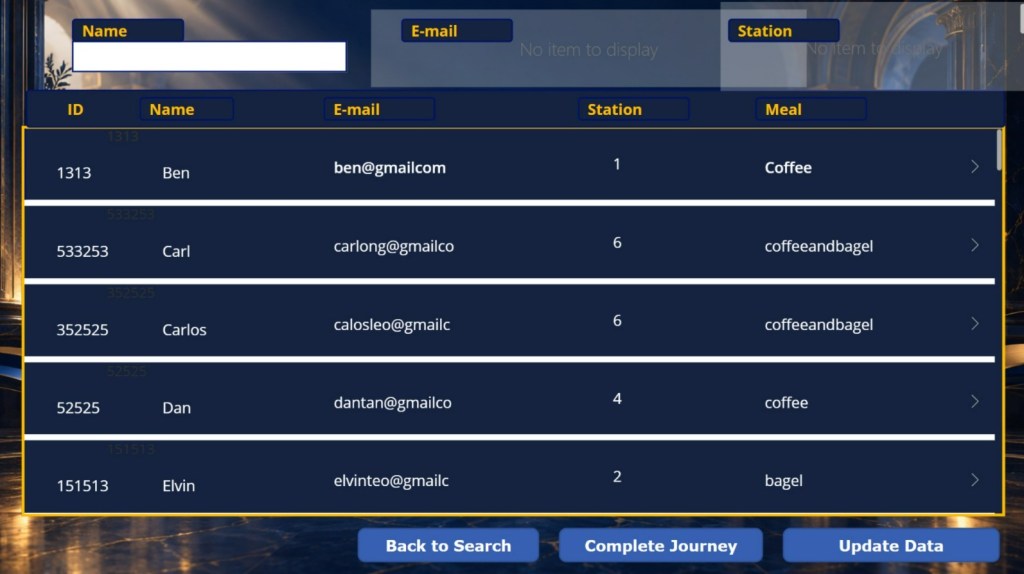
And eventually, an administrator can search for and manage that information.
That means the creator wasn’t simply reproducing what they had been shown.
They had begun to understand why the pieces existed together.
That is where creativity becomes meaningful.

The Bigger Idea Behind NOÛS
At first glance, NOÛS can be described practically as a smart course registration and reporting system.
It captures information.
It manages records.
It supports registration.
It helps administrators access information.
All of that matters.
But the name itself suggests something larger.
NOÛS comes from the Greek concept associated with the mind, intellect, understanding and reason.
That gives the brand an unusual foundation.
It isn’t simply saying:
“We built another education management system.”
It has the potential to ask a much bigger question:
How can technology serve human understanding?
That distinction matters.
The future of technology should not only be about building systems that are faster or more powerful.
It should also be about building systems that help people think, learn, organise, connect and make better decisions.
That is where I believe the NOÛS identity becomes particularly interesting.
When Ancient Ideas Meet Modern Technology
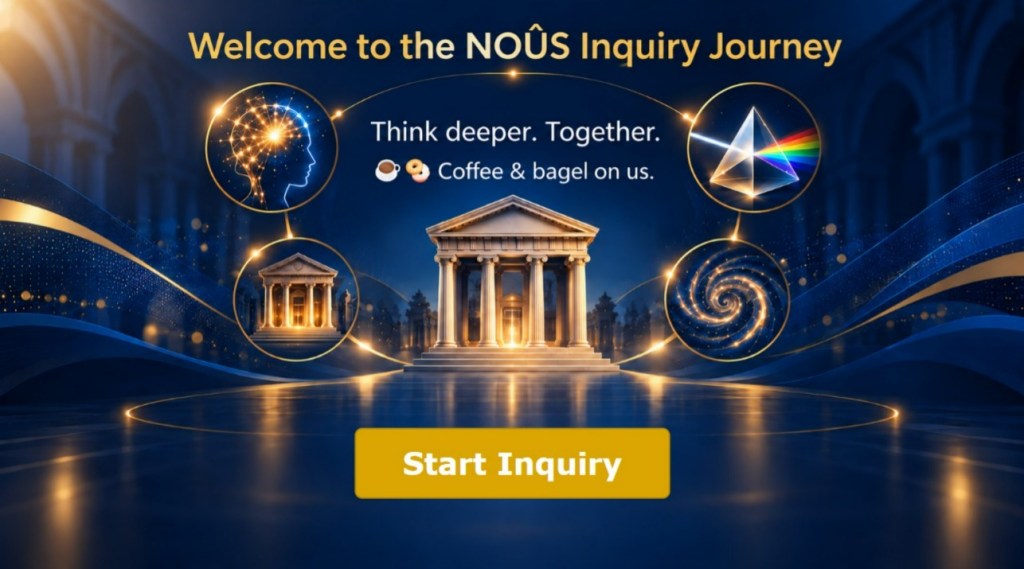
There is something intentionally distinctive about the visual identity of NOÛS.
The classical references.
The philosophical atmosphere.
The deep blue and gold.
The architectural symbolism.
And then, within that world, a modern digital system.
At first, these might seem like contrasting ideas.
Ancient philosophy on one side.
Modern technology on the other.
But perhaps that tension is exactly what makes the brand interesting.
Human beings have been asking questions about knowledge, reason, intelligence and the nature of the mind for thousands of years.
Today, we are asking those same questions in a world increasingly shaped by artificial intelligence.
The technology has changed.
The fundamental questions have not.
And perhaps that is where NOÛS can occupy a distinctive space.
Ancient questions. Modern tools. Human purpose.
The Administrator Is Part of the Story
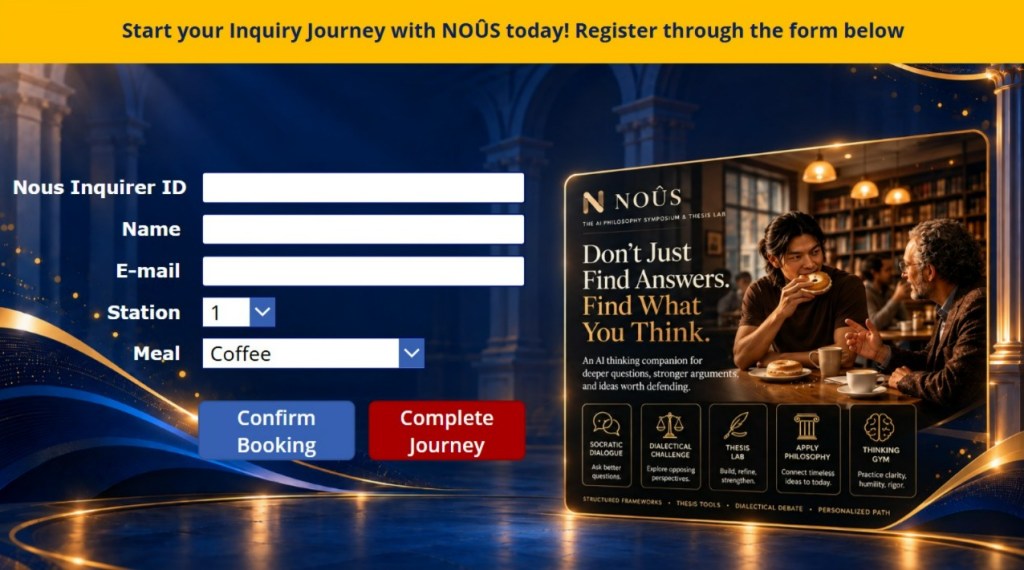
One of the aspects I particularly appreciate about the video is that it doesn’t stop with the participant.
It eventually shifts to the administrator.
This is important because technology is often designed around the person who interacts with the front end while overlooking the person who has to manage everything behind it.
The video demonstrates something much more practical:
A participant enters information.
The system captures it.
The journey progresses.
And later, an administrator can retrieve that information.
That is the real value of an administrative system.
It creates continuity.
Instead of information becoming scattered across emails, forms, spreadsheets and disconnected records, the journey can become part of a structured system.
The administrator doesn’t simply receive more data.
They gain visibility.
And good technology often works precisely this way.
It quietly removes friction that people have become so accustomed to that they no longer question it.
Faith and the Idea of Stewardship
This is where the experience connects deeply with my understanding of faith.
Christianity speaks extensively about stewardship.
We are entrusted with gifts, opportunities, resources, relationships and responsibilities.
The question is not simply:
“What have I been given?”
It is also:
“What am I going to do with what I’ve been given?”
The Parable of the Talents in Matthew 25 captures this principle beautifully.
The servants receive different things.
What distinguishes them is what they do with what has been entrusted to them.
I think innovation can be understood in a similar way.
An idea can be a form of stewardship.
A skill can be a form of stewardship.
An opportunity can be a form of stewardship.
And sometimes, someone else’s vision can be entrusted to us for a particular season.
The responsibility is not necessarily to make it perfect.
The responsibility is to develop it faithfully.
Creativity Is Also Stewardship

That is why I don’t see the NOÛS video simply as a marketing asset.
I see it as an example of creative stewardship.
My course mate was given something relatively unfamiliar.
They had a limited amount of time to understand it.
Yet rather than merely reproducing information, they interpreted it.
They identified the journey.
They understood the users.
They recognised the relationship between the participant and the administrator.
They understood the role of the system.
And then they translated that understanding into something visual.
That is what designers, strategists, engineers and communicators do at their best.
They take something that exists in someone’s mind and make it understandable to someone else.
They turn understanding into experience.
Faith Does Not Mean Having All the Answers
There is an important lesson here for anyone building something new.
We often assume that we need complete certainty before we begin.
We want the entire plan.
The perfect strategy.
The finished product.
The proven market.
The guaranteed outcome.
But that is rarely how innovation works.
You learn.
You experiment.
You build.
You receive feedback.
You adjust.
You try again.
Faith operates in a remarkably similar space.
Faith does not mean pretending that we know exactly what tomorrow will look like.
It means trusting enough to take the next step.
Sometimes God doesn’t reveal the entire path.
He reveals enough for the next step.
And perhaps that is how many worthwhile ideas are built.
One step of understanding.
One step of creativity.
One step of courage.
One step of faith.
The People Who Help Us See Our Own Vision Differently
Another lesson from this experience is the importance of collaboration.
When we build something, we naturally become attached to our own understanding of it.
We know what we intended.
We know why certain decisions were made.
We know what we hope the project will become.
But another person can come into that vision with fresh eyes.
And sometimes, they see something we didn’t.
That is what makes collaboration so valuable.
One person may understand the technology.
Another may understand the users.
Another may understand the brand.
Another may see the story.
Another may see the business opportunity.
And another may see the possibility that exists several years into the future.
We don’t need everyone to see everything in exactly the same way.
We need people who understand the direction well enough to contribute meaningfully to the journey.
That is how an idea becomes bigger than the person who first imagined it.
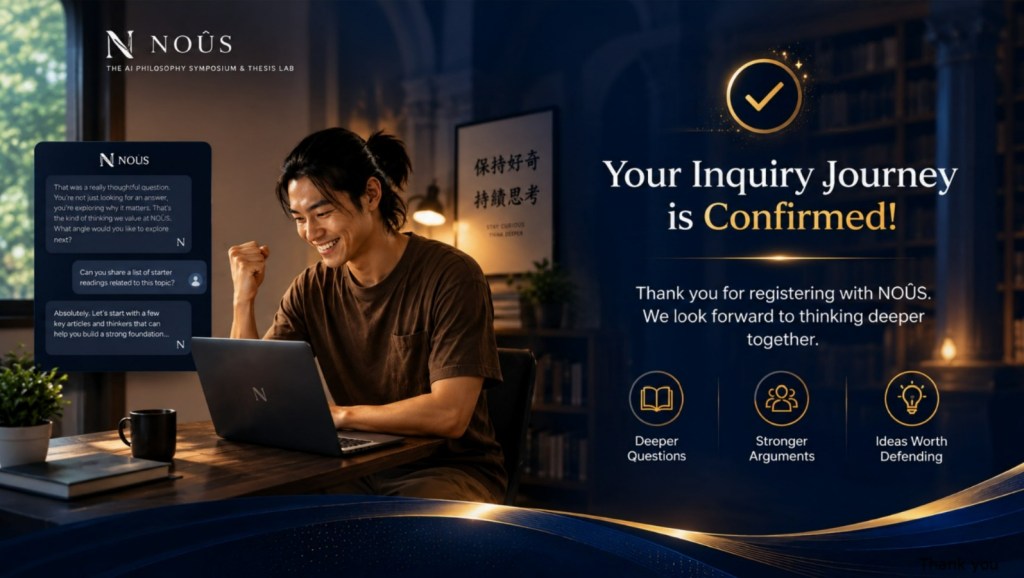
Why the Video Feels Phenomenal
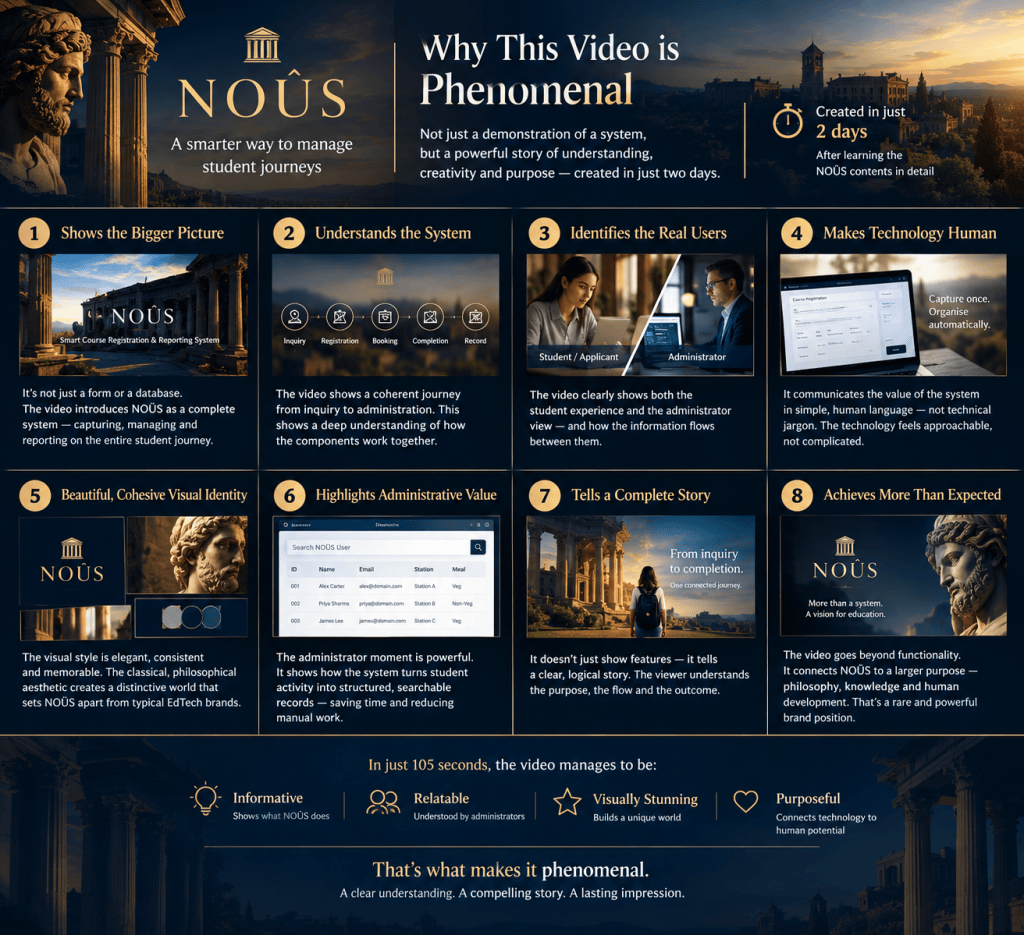
So, what exactly makes a 105-second video phenomenal?
It isn’t simply the aesthetics.
It isn’t simply the interface.
It isn’t simply the fact that it works.
It is the combination of several things.
It understands the bigger picture.
It presents NOÛS as more than a collection of forms and databases.
It understands the system.
The workflow is coherent from beginning to end.
It understands the users.
We see both the participant’s journey and the administrator’s needs.
It makes technology human.
Instead of overwhelming the viewer with technical language, it shows what actually happens.
It has a distinctive identity.
The philosophical and classical visual language separates NOÛS from generic EdTech products.
It communicates administrative value.
The information captured during the journey eventually becomes useful, searchable information for administrators.
It tells a story.
The viewer isn’t simply watching features.
They are following a journey.
And it achieves all of this remarkably quickly.
That is what makes the achievement even more meaningful.
Second day.
105 seconds.
A concept that was still relatively new.
And yet, something tangible emerged.
Excellence Is Not Perfection
There will always be things we can improve.
The next version can be more polished.
The interface can evolve.
The storytelling can become sharper.
The brand can become more refined.
The product can become more sophisticated.
That is the nature of innovation.
But we should be careful not to confuse excellence with perfection.
Excellence is not the absence of imperfections.
It is the decision to take what has been entrusted to you and develop it with care.
The NOÛS video did something incredibly important:
It made the idea visible.
Before that, NOÛS existed largely as concepts, conversations, interfaces, documents and aspirations.
Then suddenly, there was a story.
Something people could watch.
Something they could understand.
Something they could respond to.
Something they could imagine becoming real.
That is a significant milestone.
Building Technology With Purpose
As NOÛS continues to develop, I hope we never lose sight of the principle behind the technology.
Technology should not exist simply because something can be automated.
It should exist because automation, organisation and intelligence can help people accomplish something worthwhile.
For NOÛS, that means thinking about education, administration, inquiry, knowledge and human development.
And perhaps, eventually, it means asking even bigger questions.
As artificial intelligence becomes increasingly capable:
What happens to human judgment?
What happens to creativity?
What happens to education?
What happens to meaning?
And ultimately:
What does it mean to remain human in an increasingly intelligent technological world?
Those questions make NOÛS more interesting than simply another software product.
They give the technology a reason to exist.
From 105 Seconds to a Vision

The video lasts only 105 seconds.
But behind those 105 seconds are hours of learning, interpretation, creativity, collaboration and effort.
And behind the product itself is something even larger: A vision.
Perhaps that is the real lesson I take from this experience.
We should never underestimate what can happen when someone is willing to learn.
We should never underestimate what another person’s creativity can reveal about our own vision.
We should never underestimate the value of taking the first step.
And we should never underestimate what God can do through people who are willing to faithfully steward the opportunities placed before them.
As Proverbs 16:3 reminds us:
“Commit to the Lord whatever you do, and he will establish your plans.”
We don’t know exactly where NOÛS will eventually go.
Perhaps that uncertainty is part of the beauty.
What we do know is that something has begun.
A concept has become a system.
A system has become a story.
And a story is beginning to become a vision that other people can see.
NOÛS is still at the beginning.
And perhaps the most exciting part isn’t knowing exactly how the story ends.
It is having the faith, creativity and courage to keep building the next chapter.
One idea.
One person.
One act of stewardship.
One step at a time.
And perhaps, in time, those individual steps will become something much greater than any of us could have imagined at the beginning.