Reflections on AI innovation, leadership and shaping the future of responsible AI
Attending SWITCH 2026 gave me an opportunity to observe how companies, researchers, entrepreneurs and innovators are contributing to the future of artificial intelligence.
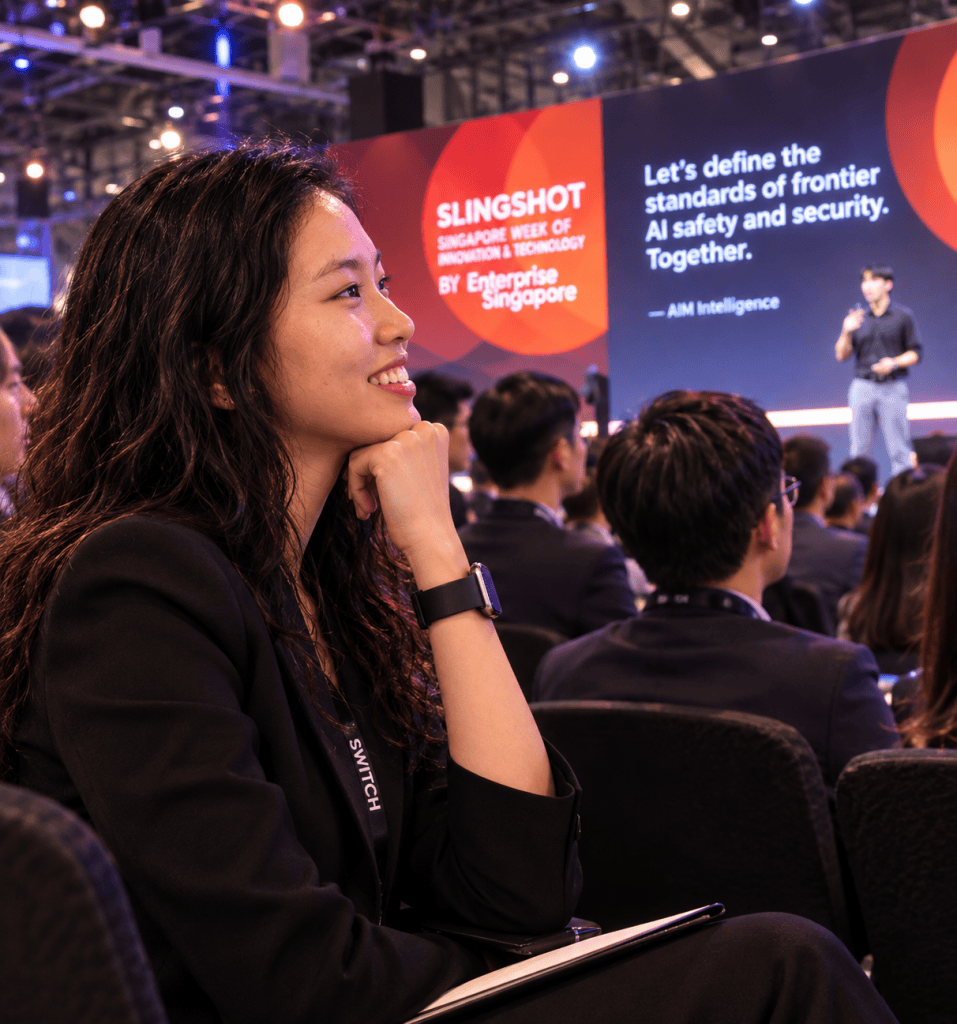
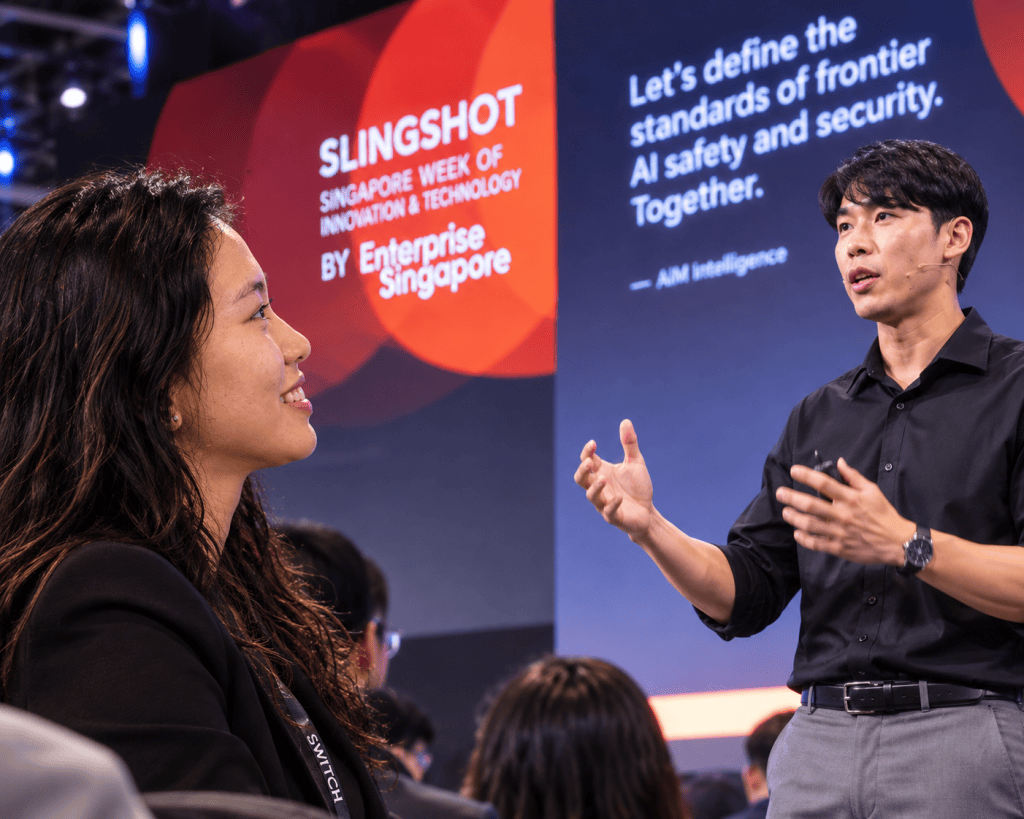
One company that caught my attention was AIM Intelligence. Its statement at the SLINGSHOT stage particularly resonated with me:
“Let’s define the standards of frontier AI safety and security. Together.”
Beyond its AI security products, I found its broader ambition interesting: contributing to the standards that will guide how humanity develops and uses increasingly powerful AI.
Here are ten lessons I believe I can learn from AIM Intelligence.
1. Don’t just build AI solutions; identify problems that matter to humanity.
AIM Intelligence reminds me that successful AI innovation begins with identifying a meaningful problem.
Rather than developing AI simply because the technology is available, it focuses on the growing need for AI safety and security.
My lesson: My NOÛS and NOESIS projects should be grounded in meaningful questions about human reasoning, trust, security and responsible AI adoption.
2. Have a vision that extends beyond the product.
AIM Intelligence’s ambition is not limited to selling AI security software. Its founder wants to contribute to defining standards for frontier AI safety and security.
This demonstrates how a company can pursue a larger mission beyond its immediate commercial offerings.
My lesson: NOÛS and NOESIS should represent more than individual applications. They can become practical experiments exploring how humans should interact with, evaluate and govern artificial intelligence.

3. Treat AI safety as an essential part of technological progress.
AI capabilities are advancing rapidly, but greater capabilities also introduce new risks.
AIM Intelligence demonstrates why AI security, adversarial testing and safeguards need to develop alongside AI innovation.
My lesson: Building an impressive AI application is not enough. I should also consider its limitations, vulnerabilities, reliability and potential consequences.
4. Challenge AI rather than blindly trusting it.
AIM Intelligence’s red-teaming approach involves deliberately challenging AI systems to uncover weaknesses.
This has an interesting philosophical connection with NOÛS, where I encourage users to question AI-generated arguments rather than simply accepting them.
My lesson: Whether evaluating human reasoning or AI behaviour, meaningful progress comes from asking difficult questions, challenging assumptions and identifying weaknesses.
5. Translate research into practical applications.
AIM Intelligence demonstrates how technical research can become practical enterprise products, such as Stinger and Starfort.
This is an important lesson about bridging the gap between intellectual ideas and real-world implementation.
My lesson: I should continue developing NOÛS and NOESIS beyond conceptual demonstrations by identifying real users, testing practical scenarios and gathering feedback.
6. Build credibility through evidence, not just ideas.
Ambitious statements need to be supported by research, measurable outcomes and demonstrable capabilities.
AI companies must show that their systems address real problems rather than relying solely on impressive presentations or marketing.
My lesson: I should strengthen my projects through pilot testing, documented evaluation methods, user feedback and clear demonstrations of their value.
7. Collaboration is essential to shaping the AI ecosystem.
The word “together” in AIM Intelligence’s statement particularly stood out to me.
No single company can independently establish the future of AI safety. Progress requires collaboration among technology companies, researchers, enterprises, institutions and policymakers.
My lesson: I should actively participate in the AI community, attend industry events, exchange ideas and develop relationships with people working across different disciplines.
8. Think beyond geographical boundaries.
AIM Intelligence originated in South Korea but is pursuing opportunities in the international AI security market, including Singapore.
This demonstrates the importance of thinking about how a locally developed innovation can address challenges across different markets.
My lesson: My AI projects should not be limited to the immediate environment in which they were developed. I should explore regional and international perspectives, partnerships and opportunities.
9. Combine different disciplines to create meaningful innovation.
AIM Intelligence operates at the intersection of AI, cybersecurity, research and enterprise technology.
Similarly, my own background combines Philosophy, education, counselling-related studies, AI training and independent project development.
My lesson: My interdisciplinary background can become a strength when I learn to connect philosophical thinking with technical understanding, business requirements and responsible AI practices.
10. Aspire to shape the future, not merely participate in it.
Perhaps the most significant lesson I take away from AIM Intelligence is the ambition to contribute to defining the standards by which future AI systems are developed and deployed.
It encourages me to think beyond becoming someone who simply uses AI tools or builds applications.
My lesson: I want to explore how I can contribute to the broader conversation about human-centred AI, responsible innovation, AI governance and the future relationship between humans and intelligent systems.
My Overall Reflection
AIM Intelligence has given me another perspective on what it means to participate in the AI ecosystem.
NOÛS explores how we preserve human reasoning and intellectual independence in an age of AI.
NOESIS explores how we apply AI responsibly in security intelligence and operational environments.
AIM Intelligence demonstrates how technical research and enterprise solutions can contribute to AI safety and security.
Although these initiatives have different objectives, they share an important underlying question:
How can we advance artificial intelligence while ensuring that trust, responsibility and human judgement remain central to its development and use?
After SWITCH, I am increasingly interested in exploring opportunities beyond simply building AI applications. I want to understand how organisations, innovators and researchers can collectively influence the direction of AI development.
Perhaps the next stage of my journey is not just about learning what AI can do, but discovering how I can contribute to what AI should become.
Technology may define what is possible, but human wisdom, responsibility and collective judgement should help define what is worth pursuing.

