In seasons of uncertainty, many believers instinctively reach for something tangible.
A prayer.
A verse.
Sometimes, even anointing oil.
There is nothing wrong with that instinct.
But it raises an important question:
What are we truly placing our trust in—God Himself, or what represents Him?
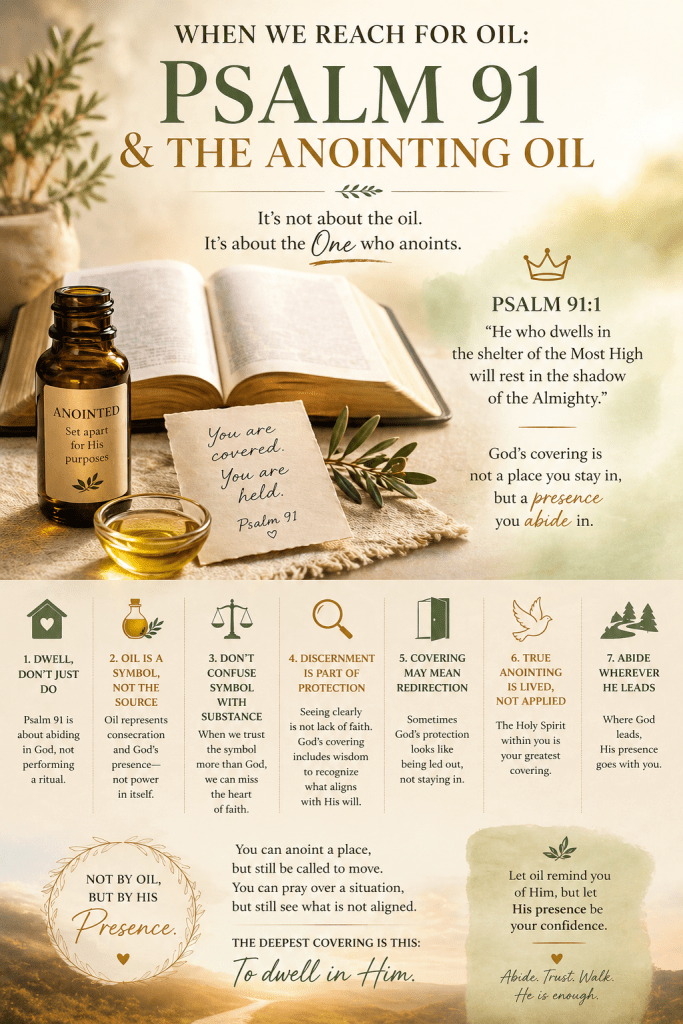
✨ 1. Psalm 91 Is About Dwelling, Not Ritual
Psalm 91 begins with a powerful condition:
“He who dwells in the shelter of the Most High will rest in the shadow of the Almighty.”
The promise is clear—but so is the posture.
It does not say:
- “He who uses oil…”
- “He who performs the right action…”
It says:
“He who dwells…”
Dwelling is:
- ongoing
- relational
- internal This means protection is not activated by a moment. It is sustained by abiding.
🕊️ 2. What Anointing Oil Represents (and What It Doesn’t)
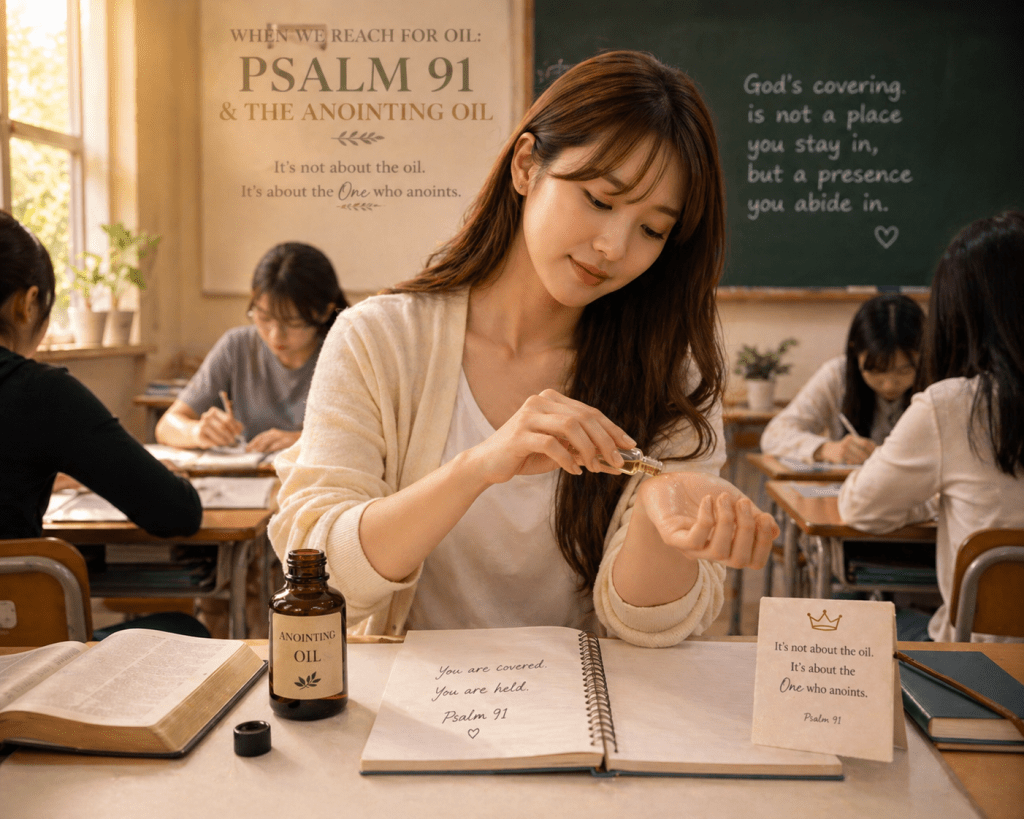
In Scripture, oil is symbolic of:
- consecration
- setting apart
- the presence of the Holy Spirit
Kings were anointed.
Priests were anointed.
Spaces were consecrated.
But the oil itself was never the source of power.
God was.
The danger is subtle.
When we move from:
“This points me to God”
to:
“This gives me protection”
we shift from symbol → substance confusion.
⚖️ 3. The Risk of Substituting Symbol for Substance
In uncertain environments, it’s natural to want reassurance.
So we may:
- pray over a place
- anoint a space
- declare Scripture
All of these can be meaningful.
But they can quietly drift into:
a need to control outcomes through spiritual actions
Instead of:
trusting God regardless of outcomes
That’s the difference between:
- faith
and - spiritual dependency on methods
🔍 4. Psalm 91 Does Not Remove Discernment
One of the most misunderstood ideas is:
“If I am under God’s covering, everything around me will feel safe.”
But Psalm 91 does not teach blindness.
It teaches security in God, not denial of reality.
You can:
- dwell in God’s presence
- and still see flaws in systems
- still notice gaps in leadership
- still recognize when environments are misaligned
That is not lack of faith.
That is:
walking in truth
🔥 5. When We Try to “Cover” What God Is Exposing
There are moments when:
- patterns become clear
- discomfort increases
- things no longer feel aligned
In those moments, applying spiritual language or actions (like anointing) can sometimes become:
an attempt to preserve what God may be revealing
We must be careful not to:
- use prayer to avoid clarity
- use symbols to quiet conviction
- use “covering” to stay where alignment is shifting
Because God’s covering does not require us to ignore truth.
🌱 6. True Anointing Is Not Applied—It Is Lived
The New Testament shifts our understanding.
Anointing is no longer external.
It becomes:
internal—through the Holy Spirit
This means:
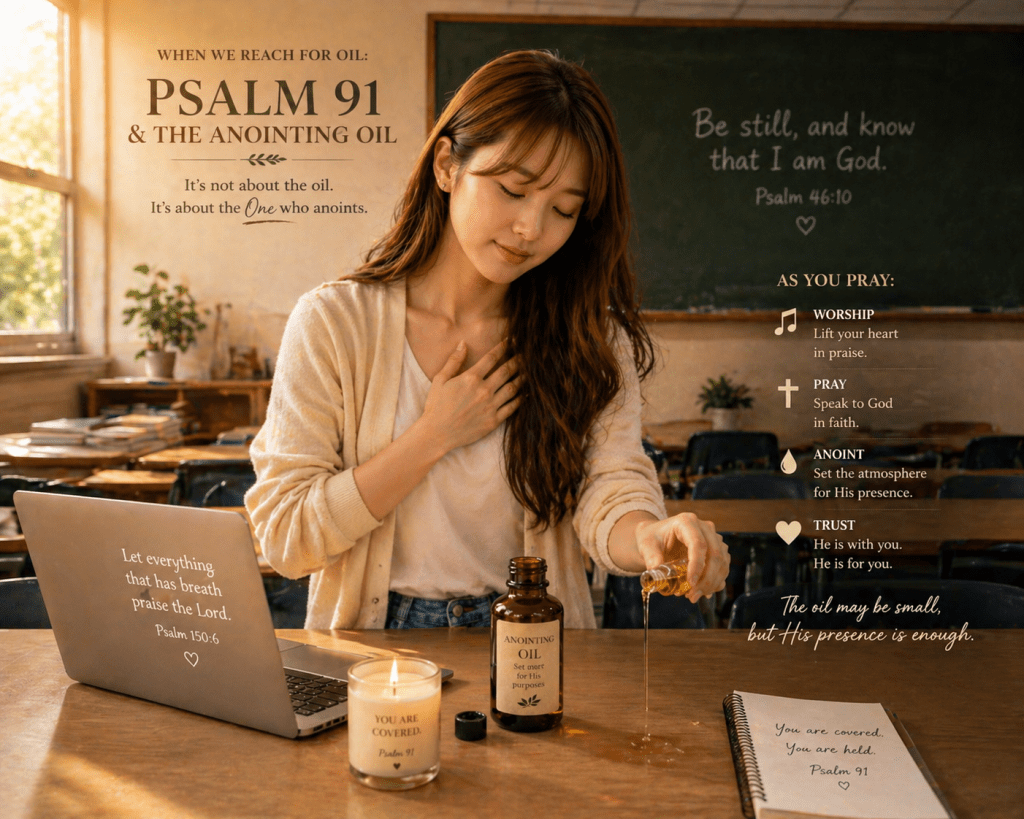
- you don’t carry oil for protection
- you carry His presence within you
True anointing looks like:
- clarity in confusion
- peace in uncertainty
- wisdom in decision-making
- courage to respond when alignment changes
🧭 7. Discernment: The Greater Protection
Protection is not always:
- staying in the same place
- preserving the current structure
Sometimes protection looks like:
being led out, redirected, or repositioned
So the deeper question is not:
“Is this place covered?”
But:
“Am I still aligned with where God is leading?”
Because:
- you can anoint a place
- but still be called to move
- you can pray over a system
- but still see its limitations
🌿 Final Reflection
If you find yourself holding both:
- the desire for protection
- and the awareness of misalignment
Do not rush to resolve the tension with action alone.
Instead, return to the core of Psalm 91:
“He who dwells…”
Not:
- he who performs
- he who secures
- he who stabilizes
But:
he who abides
Because in the end:
God’s covering is not something you apply to a place.
It is something you experience as you remain in Him—wherever He leads next.
 All about Lina Lifestyle