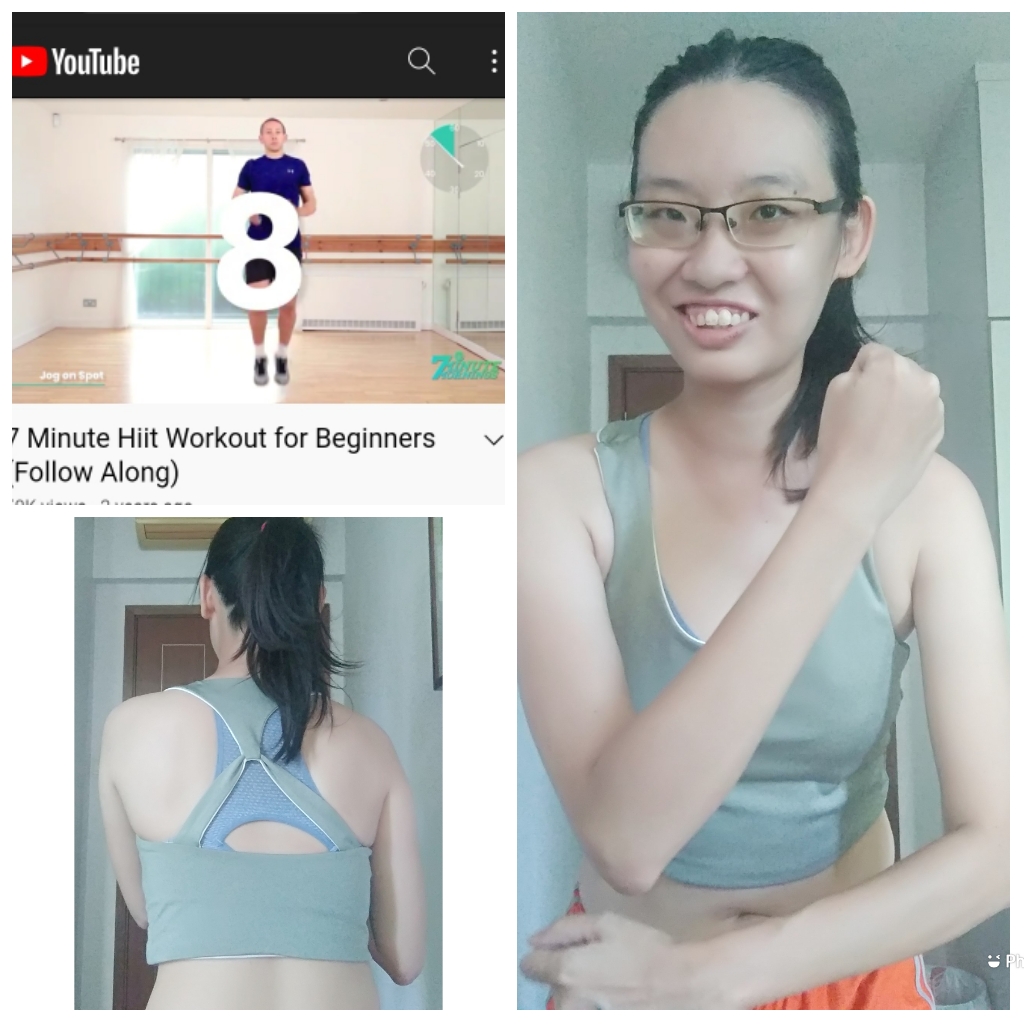
It is the time of the year where I felt that there are more fatty acids stored in the abdominal area that muscles. I thought it is high time to get started on motivational videos that are easy to follow for the sake of my physical health. I will rather lie in my comfort zone than shake my exercise routines. Thus, I felt that I have stagnated as a beginner at exercise than go into anything moderately tough on the body. I was just browsing through random workout videos as I was very used to my consistent 7 minutes High Intensive Interval Training (HIIT). Anything longer just feels like a whole lot of work and boredom will kick in.
Doing the 7 minutes beginner HIIT
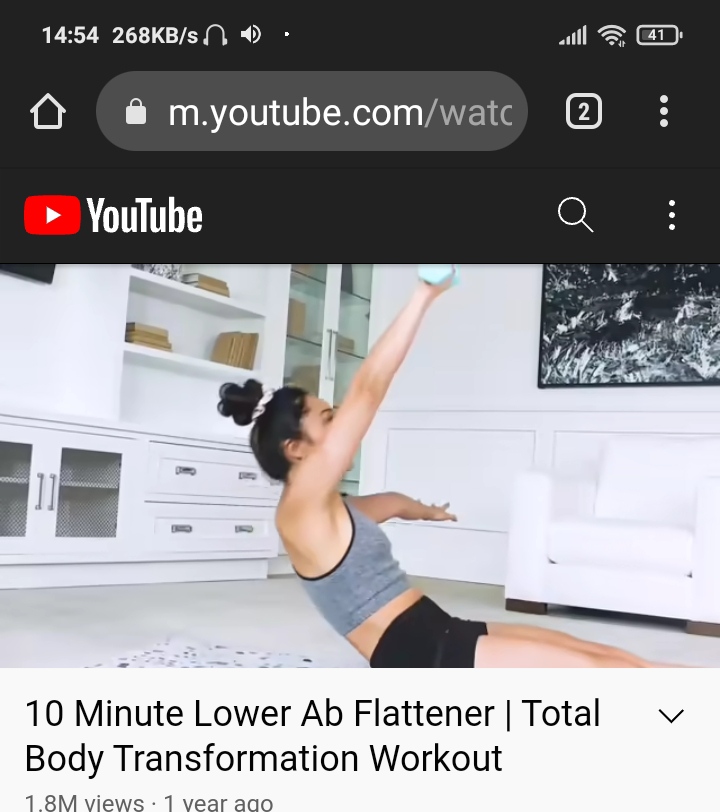
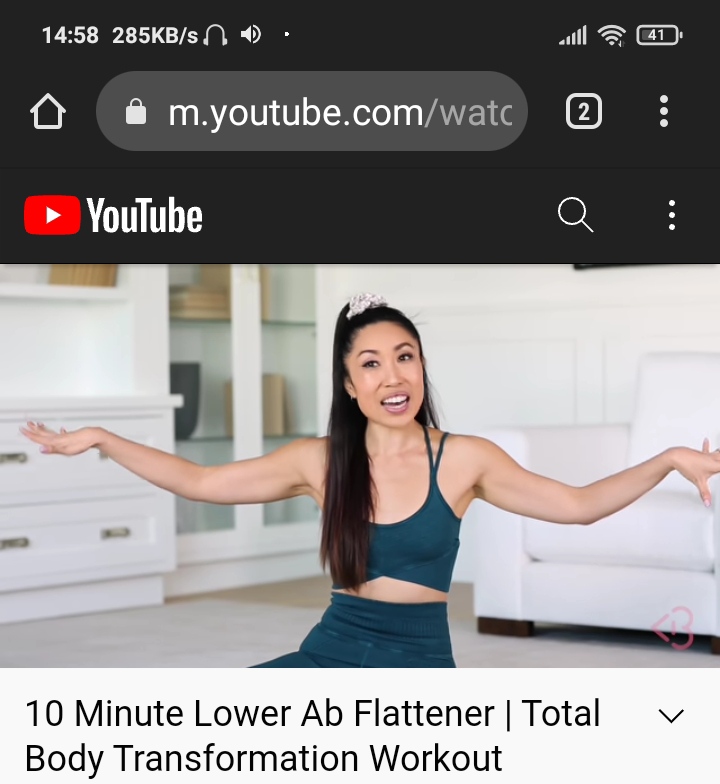
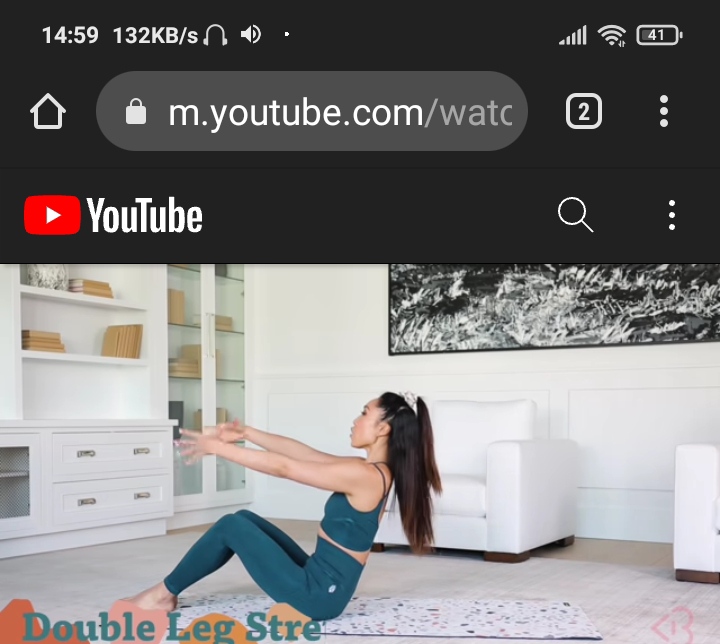
While browsing through exercise videos I am awed by a fitness personality Cassey Ho who is very motivational and organized. Finding her videos interesting, I can’t help but follow along with her 10 minutes video called Total Transformation Lower Abs. The first goal I had in mind was getting started for physical health reasons. I am so glad to get rid of my sneezes and runny nose once the whole body gets heated up and leave my common medical conditions like cold behind.
Lower abs total body transformation
For the youtube sensation, Cassey Ho I am amazed that she can speak to her audience and demonstrate the actual intensive exercises at the same time. I am glad that I can go from flat out couch potato to being a total body transformational fan. I am convinced that from “double leg stretch” to “flutters”, the catchy names are so easy to follow. If you only have 10 minutes and want to target belly fats, it will be something that did not bore me. Instead I got a kick out of hitting my fitness goal. I followed her exercises right to the end where it does feel comforting to reach the part where you can get to hear her say “roll you vertebrae up”. Celebrating my small action step to get into a more intensive exercise never felt more fun and the awesome feeling to know that my belly is flattening.
Here are the names to some of the types of exercise which sounds really catchy !
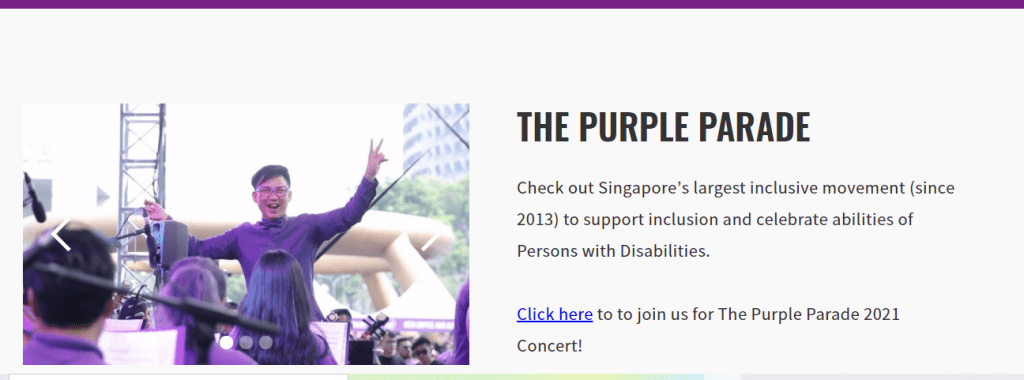
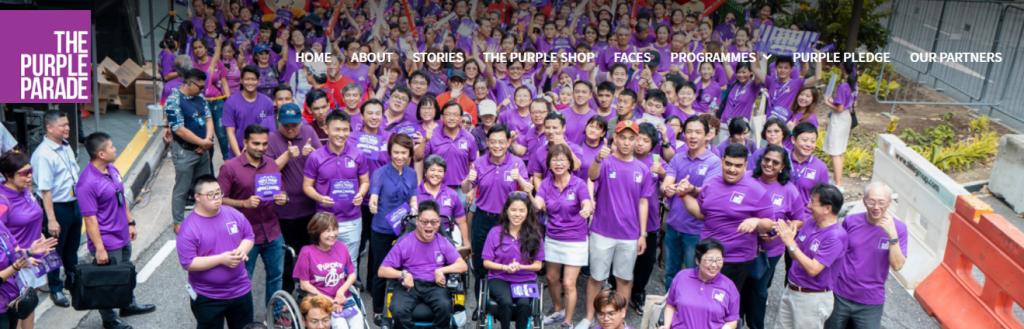
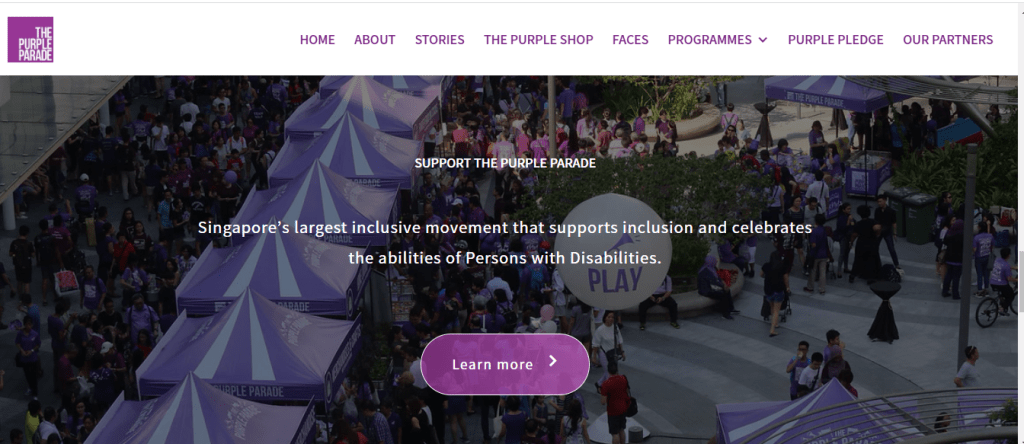
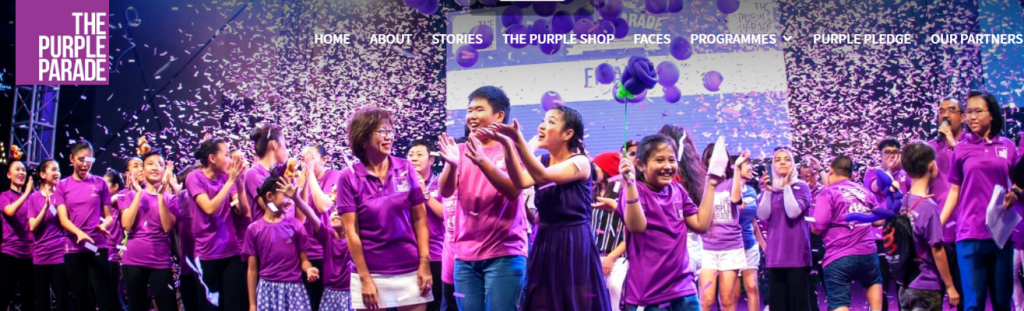
The Purple Parade is Singapore’s largest movement to support inclusion and celebrate abilities of person’s with disabilities. It aims to help Singaporean’s increase their awareness of the disability community and to recognize their abilities. It is the 9th year that they are holding the Purple Parade on October 30th 2021. This year, the Purple Parade held its very first hybrid concert with audiences joining the Purple Parade at Suntec City and on Facebook Live.
Hybrid event
The hybrid event was hosted by Yip Ping Xiu, five times Paralympic Gold medallist as well the vice chairperson of the Purple Parade. To encourage supporters to support inclusion, they even have social media platforms where they have a Purple Wall. To support the movement on social media, supporters can take a photo and posts it on instagram or facebook using the hashtags #supportinclusion and #celebrateabilities. They also have a website where you can find out more about the Purple Parade: https://www.purpleparade.sg/about
Social media hashtags
Purpose of The Purple Parade
According to Yip Ping Xiu, she thinks that is is a huge privilege to be part of a powerful and impactful movement watching the Purple Parade grow every year. She felt that with such growth Singaporeans want a more inclusive society. She believes that core of the Purple Parade movement is to ensure that persons with disabilities are involved in the main chapter of Singapore’s growth. This means having equal access to things like education, employment, healthcare, transport and social interaction.
According to Alistair, the host of the Purple Parade, the annual parade is a platform for everyone from different walks of life to come together to stand in solidarity for persons with disabilities. He is encouraged to see a great turn out together. He is happy to see a strong support for the “Let’s all go Purple campaign” this year. They have a series of workshops called “Walk in my shoes” which is to create public awareness of major disabilities through firsthand perspective. Next, they have a Purple Symphony which is Singapore’s largest orchestra consisting of musicians with and without disabilities. They have performed at many events in Singapore from the Chingay parade, National Parade and the annual Purple Parade.
The Purple Parade
Past, Present and the Future
Mayor Denise Phua is the advisor to the Purple Parade movement. She shared that she is happy to welcome Minister Masogos and a small group comprising the organising committee, Representatives of Singapore’s 4th Enabling Masterplan for the Disabled and leaders from the business sector, government and Parliament. She wanted to share the past, present and the future of the Purple Parade.
History of The Purple Parade
History of the Purple Parade
She shared briefly of how The Purple Parade started in the past. 9 years ago, it started as a grounds up movement with a group of volunteers who wanted a national occasion to ensure persons with disabilities are remembered not forgotten. They wanted to support inclusion and to look beyond disabilities and celebrate abilities of the differently able. The first Purple Parade started at Hong Lim Park where they first made their statement with 3600 people.
They moved on to Suntec City where they saw more than 10 000 gathered annually in contingents, buildings lighted in purple, carnivals and concerts beyond their wildest imagination. The event was never to replace the good work done out there by their partners and disability organizations but always to remind the rest of Singapore that everyone is worthy and deserving of equal opportunities in life’s essentials.
Supporting the Purple Parade
Present times with Covid-19
Fast forward to the present with Covid-19, the team had to pivot to other means to continue The Purple Parade movement. They stayed the course with strong supporters and their online Going Purple campaigns and concert stayed strong. Even when the committee does not have the bandwidth to personally engage everyone, thousands have continued to support the cause and sportingly joined in. This year, more than 20 000 are expected to join them. “Let’s All Go Purple” campaign in October was a great success. They have introduced Purple Conversations and Digital Human Libraries to share the life stories of persons with disabilities.
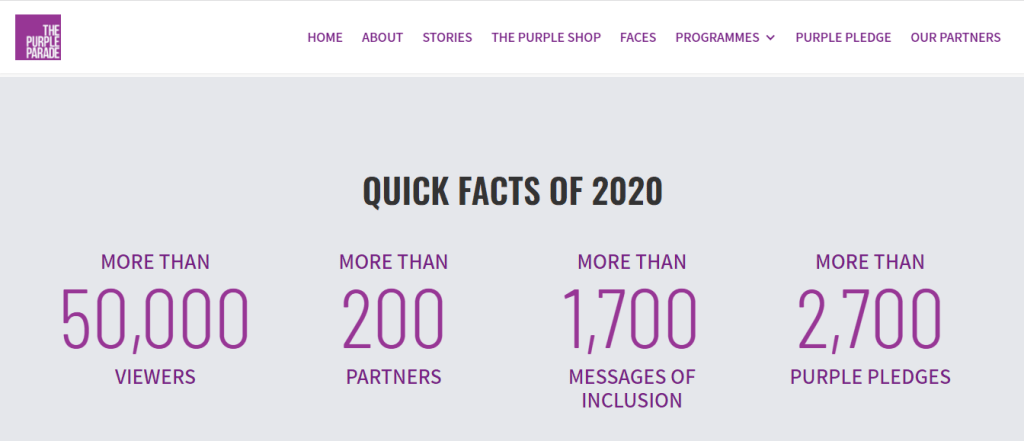
Quick Facts of 2020 during the Covid-19
Future of The Purple Parade
As for the future, the spirit of The Purple Parade must continue. It is about inclusiveness, not exclusiveness. The movement must include both persons with and without disabilities in leadership, outreach, partnerships and programmes. Their current and next generation of leaders in The Purple Parade and many activists will focus on the 3 A’s – Awareness, Action and Advocacy.
The team will build for the future deeper awareness of persons with disabilities because they all come in spectrum. The team will take action to support the higher-priority needs of the community including in the adult space. The team will continue to advocate for sustainable access to opportunities at school, at the workplace, in community facilities. Past success is no guarantee of future success. The only way to predict the future, as we all know is to help create it together. Denise Phua ended her sharing by thanking the supporting for believing that regardless of one’s ability or disability everyone is worthy.
Denise Phua and The Purple Parade
How an individual supports Inclusion in his business
According to Norman Ngai, a financial advisory manager representing Financial Alliance Pte Ltd, he has been supporting inclusivity by being aware of the needs of persons with disabilities in his work in the financial sector. This is where his business provides equal access to consultation on insurance services and supports the disability sector with action. It is good to know that his firm caters to the special needs by having knowledge of a scheme where individuals with autism can get coverage for medical expenses due to accidents and infectious diseases.
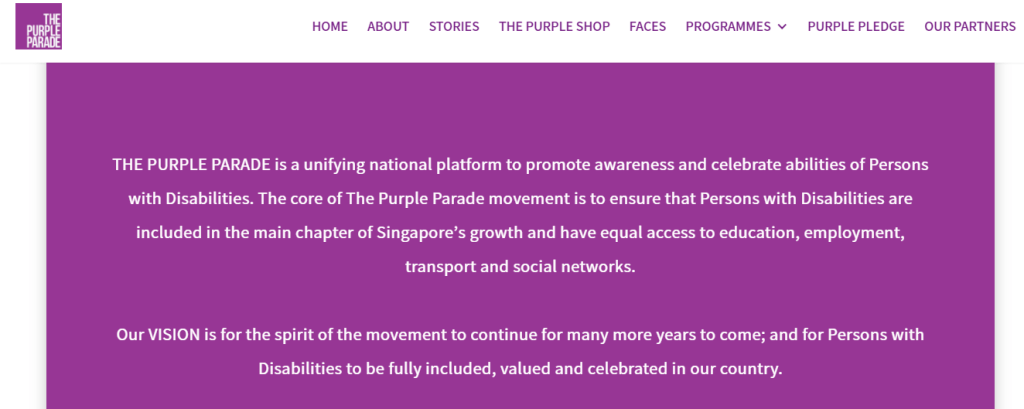
In conclusion, it is heartening to know that he is fulfilling the vision of The Purple Parade which is for Persons with Disabilities to be fully included, valued and celebrated in our country. You can read more about the mission and vision of The Purple Parade here.
Previously I wrote a blog post after attending an agile course and explained why an agile mindset is important in the VUCA world. In my third point, I mentioned the double destruction caused by automation and how technology has disrupted the economy. The good thing is that there are new jobs emerging in the market and there are opportunities with the changes in the economy. To take on these opportunities, the workforce need different skills. You can access this post here: https://lifestylelina.medium.com/three-reasons-why-an-agile-mindset-is-important-in-the-vuca-world-dc367427c1eb
One really useful skill to learn will be digital marketing. This is where there is a shift of businesses online due to the need to operate safely when they are not able to reach consumers at the physical stores due to the pandemic. I felt there are advantages to digital marketing that one can learn and know. Without a background in digital marketing, I decided to attend the course conducted by NTUC.
Digital Marketing and the five advantages
Digital Marketing is the use of internet to reach consumers using email, content marketing, search platforms, social media and affliate marketing.
1. The advantages of digital marketing is that there is global reach of consumers when we use the internet as it not only limited to a particular region. We can reach consumers all over the world as long as there are connected on the internet.
2. Digital marketing is trackable with measurable results where we can used track the effectiveness of online marketing.
3.Consumers are more open to online marketing due to the restrictions brought on by Covid-19 where consumers switch from going to physical retail stores to openness to visiting online stores.
4. There can be increased social currency with greater sharing of one’s brand on social media. According to Forbes, “social currency is essential for marketing success. In 2020, a projected $102 billion will be spent on ad spend. This is where “influencers and entrepreneurs use it to inspire, motivate and educate others on how to monetize their brand.” Social currency is a way to leverage the way people interact, buy, sell and promote on social media to ultimately grow your brand.
5. There can be improved conversion rate due to the increased brand awareness of products and services online when businesses build up their social currency and turn social media users to consumers.
I think writing on social media for my more than close to 1850 followers (at present) on LinkedIn brings tremendous responsibility in sharing my thoughts and comments in as accurate a way as possible to reflect my values and beliefs or opinions on issues. I took up this responsibility because I felt over the past year I have grown these followers slowly and organically and there is a kind of social media intimacy at a level I believe was enough to start three different blogs to engage all people that I know through my different styles of writing.
Prior to the pandemic year 2020, I knew LinkedIn existed but did not want to create an account to connect with strangers on a professional basis. I had been deliberative about sharing personal information over the world wide web for all to judge and never want to deal with the effects like doxxing, trolls and cyberbullies.
Facebook versus LinkedIn
Even when I started working, I found that Facebook is more of a safe comfort zone because I only added real friends from the university that I knew well. I often posted personal photos that are only for a select closed network to reminisce close friendships as I was more interested in the personal side of people. Recently, with greater confidence in managing my online presence on Linkedin, I found there are more benefits than drawbacks going on LinkedIn.
I started with very safe postings that did not reveal much of my personal side since I have a deliberative cautious type of personality. Still, over the one year that I was on Linkedin, I have organically grown all the followers by getting to know them as far as possible on a one to one basis. I believe it does take a certain kind of practice to know who are the sincere social media engagers. It boils down to taking the intuitive heart work where one has to start small to build trust and social media intimacy.
Social Engagement Style
My social engagement style is that I rather have a small group of followers whom I know well and genuinely respect their content, views and ideas. Personalized more intimate encounters I think beats having a very large follower numbers if I don’t have the time to get to know them well as unique individuals. Hence, I will do my best if possible by direct messaging new contacts when time and personal attention can be given to those who want to join my network. Ideally it will be best to know as much as they are willing to share privately in confidentiality. Hence, over time as my LinkedIn followers build up, I have a mindset change due to trust and social reciprocity. This is where I started having the belief that regular public engagements on social media with authentic thoughts have the power to effect good changes in the real world of work.
Personal touch of LinkedIn
Occasionally, I was pleasantly surprised to have one or two contact who claim to want a “fan” like getting to know session on zoom or call rather than a professional one and it reinforces my belief that LinkedIn can reconcile two different purposes. That is having the professional yet not lose the personal human touch as well. Thus, I believe LinkedIn has two beneficial purposes where users tend to be strong in the professional touch and second are interested to gain more genuine social connections. It is good as it can bring forth constructive discussions that can bring about immediate changes in each others respective workplaces during this volatile, uncertain, complex and ambiguous (VUCA) period.
Facebook versus LinkedIn
Even when I started working, I found that Facebook is more of a safe comfort zone because I only added real friends from the university that I knew well. I often posted personal photos that are only for a select closed network to reminisce close friendships as I was more interested in the personal side of people. Recently, with greater confidence in managing my online presence on Linkedin, I found there are more benefits than drawbacks going on LinkedIn.
I started with very safe postings that did not reveal much of my personal side since I have a deliberative cautious type of personality. Still, over the one year that I was on Linkedin, I have organically grown all the followers by getting to know them as far as possible on a one to one basis. I believe it does take a certain kind of practice to know who are the sincere social media engagers. It boils down to taking the intuitive heart work where one has to start small to build trust and social media intimacy.
Social Engagement Style
My social engagement style is that I rather have a small group of followers whom I know well and genuinely respect their content, views and ideas. Personalized more intimate encounters I think beats having a very large follower numbers if I don’t have the time to get to know them well as unique individuals. Hence, I will do my best if possible by direct messaging new contacts when time and personal attention can be given to those who want to join my network. Ideally it will be best to know as much as they are willing to share privately in confidentiality. Hence, over time as my LinkedIn followers build up, I have a mindset change due to trust and social reciprocity. This is where I started having the belief that regular public engagements on social media with authentic thoughts have the power to effect good changes in the real world of work.
Personal touch of LinkedIn
Occasionally, I was pleasantly surprised to have one or two contact who claim to want a “fan” like getting to know session on zoom or call rather than a professional one and it reinforces my belief that LinkedIn can reconcile two different purposes. That is having the professional yet not lose the personal human touch as well. Thus, I believe LinkedIn has two beneficial purposes where users tend to be strong in the professional touch and second are interested more genuine social connections. It is good as it can bring forth constructive discussions that can bring about immediate changes in each others respective workplaces during this volatile, uncertain, complex and ambiguous (VUCA) period.
Public and private social media engagement
I am glad it is time that I am more confident at regular public postings due to knowing behind the scenes what these 1850 followers are like in the private message space. Organic content sharing I believe brings more reach to my audience out there who are already in my network. I am glad to have consistently engaged them through responding to their direct personal messages over the past year. Due to my rather cautious personality in managing the double edged sword of increased connectivity of social media, I only took it more affirmatively that public posting of content brings more benefits that harm.
I remember a handful of people have privately direct messaged me saying they do look forward to my blog postings as they could engage with it. Thus, I feel that I need to effectively manage my social media writings by bringing awareness of certain social issues and yet have to be mindful of weeding out unnecessary trolling at the early stage by being even more discerning. This is because the last thing I want is to have more real followers getting trolled for their opinions in my LinkedIn space. Hence, I do see my postings here as taking on a kind of “thought leadership” that goes beyond my personal writing sphere.
I would like to highlight one impressive social media engagement that I had recently. This brings out the best of this platform where we can connect with responsibility, depth and authenticity which I highly value. Hopefully, I can manage this double edged sword by bringing out what is a form good social media engagement. Overall, with this post, I hope this will encourage less trolling and more meaningful discussions. Moving forward, I believe this will set the precedent for building greater social media intimacy and enhance all our professional relationships.
Being responsible for my thoughts
As a “thought leader” responsible for my posting, I hope to offer protection to people who would share the same interest and viewpoints and genuinely want to air their questions and point of view. Thus, I am more discerning of those who wishes to engage publicly on my public social media postings and bring out an example of a “model” social media engagement to set the correct precedent.
Impressive social media engagement
I am impressed with Jenny Lai who recently connected with my latest LinkedIn post on “Surviving the digital world in a difficult season”. I decided to republish what was on my LinkedIn social media page in a format that looks like a “mock” interview session (edited from original LinkedIn post) with the author (me) of the blog post.
Jenny(Jen) Lai: This course is useful but the challenge on how to implement it at our unique work places that may or may not be supportive to the changes
Li Nah: What are the unique challenges would one face then?
Jenny(Jen) Lai: This is subjected to the acceptance of the work place to carry out – resistance to changes
Li Nah: The course I took is practical and it gives the not so technologically literate learners like me an understanding of digital market trends in a competitive online market sphere. I believe that if a leader likes to transform his business from physical to online there will be resistance from workers.
There will be change in roles which made some duties obsolete like the manual printing of flyers as technological changes are implemented. This will redefine work roles for workers as manual work in traditional marketing may become obsolete once new digital technologies becomes available.
This caused the digital divide as it is now easy to replace workers who have a keen mindset to go on the path of least resistance. That leaves the current workers in a position where they have to upskill or be left behind so a mindset shift will need to happen inevitably.
It marvels me that even integrating a Google map on a website can be so easily done without knowing very advanced IT skills now. Just need a good learning attitude and pick up the technical knowledge made for the layman to understand.
Jenny (Jen) Lai: Yup however, despite all these requirements that we all know, perhaps there are still gaps for different leaders to identify to address the learning gaps in any organization- hope this insight may help.
Li Nah: Yes, thanks for your professional and thoughtful discussion. This has helped me to think about how to engage with other professionals who are interested in leadership transformation in the workplace.
Jenny(Jen) Lai : Yup – preparation with a growth mindset will the key drivers to move forward the various phases of digitalization
Li Nah: Thanks for the insightful comment. I believe a self-aware leader can help prepare workers to keep pace with the phases of digitalization.
I attended a two day digital marketing course recently with NTUC as I thought the course came at the right time as I perceived that everything is going online with the the surge in Covid cases and the move towards “Smart Nation” as a society. Digitalization involves every sector from e-commerce to education. For businesses to survive, there is a need for people to be equipped with the skills to understanding the pivoting techniques from that of physical marketing to digital marketing.
I was reading an article by Rice Media and it struck a chord with me as I wondered how the economically disadvantaged is able to survive in our fast paced world of digitalization. Personally, even with the advantages of having a good education and my thirst for knowledge, I was quite apprehensive of signing for my first course with a focus on information technology as I am uncertain of my ability to pick up the more technical side of things. Still, I felt that my course participants felt the same.
Understanding the plight of the seniors
When I attended the course with 20 participants, I felt at home with some of the seniors in their 50’s especially felt for one who struggled with having to be present by resolving the technical side of learning online. The senior course participant with the web camera issue struck me as a very memorable one. I would feel embarrassed to continually hold back a class of 20. He had to keep toggling with his web camera as the instructor had to remind him continuously that his screen went black on zoom. It is mandatory to show one’s face online to ensure the participants are real and authentic so as to clear the online class audit.
I can feel the panic when one has to know how to not only use Zoom to participate as a learner but had to resolve the technical glitch of his web camera going dark when we are all taking the assessment for the course. I felt that the senior really struggled to multi-task as he might not know how to resolve his technical issues in the physical set up of the home learning environment.
This struggle I believe is quite real for people who faced the double whammy of lacking digital experience and have to pick up digital knowledge in a world that has accelerated technological transformation. Thankfully, we were blessed with a very a patient, tactful and sensitive instructor who made sure that those who has technical issues that prevented their access to his lesson get extra attention and help during the break.
However, for those who are economically disadvantaged, I believe the rapid digitalization has made those who are left behind even more disconnected socially. It would be almost impossible to participate meaningfully in social activities online like upskilling on Zoom for those who faced even more problems like what happened with my course mate. I am thankful to see such a heartwarming scene where the instructor has a heart for seniors.
Digital divide and falling behind
Rice media has highlighted the predicament of the digital divide. This is where it would be so trying for an individual to even get connected to the internet, have a secure and reliable computer or web camera. They would thus be left behind if one would consider having a reliable digital connection and know-how a “need” and no longer a “want” in order to access jobs or training.
It is #WorldMentalHealthDay today and I would like to continue to share more on the issue of burn out due to what I believe was empathy fatigue that I experienced sometime back. Close to the end of 2018, I felt that I was burned out from all the work that I was doing as I was very much putting my emotional energy into the jobs that I loved that fits my personality, values and ideals so I held two jobs and was a client relation associate by day and tutor by night.
As I was flipping through my notes for counselling and psychotherapy an article dropped out. I had printed the article written by Ellen Hendriksen on learning to empathize without burning out. I could identify a lot with the article as it resonated with me as I was more interested in handling personal burn out than learning the art of managing more clients.
In the introduction, she shared about her intention to write the article on learning to empathize without burning out. According to Ellen, normally, she loved her work. It was, and continues to be, a privilege to help people get their lives unstuck. She uses the simile where it is like pushing a mired car out of the mud. You work together with great effort, and when the car lurches forward and rolls free, everyone cheers. But that time, it felt like the mud was sucking her down. (Hendriksen, 2018)
I would like to share the three different kinds of empathy according to emotional intelligence researchers. First, cognitive empathy, second emotional empathy and third compassionate empathy. Lastly, I would like to share an understanding of what empathy fatigue is among studies of health care workers and what the result of empathy is.
Three distinct way of perceiving what someone else is feeling
According to emotional intelligence researchers, empathy isn’t as straightforward as it seems; instead, there are three distinct ways of perceiving what someone else is feeling. Cognitive empathy, for example, is understanding on an intellectual level how another person thinks and feels, without getting tangled in shared emotion. It is a conscious and deliberate taking of another’s perspective — you understand what will motivate or move them. Cognitive empathy is the cornerstone of trusting relationships; when someone understands you, you begin to trust them. (Hendriksen, 2018)
In contrast, emotional empathy is the sharing of emotion, feeling what others feel, the proverbial “putting yourself in their shoes.” As a skill, it’s practically a superpower. It keeps us in sync with one another, allowing us to feel the joy of a friend’s wedding, or the giddiness of a child on Christmas morning. Beyond that, standing in the shoes of a demographic “other” can sharpen the person into focus as a living, breathing individual rather than blurring them into a stereotyped group. (Hendriksen, 2018)
Enter the third kind of empathy: compassionate empathy. This type allows us to feel alongside another, understand what they might be going through, and, crucially, move us to help. But how do we switch on the compassionate empathy? If we don’t want merely to cry together, nor sit with coolly detached understanding, how can we activate the altruism of compassionate empathy? (Hendriksen, 2018)
Empathy fatigue
The term empathy fatigue implies there is something inherently exhausting about compassionate empathy and the caring actions it prompts. But studies of health-care workers find a lower incidence of empathy fatigue in older, more experienced providers. The highest levels of empathy fatigue occur in the young guns with the least experience. This tells us that empathy doesn’t slowly drain from a person like water draining from a tub. It doesn’t deplete over the course of a friendship, a career, or a lifetime. Instead, when it sparks compassion and altruism, empathy can be energizing.
So rather than letting your heart break, let your heart respond, whether that’s administering evidence-based treatments, making a donation, volunteering your time, bringing over takeout, or simply listening in sympathetic silence. What someone suffering needs is not a mirror, but a sounding board, a plan, or simply a vehement affirmation that they’re not crazy. These days, the stories I hear are still heartbreaking, but rather than leaving my heart in pieces on the floor, or detached with cold intellectualization, my heart fills — because I can respond.
Previously I wrote a blog post about being equipped with counselling and psychotherapy as #WorldMentalHealthDay is coming up on October 10. I mentioned how the course can help the distressed by giving an overview of the helping professional. I shared my personal experience working in the healthcare setting and why people seek help due the problem situations they face. I would like to share the three principle goals of helping from the course. Firstly, life-enhancing outcomes, second learning self-help and third prevention mentality. Lastly, what a successful outcome of counselling looks like.
Three principle goals of counselling
Goal One: Life-enhancing Outcomes
Help clients to manage their problems in living more effectively and to develop unused or underused resources and opportunities more fully.
Best when done in client-directed outcome informed manner
Goal Two: Learning Self-Help
Help clients become better at helping themselves in their everyday lives
Goal Three: Prevention Mentality
Helping clients develop an action-oriented prevention mentality in their lives
Setting up resources to prevent future distress
Recognizing how to maximize unused opportunities
Results Focus
A successful outcome of counseling requires that clients go away able to manage their problems in living more effectively and to develop opportunities on their own.
Sharing some form of the problem-management and opportunity-development process with them during sessions is essential in order for this to occur.
For a successful outcome, clients need:
(1) to participate actively in the problem-management process during the helping sessions.
(2) to apply what they learn to managing immediate problems and opportunities
(3) to continue to mange their lives more effectively after the formal helping period is over.
My journey with mental health
With these principles in mind, I started seeing a counselor as I wanted to manage my problem more effectively and develop opportunities on my own. Back in 2019, I had wanted to fulfill my dream of going the entrepreneurial way as I wanted to more freedom to choose the job as a private teacher. My immediate problem was that my contract job ended and I was left without a safety net and feeling burnt out by the demands of the previous job.
In a depressed state
My mental health was at the lowest as I felt more depressed than excited about starting on this path as the road ahead seemed too long and far ahead. When I held other jobs as an employee I often wondered what it was like being on my own. I recalled the early period of 2019 vacillating between looking for a job or continue the path of tutoring.
The internal self-doubt and turmoil started and I have worked with the counselor to manage the job search process. Days were so trying finding out the “opportunity development” process that I lacked motivation as I was tired from having to make decisions. On top of that, I perceived myself to be “lazy” as I hardly exercised or wanted to get out there to make new friends.
Develop an action-oriented prevention mentality
My counselor took a goal oriented purpose where I have to set daily goals to exercise or to speak to one new person to expand my social circle for example. It was a difficult period and I started taking small action steps to get out there to exercise at the park daily. I started keep a daily mood journal like rating my mood on daily basis on a scale out of 10. Initially I started off with rating my mood as low or depressed. However, small action steps helped as I wanted to improve my mood from a low of 4 to 8.
Small Goals to get out of depression
With such a scale, I gained more self-confidence whenever I made new friends or keep the habit of exercise for a few days in a role and boosted my self-confidence. I started managing my mood better by celebrating every small wins like getting new customers or exceeding my daily steps by crossing 10000 for example. I grew a lot in terms of understanding self and became more aware of every negative thought that would spiral downwards. I took a prevention approach by ensuring that I would maintain my mood by going out for a walk in nature and so leave negative self-talk behind and forge a more positive self-esteem by loving self more.
Before the pandemic I was working in a healthcare setting in various polyclinics where I come in contact with the medically ill. I claim to be no expert counselor or psychotherapist as I am not trained formally or qualified in this area. Nevertheless this blog post will give a simple overview of the helping profession. I still feel that with #WorldMentalHealthDay coming up on October 10, I would like to share a basic introduction on learning about counseling and psychotherapy as I had enrolled in the school and worked as a client relation associate at the same time.
The course started with an introduction to the formal helping professionals. They are counselors, psychiatrists, psychologist, social workers. Other professionals who often deal with people in times of crisis and distress will be doctors, nurses, dentists and teachers.
Why do people seek help?
To deal with problems in living
Examples of problem situations: self doubt, unreasonable fears, stress that accompanies serious illness, addiction to alcohol or drugs, failing marriage, loss of employment, confusion in adapting to a new culture, catastrophic loss, jailed because of child abuse, midlife crisis, lonely with no family or friends, battered by their spouses etc
Problem Situations Are
Complex and messy problems that people are not handling well
They arise in interactions with ourselves, with others and with the social settings, organizations and institutions of life.
Missed or Unused Opportunities
Resources that people are not using or opportunities they are not developing.
Why do People Seek Help?
To Live more fully
To uncover missed opportunities and unused potential
Examples: feel locked in to dead-end jobs or bland marriages, frustrated because they lack challenging goals, feel guilty because they are failing to live up to their own values and ideals, want to do something more constructive with their lives, disappointed with their interpersonal lives, burned out.
My experience
I still remember my vivid encounters working with the distressed and have to think on my feet on how to approach their problem situation. I felt that countless individuals have shared their private lives on their encounters with social settings, organizations and institutions of life. Many times I am in a situation of helping them make decisions to tap on unused resources. These resources are useful and practical such that they can affect their outcomes on the personal healthcare options. Often times, clients in need are in distress due to being in a transition from the polyclinic to the hospital or the nursing homes.
I got to hear personal stories of how they felt that had tapped on the help of institutions and encountered roadblocks and obstacles. Hearing their side of the story at the personal level, I have a better understanding of how public policy aimed at reducing reliance on welfare may create barriers for the truly genuine sandwiched class to tap on resources. I probably got to know the all familiar name of politicians that clients bring up whenever they have to appeal their cases.
Next, on the organizational level I do encounter stories of losses of employment from sunset industries through retrenchments where this could exacerbate mental health issues on top of physical health matters. This is where I could render the help that is genuine and my assistance needed to get financial application done procedurally correct as they are likely able to qualify for the minimum safety net.
For social setting, there is a lot of distress in terms of facing loss of limbs or being wheelchair bound. It had been a very deep complex challenge working with care coordinators, medical social workers, doctors and nurses to get as much help as possible for clients to get procedures for their financial application done.
Mental Health of healthcare professionals
Working with such an intricate network, going from doctors to nurses to get lengthy paperwork done is just a glimpse of what I knew about the healthcare profession. It is not an easy profession I believe as one needs to stay mentally resilient in the face of hearing human stories of the distressed and be present to them by rendering help that is personalized and contextualized to fit their needs.
It is a life experience that I think is highly valuable as I get to hear survival stories of the downtrodden and their survival instinct in the face of life adversities. With mental health in the spotlight in the pandemic, I believe the stress healthcare workers face has been multiplied in the face of so many uncertainties of how the Covid-19 situation impacts the healthcare system to the point of strain. For example, I can’t imagine having to make tough ethical decisions like planning for who uses the ICU resources.
I feel that to a large extent, more mental health resources can be given to healthcare workers. This is based on handling the simple responsibility of my own work and having known the overlap of directly working with healthcare workers and patients. Being in contact with this group of healthcare workers before, I sense there is a need for greater mental health resources catering to the group during the pandemic. It is good direction to take if public policies needed to be carefully made to prevent a systemic mental health issues like burnout in the healthcare sector.
There is a song by Bette Midler called The Rose that goes like this, “It’s the heart that is afraid of breaking that never learns to dance. It’s the dream that is afraid of waking that never takes the chance.” I felt that this song seems to parallel my journey in choosing my dream job journey in my younger days.
My first dream job
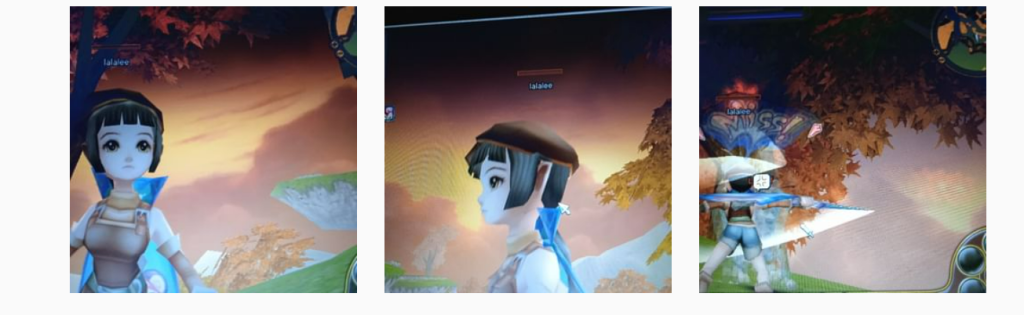
I think I wanted to be a teacher as far back as when I was a teenager playing FLYFF. Playing the online fantasy game today, I had to choose a particular job class for my character Lalalee in order to progress in the game as she had to specialize after reaching level 15. She could not gain experience as a vagrant anymore if she does not make a decision to specialize and choose a job she like and she will be stuck at level 15.
Graduation from school did feel that way as we had this dilemma which is to choose a job of our dreams or take another job that is not our heart’s desire. Back in my younger days, being in the position of a “vagrant” I took part time jobs in other job roles like marketing for a car company and customer service in the community club.
These jobs somehow made me questioned my heart’s desire on what I truly want to do everyday once I reached the metaphorical level of graduation from being a vagrant at 15. If I need to progress, I knew deep down that I would like to choose the teaching path and would have to enter the education field. Throughout the years, there were many obstacles like dealing with the metaphorical monsters in the FLYFF game where we have to defend ourselves when we are out on real world battlefield. However, the hardest part to defend will actually be the internal which is the heart. Facing many heart breaking obstacles externally, it is not easy to stay the part of one’s heart desire.
It is the dream that is afraid of waking
In the game, I decided to follow my heart again and chose the acrobat as I enjoyed watching the bow and arrow and slings in the fantasy game. I did not want to choose other job classes as I thought this was my dream job for my Lalalee. As the song goes, “It’s the dream that is afraid of waking that never takes the chance.” It reminded me that at certain times I did not take action to fulfill my dream as I did not dare to take the chance again.
My online game challenge and taking the step to fulfill the dream
Gaming does feel therapeutic as I did reflect back on the “vagrant” days where I struggled with a desired dream role when I spent months away from. In FLYFF, I found it particularly challenging to enter the dream job of an acrobat. I went to some lengths to watch guided video so as to fulfill the game quests in order to qualify as an acrobat as I got lost in the fictional world of FLYFF like going west of Florene instead of east to meet the acrobat instructor.
Finally, seeing Lalalee going to the right direction and interacting with the right characters got her qualified as an acrobat is fulfilling. Watching her dance and twirl around with her newly minted bow felt like I had come full circle in taking the chance on my dream. Looking back at how I ventured into the field of education, it did felt like I was courageously living a dream despite getting lost by going west instead of east. I believed it had been an arduous journey filled with dancing to the tune of the heart and facing existential questions like is this what I am called to do ?It is never easy though when I chose other job classes and spent some months or years away from fulfilling the dream.
Lalalee starting as a vagrant taken from my instagram
As it is my lull period, I just restarted playing the game FLYFF as my inquisitive student asked me about the games that existed when I was still in school. Out of nostalgia, I created the character Lalalee and she started off as a vagrant from level 1 and started exploring the fantasy land of Madigral to slay the monsters. The fantasy land was beautiful as the graphics showed natural landscapes that still awes the imagination after so many years from breathtakingly realistic mountain to the happening town square. It was fun creating my bright eyed character Lalalee especially when she looked ready to conquer the world probably like how many felt after graduating from school. She held her sword with agility as she went through the so-called volatile, uncertain, complex and ambiguous (VUCA) world of monsters and quests.
Previously, I wrote a blog post on “Three reasons why you will like to upskill” and I felt that there are similar parallels to playing the MMORPG when it comes to upskilling which the game seemed to naturally build in players. My third point of view about upskilling is that it boost one’s confidence seemed to ring true. I felt a sense of satisfaction attending my online learning school on the Alison platform and managed to get close to 30 certificates and diplomas during the pandemic.
Similarly, when my character Lalalee went from level 1 to level 14 in two days, I enjoyed strategizing how to choose the right level of monsters to fight and enter the battlefield prepared. This is because I made sure she was able to get enough strength to fight, improve her stamina and increase her defense with better armour and shield upgrade. Here is how the game works. Whenever, she fought a monster, the loot will fall off and she can get “penya” (FLYFF currency), swords and armour. This is like upskilling where you gain a certain % of experience after slaying a monster and she can go to the next level after gaining 100% experience. The strategy comes into play where you have to choose a right level of monster to slay so that you can retain your health points and yet have to also choose a challenging battle. This balance needed to be struck in order to gain experience so that you can move to the next level faster.
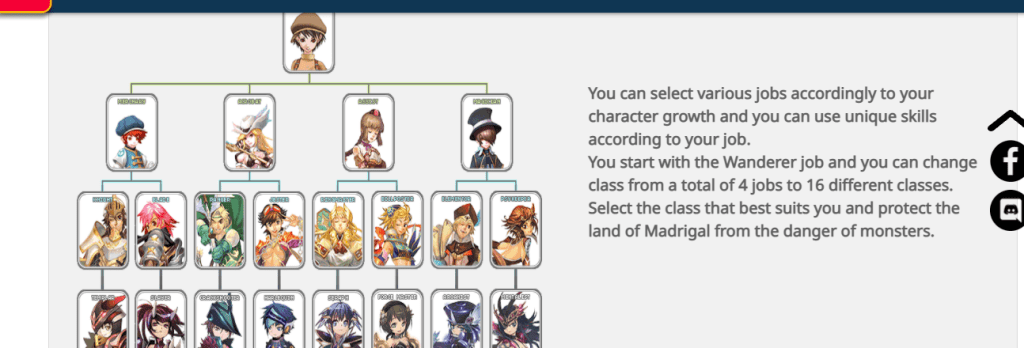
Character choosing a job class
Lalalee will have to choose a job class at level 15 and I would have to decide on how to specialize in either being a magician, assist, mercenery or acrobat. Choosing a job class at level 15 will then predetermine the job classes she can choose at level 60. It parallels my search for a new job identity as I felt that whenever I could upskill I can pick up a range of skillset and have to decide what kind of skills I am inclined towards.
Knowing my interest, I picked a range from educational psychology to mental health studies. It is both bewildering and exciting to be able to pick up so many skillsets. Nevertheless, I felt that I seem to enjoy making a decision for my life. Similarly, my virtual character Lalalee’s (or cyborg )fate is in my hands as I have to decide on her job class soon. The freedom of choice is a wonderful feeling of getting my bright eyed character to upskill as a vagrant and look forward to the next stage of her life.
You can follow me on instagram to know more about Lalalee.








 All about Lina Lifestyle