(article by Chat GPT)
In the rich tapestry of architectural history, few transitions have been as visually striking and culturally significant as the shift from Gothic to Neoclassical architecture. These two styles represent not just changes in design preferences, but also profound shifts in societal values, religious beliefs, and philosophical outlooks.

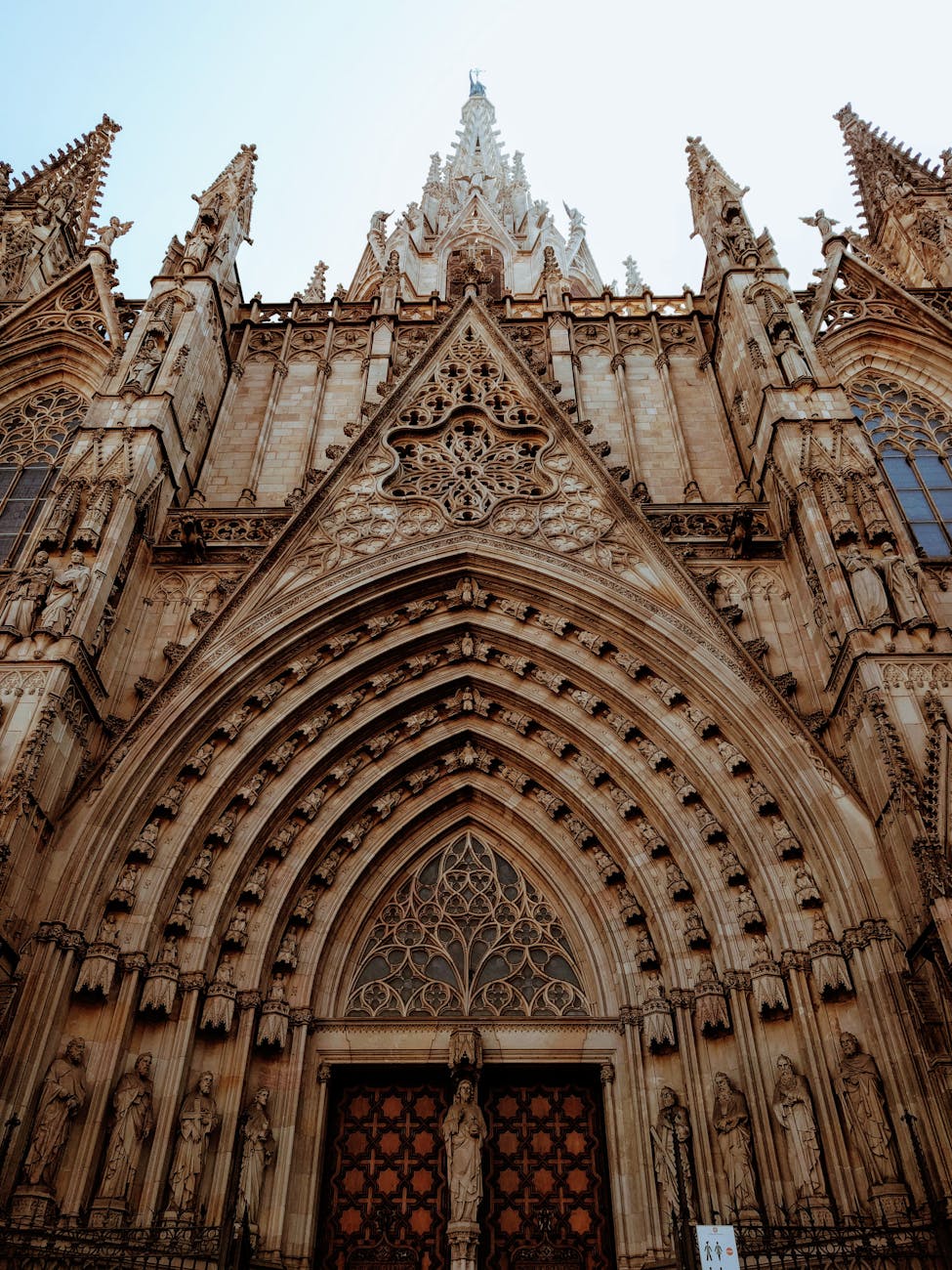
Gothic architecture, with its soaring cathedrals, intricate stone tracery, and pointed arches, emerged in the High Middle Ages as a testament to the spiritual aspirations of medieval Europe. Cathedrals like Notre-Dame de Paris and the towering spires of Chartres Cathedral exemplify the awe-inspiring majesty of the Gothic style, intended to inspire humility and devotion in worshippers.
However, by the 16th century, Renaissance ideas began to permeate Europe, leading to a revival of interest in the classical architecture of ancient Greece and Rome. This revival gained momentum during the 18th century with the rise of Neoclassicism, a movement characterized by its adherence to classical principles of symmetry, proportion, and order.
Neoclassical architecture rejected the ornate complexity of the Gothic style in favor of clean lines, restrained ornamentation, and a focus on rationality and logic. Buildings like the Parthenon-inspired United States Capitol in Washington, D.C., and the grandiose Royal Crescent in Bath, England, exemplify the elegance and harmony of Neoclassical design.
The transition from Gothic to Neoclassical architecture reflects broader cultural shifts, including the waning influence of the Church, the rise of humanism and scientific inquiry, and the political upheavals of the Enlightenment era. While Gothic architecture spoke to the spiritual aspirations of an age dominated by faith, Neoclassical architecture embodied the ideals of reason, progress, and civic virtue that characterized the Age of Enlightenment.
Yet, despite their differences, both Gothic and Neoclassical architecture continue to captivate and inspire us today. Whether we stand in awe before the soaring vaults of a medieval cathedral or marvel at the symmetrical perfection of a neoclassical façade, these architectural styles remind us of the enduring power of human creativity and the timeless quest for beauty, meaning, and transcendence.
 All about Lina Lifestyle